Posted on Leave a comment

Fish farming

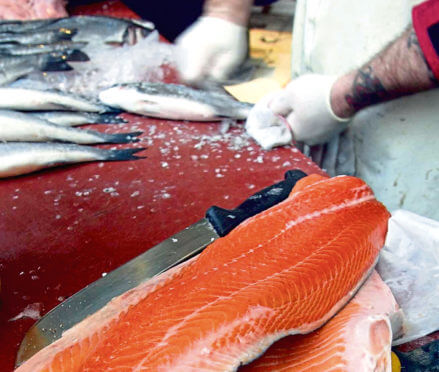
Salmon fillets on sale at a local fish market, London, January 09 2004, fishmongers have hit out following the publication of a scientific report which raised concern about the level of toxins in Scottish farmed salmon. Claims that Scottish salmon was so full of chemicals it should be eaten only three times a year have been labelled as ‘plain ridiculous’. See PA story SCIENCE Salmon. PA Photo: Matthew Writtle.

Fish farming

Fish farming is a form of aquaculture in which fish are raised in enclosures to be sold as food. It is the fastest growing area of animal food production. Today, about half the fish consumed globally are raised in these artificial environments. Commonly farmed species include salmon, tuna, cod, trout and halibut. These “aquafarms” can take the form of mesh cages submerged in natural bodies of water, or concrete enclosures on land.

According to the United Nations Food and Agriculture Organization, roughly 32% of world fish stocks are overexploited, depleted or recovering and need of being urgently rebuilt. Fish farming is hailed by some as a solution to the overfishing problem. However, these farms are far from benign and can severely damage ecosystems by introducing diseases, pollutants and invasive species. The damage caused by fish farms varies, depending on the type of fish, how it is raised and fed, the size of the production, and where the farm is located.

One significant issue is that—rather than easing the impact on wild populations—the farms often depend on wild fish species lower on the food chain, like anchovies, in order to feed the larger, carnivorous farmed species. It can take up to five pounds of smaller fish to produce one pound of a fish like salmon or sea bass. Overfishing of these smaller “forage” fish has repercussions throughout the ocean ecosystem.

As is the case with industrial animal farms on land, the fish are often housed in unnaturally crowded and cramped conditions with little room to move. Fish may suffer from lesions, fin damage and other debilitating injuries. The overcrowded and stressful conditions promote disease and parasite outbreaks—such as sea lice—that farmers treat with pesticides and antibiotics. The use of antibiotics can create drug-resistant strains of diseases that can harm wildlife populations and even humans that eat the farmed fish.

Escaped fish introduce yet another threat into the environment. Each year, hundreds of thousands of fish escape farms and threaten the genetic diversity and survival of native species. High stocking densities result in a significant amount of pollution from fish excrement and uneaten food, which in turn lead to poor water quality high in ammonia and low in oxygen. Outdoor fish farms can also attract predatory marine animals, such as sea birds and sea lions, who are sometimes poisoned or shot by aquafarmers for eating the fish.

Despite evidence to the contrary, it is still a common misconception that fish do not feel pain. Slaughter methods in the aquaculture industry are appalling. Little to no attention is given to the suffering of the animals and most are fully conscious during slaughter, which can take many minutes. Some species, such as salmon in the United States, are also starved for many days to empty the gut before they are sent to slaughter. Fish are most often not stunned and are killed by bleeding out, being hit on the head repeatedly, suffocating or freezing. In the US, as with many other countries, there are no regulations to ensure the humane treatment of fish.

Years of unregulated and underreported catches of bluefin tuna in the Mediterranean Sea and Atlantic Ocean are threatening the existence of this severely overfished species. To meet the high and growing demand for sushi in Japan and elsewhere, ranching of bluefin tuna is becoming a popular industry and is exacerbating the problem. Fisherman use longlines and purse seines to catch the tuna before they reach breeding age and have time to reproduce. They are then kept in seafarms for 3–6 months and fattened with thousands of pounds of smaller wild-caught fish before being killed and exported.

Posted on Leave a comment

Healthiest Human Food Dogs Can Eat

Healthiest Human Food Dogs Can Eat

There are plenty of people foods we’d love to share with our dogs, but some are much healthier than others. In fact, some foods are even toxic to our dogs. But fear not, there are certain human snacks that can actually benefit our four-legged friends. To see what they are, check out this list of the healthiest human food dogs can eat:

(As always, practice moderation and check with your vet before making any dietary changes.)

  1. Peanut Butter. Peanut Butter is one of the best treats to give to dogs because it lasts them so long! Plus, its packed full of protein, healthy fats, niacin, vitamin B and vitamin E. Unsalted peanut butter is the best, as too much salt is just as bad for dogs as it is for people. Make sure you check your peanut butter to make sure it DOES NOT contain sugar substitutes like Xylitol, which can be deadly for dogs.
  2. Chicken. Chicken can be fed to our dogs a variety of ways. Cooked chicken meat is a perfectly suitable snack or meal additive, but cooked bones should never be fed to dogs. On the other hand, both raw chicken and raw chicken bones are healthy for our dogs to eat. Cooked bones splinter and can be dangerous, while raw bones are soft and chewy.
  3.  
  4. Cheese. (Note: some dogs are lactose intolerant, and any dairy products should be given in small amounts.) If your dog is not lactose intolerant, cheese is an excellent treat choice. Cottage cheese is fed often by many dog owners because it’s high in protein, calcium and is bland and easy to digest. 
  5. Carrots. Carrots are high in fiber and vitamin A while being low in calories, so they make a great snack for your pooch. Chewing raw carrots is also beneficial for your dog’s teeth. If you’ve got an overweight dog, carrots are a great choice for treats because of their low calorie content. 
  6. Yogurt. Yogurt is full of protein, calcium and digestive cultures and is an excellent way to improve your pup’s digestive health. Make sure the yogurt you choose includes live active cultures and is non-fat with no sweetener or flavor. 
  7. Pumpkin. Canned pumpkin or fresh, cooked pumpkin with no added sugars and spices is a great choice for dogs with a sensitive stomach. It’s also an excellent source of vitamin A and fiber.
  8. Eggs. Eggs can be fed raw or cooked and both have great health benefits. Raw eggs should also be fed with a shell, giving the full amount of biotin, protein, riboflavin and selenium. Cooked eggs should be prepared plain with no salt, pepper or any other seasoning.
  9. Green beans. Green beans are highly recommended by veterinarians for owners looking to help their dogs lose weight. They are very high in fiber but low in calories, making them a healthy treat alternative that’s filling but won’t add any weight. 
  10. Salmon. Salmon is very high in health omega-3 fatty acids and is typically the fish used to make fish oils for our pets. Whether you want to give your pooch unseasoned cooked salmon or some capsules, you’ll be providing healthy vitamins for them. Do not give your dog uncooked salmon for any reason.  
  11. Sweet potatoes. Sweet potatoes work similarly to pumpkin as they are high in vitamin A, fiber and other nutrients. They are easily digestible when steamed or baked, served unseasoned. 
  12. Apples. Sliced apples are a healthy and tasty treat for dogs that are full of phytonutrients, vitamin A and vitamin C. They can be given with the skin on, but avoid feeding the seeds as they naturally contain cyanide.
  13. Oatmeal. Oatmeal is found in many dog foods and for those not sensitive to grains, it can be a healthy additive to your dog’s meal. Not only is it packed with vitamins and minerals, it’s an excellent source of dietary fiber.