Posted on Leave a comment

China bans wildlife trade due to coronavirus outbreak

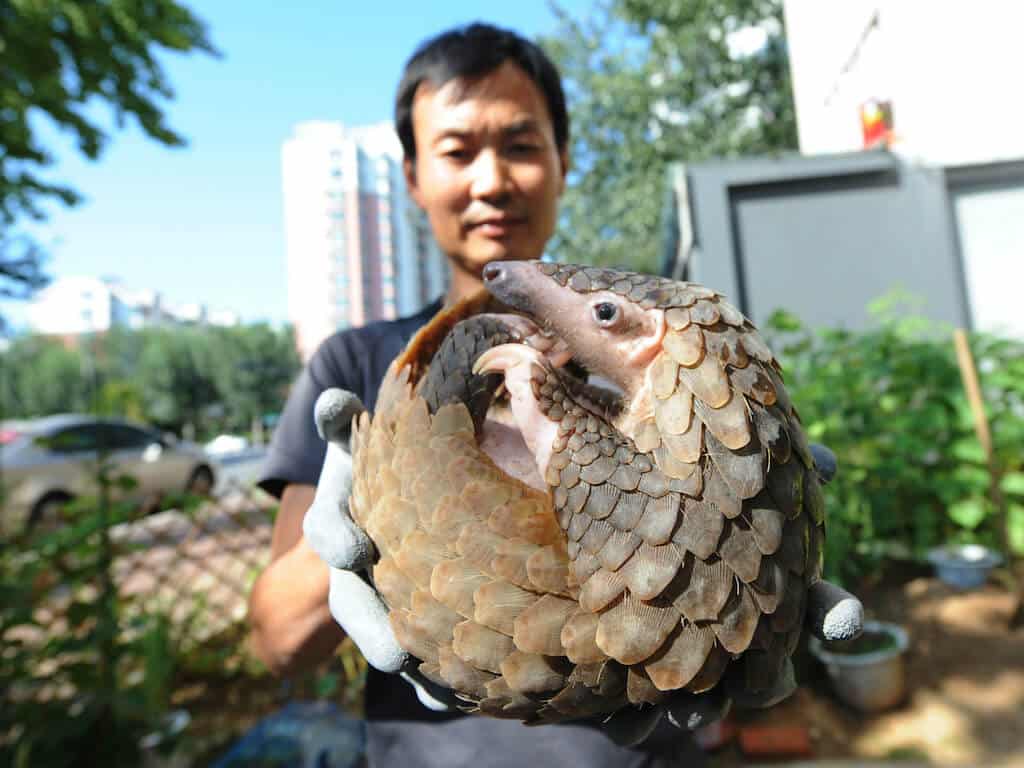
vet meds pangolin china coronavirus alamy
China bans wildlife trade

Kate Nustedt, our global wildlife director, said: “We commend China’s decision to impose a nationwide ban on wildlife trade in response to the deadly coronavirus outbreak. This ban will prevent the terrible suffering endured by millions upon millions of wild animals across the country.  

Crucially, it will also put a stop to the horrific conditions that serve as such a lethal hotbed of disease. We hope that this courageous step is made permanent and extended to all wildlife imports and exports, to help prevent any future crises of this nature.

Wild animals belong in the wild. This wildlife trade ban by China will help keep them there.”

Protecting wild animals and people

The deadly coronavirus is believed to be the result of the transmission of the virus from snakes to humans. Captive reptiles are well-documented as carriers of pathogens, such as bacteria, parasites, and viruses, that can be transferred to humans.

Snakes that are sold at markets, like those reported in Wuhan province, have suffered horrendous conditions before they get there. They’ve either been captured in the wild, stuffed together in bags or small cages for transportation to the market, or intensively bred in ranches and farms where they are kept in overcrowded containers.

Either way, these conditions are incubators for the transmission of disease and the evolution of more virulent pathogens.

Posted on Leave a comment

Starbucks, Subway and McDonald’s have made no animal welfare progress in eight years

piglet_on_a_factory_farm online vet pharmacy

Starbucks, Subway and McDonald’s have made no animal welfare progress in eight years

Our Animal Protection Index (API), which ranks countries on their laws protecting animals, exposes the drastic need for global change

Holding countries to account

For the API, we assessed the animal welfare policies and legislation of 50 countries and ranked them from A (the highest score) to G.  

Shockingly, no country obtained an ‘A’ grade.

Some countries such as Morocco, Iran, Algeria, and Belarus were found to still be missing the basic legal framework needed to protect animals, and others do not formally recognize animal sentience in their existing legislation.

Sweden, United Kingdom, and Austria are rated with the highest scores, which is encouraging. More countries need to follow their lead. 

We are calling on all governments to immediately improve their animal welfare standards, not only for the benefit of animals but also to reduce the risk to public health.

Coronavirus and other concerns 

Severe animal welfare concerns from intensive farming, wildlife markets, and associated trade are all proven threats of disease outbreak, such as the most recent global epidemic, coronavirus. 

The API found that China, USA, Vietnam, Egypt, Azerbaijan, and Belarus need to do more to protect animals and people from the threat of zoonotic diseases.

This global threat will continue for as long as there is no effective legislation and preventative measures to control the emerging threat to animal and people’s health. 

Beyond public health, these systems which put us all at risk are causing immense suffering and cruelty to billions of animals every year. 

We need to build a better world for animals and people, but this won’t be possible until we stop treating animals as commodities.

Does the life of an animal mean nothing at all?

Last year we launched a film to highlight the many ways that we are failing to protect animals, asking the question: does the life of an animal mean nothing at all?

This is a question we need to ask governments lacking even the most basic animal welfare policies.

Materials by: WAP

Posted on Leave a comment

As COVID-19 keeps us apart, we will let the animals in

COVID-19

As COVID-19 keeps us apart, we will let the animals in

First, the eyes. I pressed mine to the opening of a little wooden house. The park ranger behind me cleared her throat.

“Yeah, watch out because they jum–”

The shiniest eyes bugged out, followed by a little furry body.

An Australian northern quoll is fast, spotty and critically endangered. Ginger Meggs landed deftly on my neck, scuttled across my shoulders and flattened his body against my wrist. Normal quoll behaviour?

“He’s feeling your pulse,” the ranger told me. She asked if maybe I was a calm sort of a person because he stayed there, belly warm against wrist, reading my blood. No one has ever described me as calm. In the human world, I’m excitable. But maybe in quoll time my big human heart is languid, lazy.

I was living alone in a caravan in the Northern Territory Wildlife Park at the time, researching my novel about communication between humans and animals, which begins, a little too presciently, with a new flu pandemic sweeping the country. Ginger Meggs was living alone in an enclosure. We paused there together, sharing my heartbeat.

But now, in the age of coronavirus, we all live alone. Or with a couple of people, max: our bubble buddies that we are happy to share germs with and no one else. While we keep apart to protect each other, there are still many moments of connection online. We can watch author Miranda July dance in her loungeroom. We can learn how to do the #BlackfellaHug on NITV, celebrate Jacinda Ardern or deplore Scott Morrison together on Facebook. But on the last day of on-site work, I can’t hug my crying colleagues. I recently moved from Melbourne to regional New Zealand and can’t get to my family across the deep Tasman Sea. And I can’t cope with the thousands who have already died from coronavirus.

In my riverside town, people tended to holler “hello” of a morning. This week, they’ve been inadvertently reduced to a whisper, as though even a greeting might imply inappropriate social contact. Our bodies move awkwardly in public – we don’t know how to communicate togetherness and solidarity while being so physically separate.

But then a woman appears on the river bend, easy limbed, with a dog keeping pace. She doesn’t break her stride when she sees me, she smiles; she’s not alone because she’s with a dog. And that dog wags, showing us how to be in the world.

“You know who this is all working out very nicely for?” author Ella Holcomb posted online, “PETS! VERY nicely indeed.”

Another Twitter user had to take their dog, Rolo, to the vet because he sprained his tail from excessive wagging at his suddenly homebound humans. (Rolo now has an Instagram account.)

Meanwhile my cousin jokes that, “While the rest of NZ was panic buying toilet paper and tins of tomatoes, we panic bought a dog!”

Dr Liz Walker, CEO of RSPCA Victoria, tells me over a stuttering Zoom connection that, “People with pets have higher self-esteem, are less likely to be depressed, and cope with grief and stress more effectively than non-pet owners. Especially now amid Covid-19, animals give us a sense of connectedness. No matter how bad it gets, animals make you feel safe, they make you feel happy and they’re always glad to see you.”

As countries close down and our home lives get smaller, I too “joke” with my partner that now is the exact right time to rescue a rabbit. I imagine long days of watching Cottontail chewing the furniture and pooing on the rug. And indeed, pets are generally good. For us. But – and if I didn’t think so much about this I’d have a Cottontail with me right now – what about the animals? How do they fare in this new world paradigm?

Dr Siobhan O’Sullivan, an animal welfare expert from UNSW, says that in times of crises, “we’re looking out for the humans, but animals are considered dispensable for some. There’s no doubt that you’re still vulnerable when you’re a nonhuman animal, even as a companion animal”. Some people, for instance, have asked vets to put pets to death because they’re concerned that they might carry the virus. New research that cat-to-cat transmission is possible not only increases fear, but makes a pet’s position as beloved family member increasingly tenuous. When it comes down to it, will we continue to protect our companions?

Walker agrees that while it’s natural to seek support from your companion animal, “it’s also important to prioritise downtime for everyone, including animals, so that when this ends – and it will – animals can cope with the changes in the household. Cats sleep for 18 hours and if you’re home when you were once out, you’re disturbing their sleep patterns. I would get cranky too!”

If we’re to eradicate coronavirus globally, isolation will drag into months; for some of us, the birds that we see hanging around outside the window could become our only non-screen living contact for the day. Maybe having more time to watch animals and observe that they have their own lives and needs, will give us a new appreciation for them. “That feeling of connectedness that you get from animals, and watching them do their thing … it’s extremely comforting. A lot of people get a whole lot of joy out of watching animals experience happiness and freedom,” Walker says. Can we stop, look around ourselves, realise that we aren’t the centre of the universe, and try to be a different way in the world?

Our Zoom chat is broken by a terrifying screech as the New Zealand government sends an emergency alert to every mobile phone in the country, marking the beginning of phase four: total isolation: “Follow the rules and STAY HOME. Act as if you have Covid-19. This will save lives”. For the next four weeks, I’m allowed to see people on the screen and my partner in person – no one else.

But I know that when I go for my sanctioned solitary river walk, I will still see life. Everywhere. Like a scene from the novel I just published, where a strange new flu enables us to understand other animals, my senses will be heightened to them. In the skies, crawling between rocks, hopping in the long grass and waddling at the end of a lead. From their perspective, my presence might mean very little – they have their own thing going on – but my heartbeat will slow, calm for a moment. It will mean the world.

• The Animals in that Country by Laura Jean McKay is out now through Scribein paperback or as eBook

The Guardian
Posted on Leave a comment

Risk of people spreading COVID-19 to pets and other animals

covid and pets online pet pharmacy homelabvet

Key Points of COVID-19 to pets

  • Coronaviruses are a large family of viruses. Some cause illness in people, and others cause illness in certain types of animals.
  • Coronaviruses that infect animals can sometimes be spread to people, but this is rare.
  • We do not know the exact source of the current outbreak of coronavirus disease 2019 (COVID-19). The first infections were linked to a live animal market, but the virus is now spreading from person to person.
  • CDC is aware of a very small number of pets outside the United States reported an external icon to be infected with the virus that causes COVID-19 after close contact with people with COVID-19.
  • We do not have evidence that companion animals, including pets, can spread COVID-19.
  • We do not have evidence to suggest that imported animals or animal products imported pose a risk for spreading the 2019 novel coronavirus in the United States.
  • Further studies are needed to understand if and how different animals could be affected by COVID-19.

Coronaviruses are a large family of viruses. Some coronaviruses cause cold-like illnesses in people, while others cause illness in certain types of animals, such as cattle, camels, and bats. Some coronaviruses, such as canine and feline coronaviruses, infect only animals and do not infect humans.

Risk of animals spreading COVID-19 to people

Some coronaviruses that infect animals can sometimes be spread to humans and then spread between people, but this is rare. Severe acute respiratory syndrome (SARS) and Middle East respiratory syndrome (MERS) are examples of diseases caused by coronaviruses that originated in animals and spread to people. This is what is suspected to have happened with the virus that caused the current outbreak of COVID-19. However, we do not know the exact source of this virus. Public health officials and partners are working hard to identify the source of COVID-19. The first infections were linked to a live animal market, but the virus is now spreading from person to person. The coronavirus most similar to the virus causing COVID-19 is the one that causes SARS.

The virus that causes COVID-19 spreads mostly from person to person through respiratory droplets from coughing and sneezing. At this time, there is no evidence that companion animals, including pets, can spread COVID-19 to people or that they might be a source of infection in the United States.

Risk from imported animals and animal products

CDC does not have any evidence to suggest that imported animals or animal products pose a risk for spreading COVID-19 in the United States. This is a rapidly evolving situation and information will be updated as it becomes available.

Regulation of imported animals and animal products

The U.S. Centers for Disease Control and Prevention (CDC), the U. S. Department of Agriculture (USDA), and the U.S. Fish and Wildlife Service (FWS) play distinct but complementary roles in regulating the importation of live animals and animal products into the United States. CDC regulates animals and animal products that pose a threat to human health; USDA regulates external icon animals and animal products that pose a threat to agriculture; and FWS regulates external icon importation of endangered species and wildlife that can harm the health and welfare of humans, the interests of agriculture, horticulture, or forestry, and the welfare and survival of wildlife resources.

Stay healthy around animals

In the United States, there is no evidence to suggest that any animals, including pets, livestock, or wildlife, might be a source of COVID-19 infection at this time. However, because all animals can carry germs that can make people sick, it’s always a good idea to practice healthy habits around pets and other animals.

  • Wash your hands after handling animals, their food, waste, or supplies.
  • Practice good pet hygiene and clean up after pets properly.
  • Talk to your veterinarian if you have questions about your pet’s health.

Risk of people spreading COVID-19 to pets

CDC has not received any reports of pets or other animals becoming sick with COVID-19 in the United States.

CDC is aware of a very small number of pets outside the United States reported an external icon to be infected with the virus that causes COVID-19 after close contact with people with COVID-19. To date, there is no evidence that pets can spread the virus to other animals or people. CDC is working with human and animal health partners to monitor this situation and will continue to provide updates as information becomes available. Further studies are needed to understand if and how different animals could be affected by COVID-19.

Protect pets if you are sick

If you are sick with COVID-19 (either suspected or confirmed), you should restrict contact with pets and other animals, just like you would around other people. Although there have been no reports of pets or other animals becoming sick with COVID-19, it is still recommended that people sick with COVID-19 limit contact with animals until more information is known about the virus. This can help ensure both you and your animals stay healthy.

  • When possible, have another member of your household care for your animals while you are sick.
  • Avoid contact with your pet including, petting, snuggling, being kissed or licked, and sharing food.
  • If you must care for your pet or be around animals while you are sick, wash your hands before and after you interact with them.