How to Feed Pigs
Knowing what, when, and how to feed your pigs will help them grow big and healthy. A well-balanced diet is also essential for producing high-quality meat if they’re destined for the market. Start young piglets off with a fortified dry food that meets their complex nutritional needs. As they get older, you can begin giving them a mixture of grains, fruits and vegetables, distilling mash, and even leftovers from your own table.
1.Start piglets off with a well-balanced pellet feed. Pellet feeds, such as creep feed, come in small, digestible pieces that are the perfect size for young pigs to munch on. These feeds are specially formulated to meet growing pigs’ unique nutritional needs, and typically contain a well-balanced blend of protein, carbohydrates, and essential vitamins and minerals.
- You can find creep feed and other dietary supplements for newborn pigs at farm supply stores.
- Each of your piglets should get about 20g of creep feed per day over one or two feedings.
2. Feed mature pigs a variety of wholesome grains. As your pigs get older and larger, you can wean them off pellet feed and switch them to natural grains, which will make up the bulk of their diet. Wheat, barley, rice, and corn (both on and off the cob) are among a few of the grains that backyard farmers commonly feed to their pigs.
- Most whole grains are high in carbohydrates, which can cause your pigs to put on fat rather than lean, healthy muscle. For this reason, it’s a good idea to supplement regular grains with protein-rich offerings like alfalfa and soybeans.[
- For ease of digestion, the grains you supply to your pigs should be cracked, rolled, soaked, or otherwise processed.
3.Give your pigs a selection of fresh fruits and vegetables. Like humans, pigs need to eat their fruits and veggies in order to grow. For the most part, it’s safe for them to have just about any kind of produce you yourself would eat. However, they’re especially partial to leafy vegetables like lettuce, cabbage, spinach, and sweet potato vine, as well as apples, bananas, pears, melons, and other fruits.
- You can also feed your pigs root crops. Pigs can’t get enough of the hearty crunch of veggies like potatoes, carrots, sugar beets, and parsnips.
- Sweet, colorful produce not only tends to be the tastiest to pigs, it also contains the highest concentrations of beneficial vitamins and minerals.
- Fruits and veggies are more nutrient-rich than other types of foods, so it’s okay for your pigs to have as much as they can hold on top of their regular grain-based diet.

4.Keep your pigs full with distilling residue. If you brew your own beer or liquor, allow your pigs to feast on the spent mash rather than simply throwing it out. Alcohol is made by fermenting the same types of grains that pigs love to eat. Since these materials have already been softened by the distilling process, they’ll be easy for your pigs to chew and digest.
- In some places, you can purchase spent grains from distilleries for a low price to use for feed.
- Avoid giving mash to pregnant sows or young piglets. Even though it has a low alcohol content, it still isn’t good for them.
5. Supplement your pig’s diet with table scraps. Gather up any leftover fruits, vegetables, and grains from your kitchen and combine them in a large container. You can then divide the mixture up between your pigs in place of one of their regular feedings, or serve it up as an extra treat at the end of the day. Giving your pigs your leftovers is a good way to reduce household food waste while cutting down on feed costs.
- Pigs will eat just about anything, but that doesn’t mean that they should. Never feed your pigs processed meat or cheese products, or overly sugary baked goods.
- Keep in mind that what you feed your pigs affects their health and body composition. A diet full of fattening foods will therefore produce pigs with more lard and less lean meat.
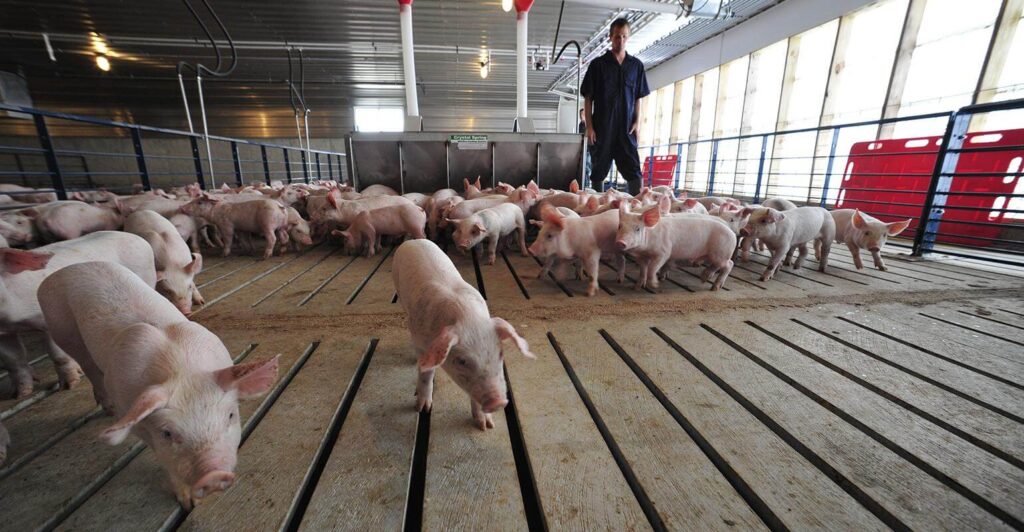
Determine how much food your pigs need to grow. A good rule of thumb is to feed your pigs roughly 7 pounds of food for every 30 pounds of body weight. Piglets, for instance, may only need about 1-2.5 lbs (0.5-1 kg) of creep feed per day, while a full-sized hog might eat anywhere from 15-50 lbs (6.8-23 kg)!
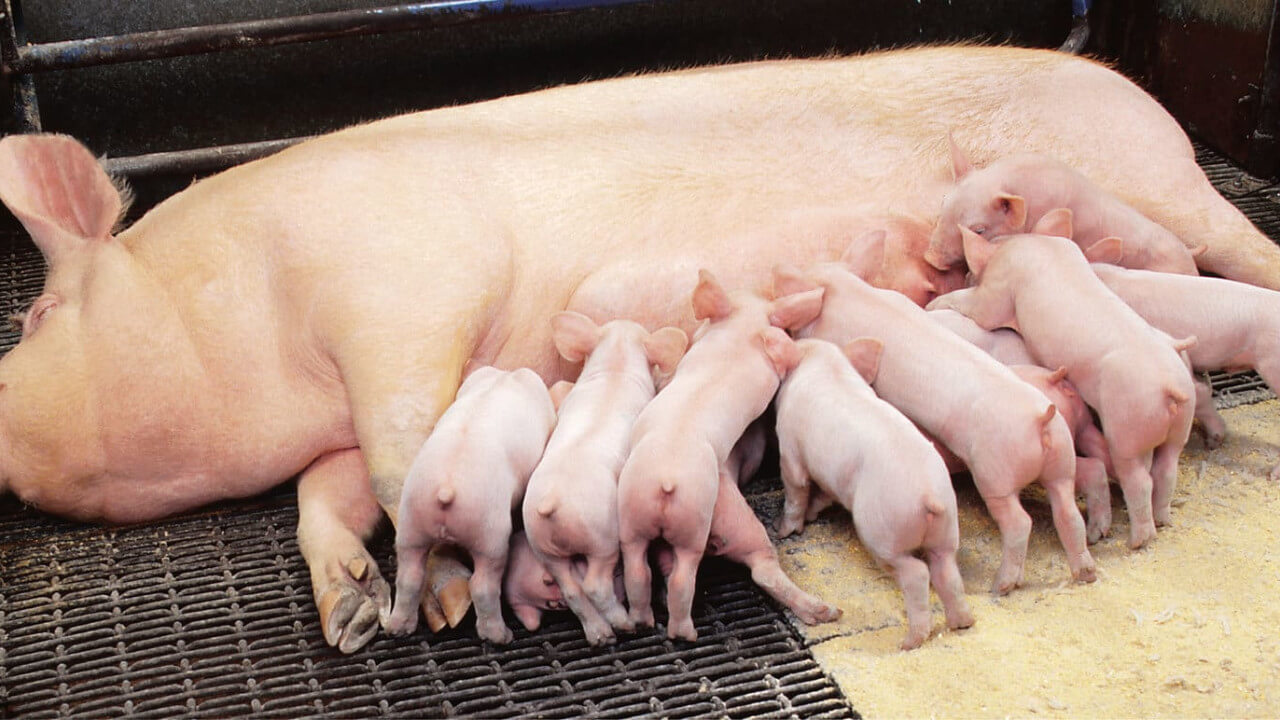
- Pregnant and lactating sows typically need an extra 0.5kg of feed per day to be able to nourish their unborn litter or produce milk for their young.
- It’s generally better to give your pigs too much food than not enough. As mentioned, they’ll stop eating when they’re no longer hungry.
- Do some research on the specific nutritional needs of the pigs you’re raising to get a better idea of exactly how much of what to feed them.
Invest in an automatic feeder for hassle-free feeding. Automatic feeders refill themselves continually as their contents are depleted. This can make feeding less of a chore for busy or forgetful farmers. And since pigs instinctively know when to stop eating, you won’t have to worry about overfeeding them accidentally.
- Automatic feeders can be used to dispense grains, pellets, meal, or any type of dry feed.
- Look for feeders with separate troughs to make sure your pigs are getting enough to eat and aren’t being forced to fight over food.
Use a trough to serve table scraps and distilling grains. Whenever you feed your pigs something that comes out of the still or stove, portion it out into individual servings in a large trough. That way, you can make sure they’re only eating a predetermined amount. Using a separate trough will also eliminate the need to dirty up or risk contaminating your main feeder.
- Only serve as much leftover table food as your pigs can eat at one time. Anything left behind will quickly spoil and become a health risk.
Feed your pigs once or twice a day. It’s important to make sure your pig’s feeder or trough stays well-stocked when they’re young and their growth is most rapid. Once they reach their full size, a single large, balanced feeding a day should be enough to keep them healthy and satisfied.
- If possible, provide your pigs with a fenced-in field or pasture where they can graze between feedings.
- If it’s not possible for your pigs to graze, stick to feeding them once in the morning and once in the evening and reduce the amount given with each feeding.
Secure your feeder to prevent it from being knocked over. Anchor your feeder or trough firmly to the floor or the lower part of the fence so that it doesn’t budge. Hungry pigs can easily overturn a container that’s not strapped down, resulting in wasted feed.
- Some farmers even resort to using sturdy makeshift feeders like converted bathtubs and sinks that are too heavy to topple!
- Feeding pigs is expensive enough on its own, so it’s important to ensure that as little food as possible goes to waste.
Stop feeding your pigs a few hours before transporting them. Put your regularly scheduled feedings on hold on days when you’ll be busing your pigs to another location. If you load them up while their stomachs are full, there’s a good chance they’ll vomit or defecate and you’ll be left with a big mess on your hands.
- Pigs are known to roll in their filth, which means you’ll be stuck hosing them down along with your truck if they happen to get sick.
- In some cases, feeding pigs prior to transporting them can cause excess gas to build up inside their chest cavities, leading to complications like heart failure.
Discontinue feeding 12-18 hours before taking your pigs to the butcher. This should give anything they’ve eaten recently plenty of time to make its way out. Cleaning a pig is much harder (and less sanitary) work when there’s partially digested food remaining inside its digestive tract.
- If you use an automatic feeder, pay close attention to your pigs’ feeding habits so you’ll have an idea of when they last ate.
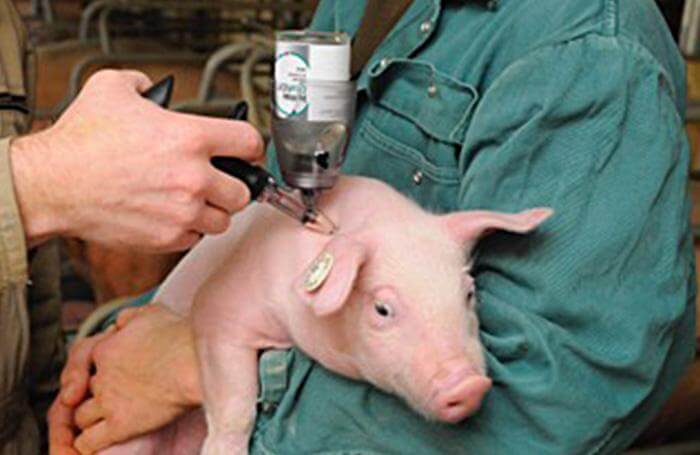
If you want your pigs always being in healthy mood treat them well, give them antibiotics and other treatments…