Posted on Leave a comment

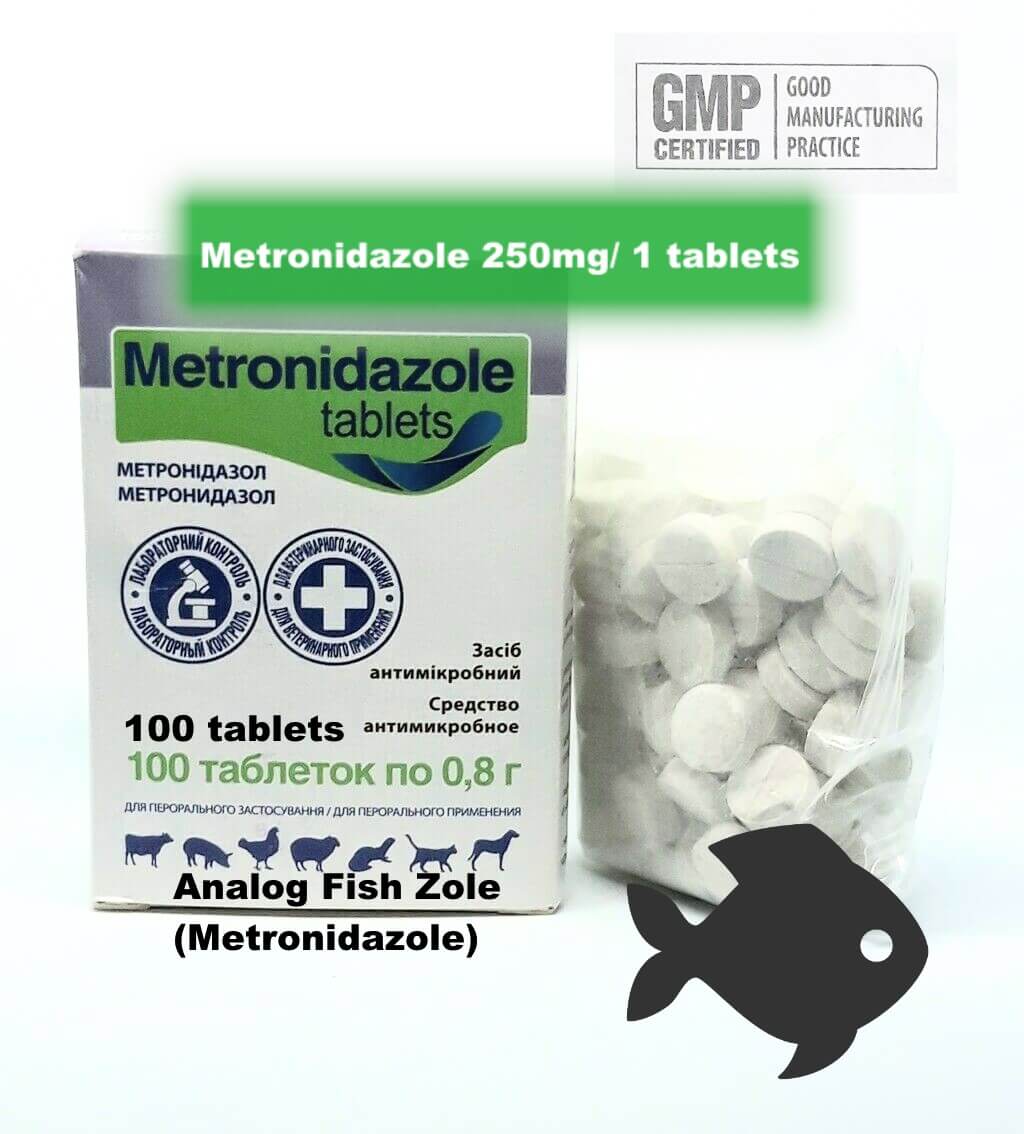
FISH parasites killer | Fish Zole | Metronidazole 250 mg

metronidazole 500mg for dogs for fish flagyl for fish for sale price

Metronidazole for fish – fish parasites killer

Metronidazole is an antibiotic that exerts a bactericidal action on gram-positive and some gram-negative bacteria in fish. Useful to help control some common bacterial diseases in fish such as Aeromonas, Pseudomonas, and Mycobacterial (Gill diseases and Chondrococcus). Effective against anaerobic bacteria, a bacteria that only grows where there is no oxygen. Also used to control parasitic diseases such as Cryptocaryon irritans, Ichthyophthirius multifiliis, and Hexamita.


Features:

  • For fish only
  • Exerts a bactericidal action on gram-positive and some gram-negative bacteria in fish
  • Useful to help control some common bacterial diseases in fish
  • Easy to use tablets

Item Specifications:

Strength:

250mg

Ingredients:
Metronidazole Directions of Use:
Add one tablet (250mg) into aquarium for each 10 gallons of water to be treated. Repeat in 24 hours. It is suggested that a partial water change be made between treatments. While duration of treatment depends on type and severity of infection, it is recommended that extended medication baths continue for a minimum of 5 days and not for more than 10 days. Discontinue treatment if no improvement is noted within 5 days. To remove harmless yellow color, change 20% of water and use charcoal filter until clear.

Posted on Leave a comment

Parasites in Fish ? Bendazole (Fenbendazole) ? Panacur

Parasites in Fish

Most of the drugs listed below are anthelmintic (antihelminthic) drugs. These are chemical preparations that effectively destroy various parasitic helminths (“worms”). With regard to fish parasites, this group includes trematodes, nematodes and cestodes (tapeworms). These medicines are given to the fish by mouth with food, although some are also effective in the form of baths. Anthelmintics used for bath treatments have been shown to be effective against non-helminth ectoparasites such as Argulus or Argulus carp lice. If the dosage for a specific drug is not listed, you should consult your veterinarian.

Many of the anthelmintic drugs used to treat fish are also used in humans, so in some countries they can only be obtained through a veterinarian. Other such agents, for example trichlorfon, are organophosphorus compounds. These are extremely toxic chemicals, and their sale is highly regulated.

It is important to remember that the life cycle of ectoparasites is quite complex and includes many stages. Some stages are resistant to chemicals, others are more vulnerable. Since resistant stages can remain viable for a long time, re-treatment is often necessary to completely eradicate the parasites.

In addition to the chemicals listed below, there are a number of specialty aquarium medicines on the market for some of the larger ectoparasites. They should be used in accordance with the manufacturer’s instructions. It is very important to follow through with the recommended course of treatment. Allow enough time for the eggs or cysts that are resistant to chemicals to hatch into larvae.

Bendazole Fenbendazole (Panacur)


Fenbendazole is used primarily to treat worms in horses. In addition, it is useful in the fight against fish nematodes such as Camallanus. It can be purchased as an equine anthelmintic. In the aquarium hobby, this medicine is used as a powder or granule, not a dough. A three-week course of treatment is carried out by the method of long baths with a dose of 2 – 3 mg/liter, and on the 7th and 14th days, the procedure is repeated.

Fenbendazole (PANACUR) aquarium dosage

Also be aware that fenbendazole seems to soak into the porous live rock and be absorbed indefinitely. I know one hobbyist who transferred a small piece of live rock that had been treated with fenbendazole (Panacur) months earlier into a reef tank, where it killed the resident starfish and Astrea snails. So enough of the medication may be retained within treated live rock to impact sensitive animals months after the fenbendazole was administered. Don’t treat live rock intended for reef systems with fenbendazole (Panacur)!

At the lower dosage recommended for nursery tanks (1/16 tsp. Per 10 gallons), fenbendazole normally does not harm cleaner shrimp and decorative shrimp. With the exception of Astrids (Astrea), Coit and Worden have found it does not usually affect the types of snails typically used as cleanup crews (e.g., Nassarius, Ceriths, and Nerites). It will kill starfish but copepods, hermit crabs, and shrimp are normally not affected.

Macroalgae such as the feathery or long-bladed varieties of Caulerpa or Hawaiian Ogo (Gracilaria) are not harmed by exposure to fenbendazole at even triple the normal dose. In fact, if you will be using Caulerpa in your nursery tanks to provide hitching posts for the fry and serve as a form of natural filtration, it’s a very wise precaution indeed to treat them with a regimen of fenbendazole beforehand.

fenbendazole panacur suspension safe guard dog pharmacyFenbendazole 10% fish bendazole Liquid SUSPENSION PANACUR

So fenbendazole (FBZ) or Panacur is primarily useful for ridding bare-bottomed nursery tanks and dwarf seahorses setups of hydroids and Aiptasia anemones, ridding Caulerpa and other macroalge of hydroids or Aiptasia before its goes into the aquarium, and cleansing live rock of bristle worms, hydroids, and Aiptasia rock anemones before it is introduced to the aquarium.  If you are serious about raising seahorse fry, fenbendazole is must-have med for keeping your nurseries hydroid free.

It can also be used to eradicate bristle worms, hydroids, an Aiptasia from an established aquarium if it does not house sensitive animals such as live corals and gorgonians, starfish, Astrea snails, or tubeworms and other desirable worms that may be harmed by FBZ, providing you monitor the ammonia levels closely and are prepared to deal with the ammonia spike that may result from the sudden death of the worm population.

Caution: For aquarium and ornamental fish only. not for human use. keep out of the reach of children. keep the container tightly closed and in a cool dry place. not to be given to fish intended for food use.
 
Posted on Leave a comment

Fish farming

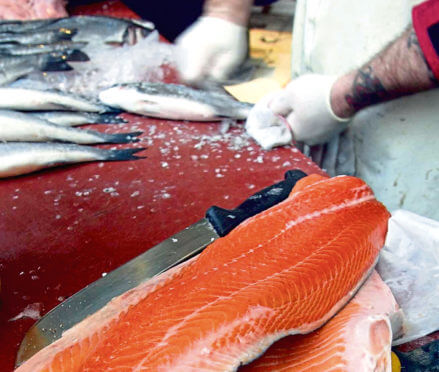
Salmon fillets on sale at a local fish market, London, January 09 2004, fishmongers have hit out following the publication of a scientific report which raised concern about the level of toxins in Scottish farmed salmon. Claims that Scottish salmon was so full of chemicals it should be eaten only three times a year have been labelled as ‘plain ridiculous’. See PA story SCIENCE Salmon. PA Photo: Matthew Writtle.

Fish farming

Fish farming is a form of aquaculture in which fish are raised in enclosures to be sold as food. It is the fastest growing area of animal food production. Today, about half the fish consumed globally are raised in these artificial environments. Commonly farmed species include salmon, tuna, cod, trout and halibut. These “aquafarms” can take the form of mesh cages submerged in natural bodies of water, or concrete enclosures on land.

According to the United Nations Food and Agriculture Organization, roughly 32% of world fish stocks are overexploited, depleted or recovering and need of being urgently rebuilt. Fish farming is hailed by some as a solution to the overfishing problem. However, these farms are far from benign and can severely damage ecosystems by introducing diseases, pollutants and invasive species. The damage caused by fish farms varies, depending on the type of fish, how it is raised and fed, the size of the production, and where the farm is located.

One significant issue is that—rather than easing the impact on wild populations—the farms often depend on wild fish species lower on the food chain, like anchovies, in order to feed the larger, carnivorous farmed species. It can take up to five pounds of smaller fish to produce one pound of a fish like salmon or sea bass. Overfishing of these smaller “forage” fish has repercussions throughout the ocean ecosystem.

As is the case with industrial animal farms on land, the fish are often housed in unnaturally crowded and cramped conditions with little room to move. Fish may suffer from lesions, fin damage and other debilitating injuries. The overcrowded and stressful conditions promote disease and parasite outbreaks—such as sea lice—that farmers treat with pesticides and antibiotics. The use of antibiotics can create drug-resistant strains of diseases that can harm wildlife populations and even humans that eat the farmed fish.

Escaped fish introduce yet another threat into the environment. Each year, hundreds of thousands of fish escape farms and threaten the genetic diversity and survival of native species. High stocking densities result in a significant amount of pollution from fish excrement and uneaten food, which in turn lead to poor water quality high in ammonia and low in oxygen. Outdoor fish farms can also attract predatory marine animals, such as sea birds and sea lions, who are sometimes poisoned or shot by aquafarmers for eating the fish.

Despite evidence to the contrary, it is still a common misconception that fish do not feel pain. Slaughter methods in the aquaculture industry are appalling. Little to no attention is given to the suffering of the animals and most are fully conscious during slaughter, which can take many minutes. Some species, such as salmon in the United States, are also starved for many days to empty the gut before they are sent to slaughter. Fish are most often not stunned and are killed by bleeding out, being hit on the head repeatedly, suffocating or freezing. In the US, as with many other countries, there are no regulations to ensure the humane treatment of fish.

Years of unregulated and underreported catches of bluefin tuna in the Mediterranean Sea and Atlantic Ocean are threatening the existence of this severely overfished species. To meet the high and growing demand for sushi in Japan and elsewhere, ranching of bluefin tuna is becoming a popular industry and is exacerbating the problem. Fisherman use longlines and purse seines to catch the tuna before they reach breeding age and have time to reproduce. They are then kept in seafarms for 3–6 months and fattened with thousands of pounds of smaller wild-caught fish before being killed and exported.