Posted on Leave a comment

Arthritis in dogs. Signs, diagnosing, and treatment

arthritis dog

Arthritis in dogs

The first thing to think about if a dog limps on its front paw is an injury or joint disease. Indeed, these are the most common causes, but partial lameness can also be a symptom of certain diseases. And it happens that a pursed front paw is not a sign of health problems at all. The dog may try to attract attention and get a pet or treat in this way.

How to determine a limb injury?

Often dogs get injured on a walk, cutting themselves on the glass. So suffer mostly their front paws, the first to touch the subject. They also take the main load during landing from jumps, so bone or joint damage is often received. Determine that the dog limps on the front paw due to injury, you can through a careful inspection. Burns and wounds always leave traces, you can find a red burned area or a place of bleeding. You also need to examine the pads of the paws for bruising or broken at the root of the claw Dog Arthritis Medications

The examination should be carried out very carefully, since any contact with a fracture can cause the dog severe pain. You do not need to try to force the joint to “help” the animal. The pain threshold in dogs is very high and if it does not want to be touched in any place, it means that the unpleasant sensations are very strong. With a fracture, it is not necessary that the injury is received in the lower part of the paw. It can be much higher. An accurate diagnosis can be made by a veterinarian after an x-ray and examination.

arthritis in dogs

Can the problem be related to the disease?

When a dog limps on its front legs in severe pain, it moves in a special way: bending down and throwing its head up, as if diving. This suggests that it is difficult for her to move in General. She begins to sit differently, hardly gets up from the lying position (especially problems with movements after sleep are characteristic of arthrosis). At the same time, no external damage is detected. What could it be arthritis medicine for dogs. One of the following ailments:

  • Intermittent lameness;
  • Tear of a muscle or ligament;
  • Osteosarcoma;
  • Diseases of the spine;
  • Arthritis

With intermittent lameness, the dog falls on one or the other paw. In this case, the animal does not respond to manual examination, as it does not experience pain. With other diagnoses, the dog may feel unpleasant or painful during palpation and procedures.

If not an adult dog, but a puppy limps on its front paw, then we can also assume the probability of any hereditary diagnosis:

  • Patellau Disease.
  • Perthes Disease.

Is self-diagnosis possible? In most cases, it does not give results. If there is a noticeable swelling or growths, you will still have to contact a veterinarian. The same as if there is no pain, but the dog still limps on its front legs

dog arthritis treatment

Signs of arthritis in dogs

  • Hesitates before going up or down the stairs.
  • Lags behind or gets tired easily while walking.
  • Prefers to lie down rather than sit or stand.
  • Stiffness, especially after a rest.
  • Whines, growls, or bites when touching a sore spot.

What to do if your dog has arthritis: improve mobility and joint health

  • Contact your veterinarian to select the correct treatment. Act now to keep your dog’s joints healthy.
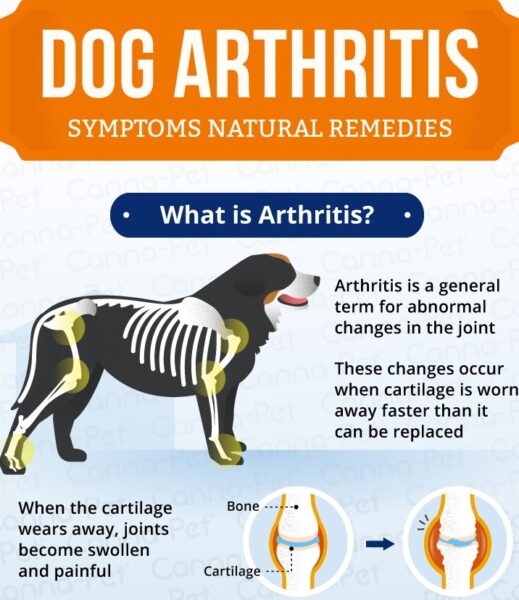
  • If she has arthritis, the cartilage in her joints is erased, causing severe pain.
  • If you address the problem now, your dog may not need more aggressive treatment methods, such as surgery, in the future.

Treatment: the importance of nutrition

The health of the dog and its condition in General largely depend on nutrition. A balanced diet is an essential part of your pet’s active, healthy lifestyle. To find out the exact diagnosis and treatment options, always consult your veterinarian and ask them to recommend the best food to treat arthritis and maintain the health and mobility of your dog’s joints. Some medications can make your pet’s life easier, such as Rimadyl P Zoetis. It is prescribed for dogs to relieve inflammation and pain in acute and chronic diseases of the musculoskeletal system (osteoarthritis), for analgesia, and as an anti-inflammatory agent to reduce postoperative pain and swelling, and many dog breeders use CIMALGEX or PREVICOX in their practice, these drugs lead to an improvement that is noticeable for dog owners.

Treatment

Depending on the disease and the General condition of the animal, the veterinarian prescribes various medications and physical therapy. Folk remedies, unfortunately, are not very effective for injuries and pathologies. It should be noted that the same fracture of the front paw can heal in a dog itself, but it is not a fact that this will happen correctly. The animal will experience a lifetime of discomfort due to long-standing injuries.

It is interesting to know! After realizing that they are being taken care of during their illness, dogs can later fake a limp on their foreleg to get more care and attention.

In certain cases, it is impossible to fully recover. This applies, for example, to arthrosis. Maintenance therapy is used to ensure that the pet’s standard of living is at the proper level and there is no severe pain. Injections of an analgesic and anti-inflammatory medication may be prescribed Dog Arthritis Medications.

There are also recommendations that are given for almost any reason for lameness on the front paws in dogs:

more rest;

a place to sleep that you don’t need to jump on;

food additive;

special diet.

You can’t decide on your own whether to do massages or develop joints. Excessive loads can cause the dog’s condition to deteriorate.

Prevention

  • During the walk, you need to make sure that the dog does not run into places where glass, brick fragments, sharp metal objects may be scattered.
  • If several animals play together, it is better to make sure that the larger ones do not” chase ” the smaller ones – at such moments, Pets often get dislocated and bruised.
  • Adhere to a full and competent diet with the addition of vitamin complexes for the healthy development of bones, muscles and joints.
  • When receiving a puppy, you should ask about the health of your parents. Some inherited diseases may never show up with proper care.
  • To maintain an adequate age, condition and breed of physical activity. So, dogs of small breeds should not jump down from too high a height-landing on their front paws, they can damage them. A number of large breeds and older animals have difficulties using stairs, you need to spare your pet.

Lameness of the front paws in dogs

Lameness of the front paws in dogs can indicate not only a banal injury, but also certain diseases. The animal’s health can be improved with the help of veterinarians, but with a number of diagnoses, full recovery is unfortunately impossible.

In any case, the owner of his dog can always help improve health with vitamin supplements, Canina Petvital Canhydrox GAG a drug that stimulates the growth and formation of bones, joints or a time-tested vitamin Supplement Calcium supplement 8 IN1 Excel.

Posted on Leave a comment

Things You Should Know About Canine and Feline Arthritis

Dog Arthritis

Arthritis

is an infamous problem among dogs. Many vets and dog owners struggle for years, trying to control the lameness, soreness, and reduced activity level associated with canine osteoarthritis. But in recent years veterinarians have made significant strides towards understanding more about osteoarthritis in cats – mainly from the standpoint of simply recognizing that it does happen and that it can cause significant pain and discomfort in our feline friends.

Because cats are so good at hiding their medical problems from us, it’s important that cat owners understand how to recognize potential problems before they become serious. Read on to learn about the symptoms associated with arthritis, and some strategies for successfully dealing with this problem.

Just how big of a problem is this?

One study looked at the x-rays of 100 cats that were randomly selected and between ages 6 months and 20 years. The study found signs of osteoarthritis in 91% of cats in their front and rear leg joints. It found evidence of arthritis in the spine of 55% of these cats. The study also found that the incidence of arthritis increased dramatically as cats aged.

What’s even more interesting is that arthritis is often what we consider an “incidental” finding on the x-rays of cats, meaning that the vets weren’t even taking the x-rays because they suspected a problem in that location. That fact alone should really drive home the point that many, many cats are living with this problem, and very few of them are telling us about it.

Most of the time when people say “arthritis”, they mean “osteoarthritis”. But there are other types, and it’s worth a couple of minutes of our time to understand exactly what we mean when we diagnose the problem.

Osteoarthritis is the most common type of arthritis in both dogs and cats. It occurs when the cartilage that covers the surface of joints wears away, eventually causing bone to contact bone and exposing the exquisitely sensitive pain receptors in these areas. The body tries really hard to fix the problem by creating new cartilage, but unfortunately cartilage doesn’t regenerate very well, and the “new” surface is often bumpy and uneven.

Why does the cartilage gets worn in the first place? Most of the time it’s due to either previous joint damage, such as might occur if a cat is hit by a car or falls from a high place, or due to a birth defect that resulted in improper formation of the joint. We’re really just starting to understand that hip dysplasia, previously thought to be almost exclusively a problem of large dogs, is pretty common in our feline friends as well.

Other types of arthritis include septic arthritis, due to infection in the bloodstream, and immune-mediated arthritis, such as what we see in people who have rheumatoid arthritis. Both of these kinds of arthritis do occur in cats, but much less often than osteoarthritis.

My cat doesn’t have arthritis. I’ve never even seen him limping.

Another fascinating finding about feline arthritis is that cats with the disease typically don’t look anything like dogs with the disease. We’re used to seeing “gimpy” old dogs, that hobble around due to osteoarthritis, so it makes sense that we’d expect the same from cats. However, we’re commonly reminded in vet school that cats aren’t small dogs, and this is just one of the many ways that they’re different. Cats with arthritis typically don’t display signs of lameness.

So how are you supposed to get the hint that your cat might have osteoarthritis? The signs are subtle, but if you pay attention you’ll see changes in your cat that will prompt you to go to the vet, who can do a thorough orthopedic exam and hopefully zero in on areas of pain. Signs of arthritis in cats include sudden aggression towards people or other animals in the house (especially in cats that used to be happy and peaceful), difficulty jumping, loss of interest in surroundings, decreased activity levels, avoiding the litter box (even when previously trained well), vocalizing, and decreased grooming (especially overgrown claws).

The most interesting symptom to me in this list is the development of litter box problems. Failure to use the litter box is the number one reason that cats are relinquished to shelters in the U.S. How truly sad to think that many of these cats might really be painful, and have problems getting into and out of the box, or with squatting. This is one of the reasons that fixing litter box problems always starts with a complete medical workup.

But my cat’s not old!

Unfortunately, arthritis is a disease that can happen to young cats as well as old cats. This is especially true in cats that have previously experienced trauma. Even if the injury was repaired, the potential for in congruencies in a previously normal joint is there. When the joint isn’t properly fitted together, there’s room for laxity, and this laxity creates the cartilage erosion that leads to osteoarthritis.

Can’t I just give my cat some aspirin?

аспирин

No, please don’t! We counsel owners frequently about whether to treat cats at home for pain. While it can be dangerous to use over-the-counter human pain relievers in dogs, it’s absolutely critical that drugs like aspirin, Tylenol, and Advil NOT be given to cats. Aspirin and Advil (and other drugs like them such as Motrin) create severe gastrointestinal problems as well as kidney failure. Tylenol produces a severe and life-threatening problem called Heinz body anemia in cats.

Unfortunately, cats do not do well with most of the pain relievers that we easily use to treat arthritis in dogs. However, with close observation, they can tolerate some drugs well and provide significant relief and improvement in clinical signs. The opioid drug buprenorphine can be administered orally to cats and has excellent analgesic effects. The downside is that it tends to be expensive with prolonged use and can cause constipation. Tramadol is a synthetic opioid that has long been used in humans and may provide more cost-effective relief for cats. And gabapentin helps many cats feel better. VetExpert Arthrovet Capsules and Canina Petvital Arthro Tablets are very effective for cats and dogs. You can buy these drugs from the Homelabvet Online Store.

Currently, Metacam appears to be the only veterinary drug that is both effective and generally safe for long-term use in cats for inflammatory pain associated with arthritis. Because it can also cause gastrointestinal problems as well as kidney failure, cats taking this drug should be closely monitored with repeated lab tests to look for signs that the drug may be causing side effects.

What else can I do to help relieve pain associated with arthritis?

Start by changing your environment. Place food and water where you do not need to jump. Use ramps and stairs to help cats climb and get off furniture. Create trash bins you don’t have to jump into by purchasing plastic storage bins and cutting out a “door” on the side. Groom your cat regularly, especially in areas that are difficult for a cat with arthritis to reach. And make sure your cat has a warm and comfortable sleeping environment.

Supplements such as fish oil and glucosamine can also help. It is important to use products that are reliably manufactured and formulated for cats. There are also several high-quality diets available for cats with osteoarthritis. And since obesity exacerbates the clinical signs of arthritis, losing weight on your cat is likely to significantly improve well-being.