Best ways to improve broiler feed efficiency beyond nutrition
After the feed arrives at the farm, there are five pointers that will help improve feed efficiency in broilers.
Improving feed efficiency is usually associated with improved profitability. Most measures to improve this useful index of productivity are by balancing the ratio between energy and amino acids, and (or) by improving nutrient digestibility by a number of different means. But, the feed efficiency rate can be improved even after the feed is mixed and delivered at the farm. Here are five tips to ensure broilers take the most out of the feed they are given on any farm.
1. Avoid hot spots in feed silos
Molds consume valuable nutrients and produce mycotoxins. Moldy feed is not only unpalatable, but also toxic as well. Quite often, feed is delivered into silos that are never cleaned. In humid and warm climates, mold growth is easy to occur, and even in apparently empty silos, there are hot spots (patches of old moldy feed adhering to the inside surfaces of silos) that can serve as the leaven for the next batch of fresh feed. Adding a mycotoxin binder and a mold inhibitor is not enough. Silos must be periodically inspected and cleaned thoroughly. Usual dosage rates recommended for mycotoxins in feed do not take into account this issue, which can be quite serious under unfavorable conditions.
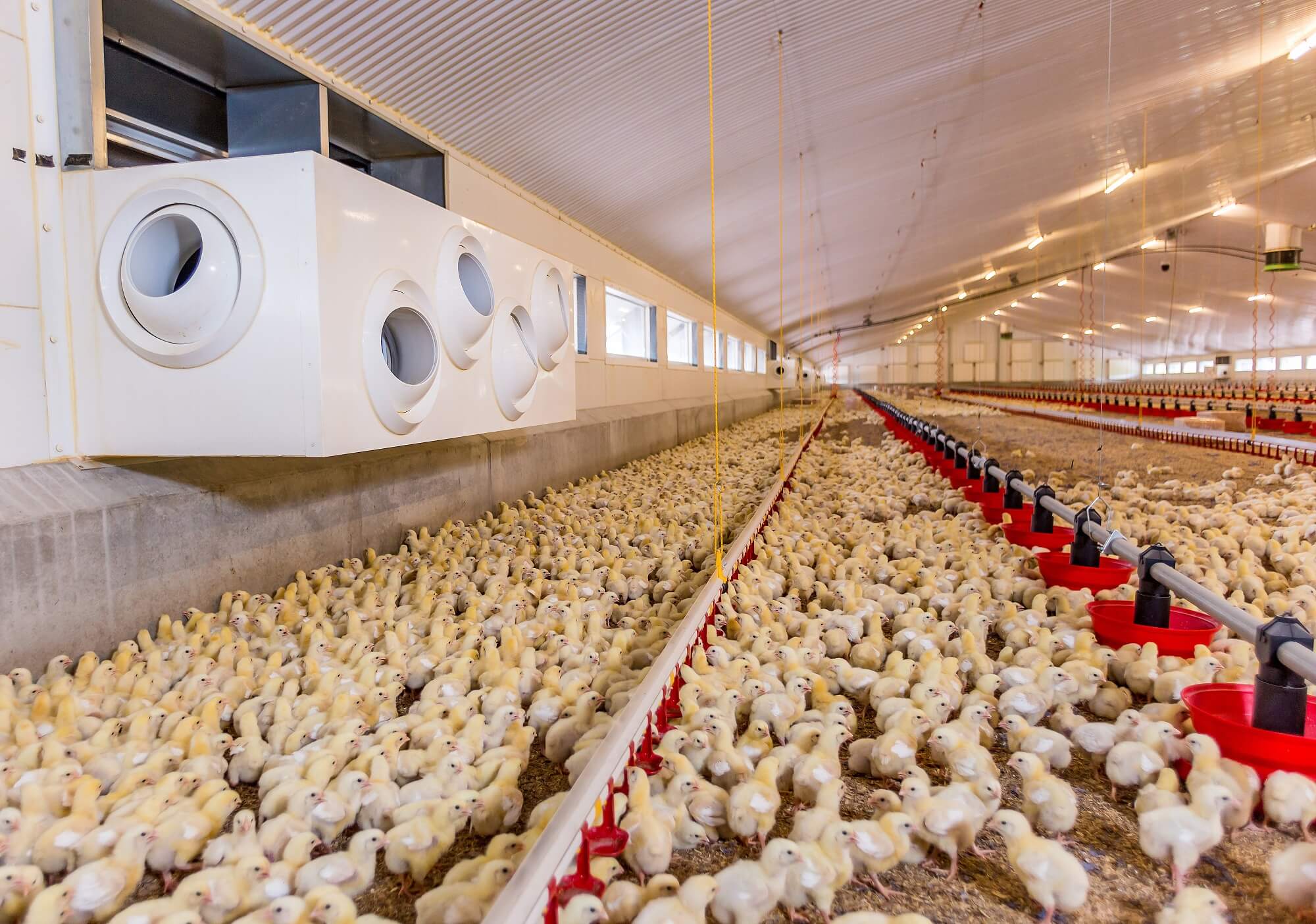
A factor that greatly enhances feed efficiency is the correct placement of drinkers close to the feeders, but not so close as to cause feed spoilage.
2. Use feeders that don’t waste feed
It might appear obvious to buy feeders that minimize feed wastage, but low-cost is always an alluring factor that quite often makes us buy something less efficient in the long-run. Feeders should also be managed (cleaning, placement, distances, number of birds per feeder, etc.) so that feed consumption is neither an opportunity to beat boredom nor a hurried fight to eat. Quite often a factor that greatly enhances feed efficiency is the correct placement of drinkers close to the feeders, but not so close as to cause feed spoilage.
3. Lights on and off
It has been suggested that a constant lighting program (such as 23 hours light and 1 hour darkness) might not be the best in terms of feed digestibility. Under constant lighting, birds tend to overconsume feed, which tends to increase feed rate passage. Given that birds are fed at or near maximum genetic potential levels, this extra feed they consume has limited time to interact with digestive enzymes, resulting in reduced feed digestibility. In contrast, a lights-on, lights-off program (for example, 1 hour light, 1 hour darkness, and so on) allows birds to fully digest their feed while resting (which also improves feed efficiency as birds do not walk aimlessly all day), and gives them enough time to “refill” during light hours. The only problem with this system is that there should be enough feeding spaces for all birds to eat simultaneously, something that requires careful pre-placement feeder management.
4. Avoid heavy body weight at market age
If you need to attain a certain market age or market weight, then you should probably follow the guidelines of your contracting partner. But, if you sell on the open market, it pays to keep in mind that feed efficiency becomes a bit worse with each day the birds age. This is mostly due to the fact that birds have a greater body mass to maintain each day — and maintenance requires both energy and amino acids. So, finding the minimum weight per bird that is acceptable will also minimize feed efficiency. Of course, this does not necessarily mean maximal profitability, and to this end, other parameters should be consulted: cost per weight gain, or weight gain per given floor surface, etc.
5. Keep birds healthy
One more obvious observation, but it is always worth repeating: sick birds do not grow, and if they do not grow, feed efficiency is never ideal. Sick or subclinical affected birds don’t eat as much as healthy birds, and what they eat usually goes to fighting off the disease. In addition, they might even break down muscle proteins, which reduces their body weight, making feed efficiency the worst possible. In contrast, healthy birds, especially those with a very healthy digestive system, will utilize nutrients in the feed at maximal efficiency. Perhaps subclinical diseases are the worst “robbers” of feed efficiency points, if only because they go unnoticed, whereas we investigate anything else that might have caused this drop in performance.
Conclusion
Obviously, not all of the above pointers are applicable in every single farm. But, even if one point is taken into consideration and feed efficiency improves by a bit, it means increased profitability, especially since all of the above are routine management measures.


