Posted on Leave a comment

What is fenbendazole? How does fenbendazole work?

panacur fenbendazole

The best broad spectrum benzimidazole anthelmintic for Dogs, for Cats, for Fish and Chickens is Fenbendazole

Fenbendazole is a broad spectrum benzimidazole anthelmintic used against gastrointestinal parasites including: giardia, roundworms, hookworms, whipworms, the tapeworm genus Taenia (but not effective against Dipylidium caninum, a common dog tapeworm), pinworms, aelurostrongylus, paragonimiasis, strongyles, and strongyloides that can be administered to sheep, cattle, horses, fish, dogs, cats, rabbits, and seals.

In this article, we would like to tell you a little about such an affordable and at the same time very effective veterinary remedy as Fenbendezole. To begin with, we would like to say a few words about its pharmacological properties.

Pharmacological (biological) properties and effects of Fenbendazole (Panacur)

panacur fenbendazole
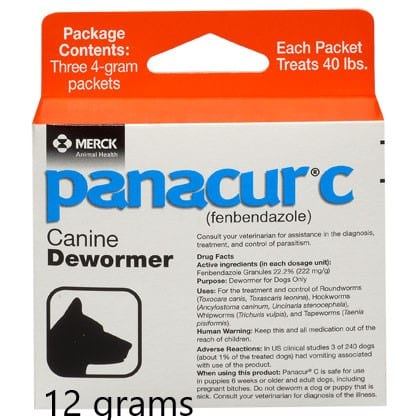
Panacur C (fenbendazole)


Fenbendezole is an anthelmintic of the benzimidazole group. Fenbendazole (5-phenyl-thio-2-benzimidazole carbamate) has a wide spectrum of nematodocidal and cestodocidal action, is active against adult forms, larvae and eggs of gastrointestinal and lung nematodes, as well as cestodes that are parasitic in animals.

The mechanism of action of fenbendazole is the destruction of microtubules in the intestinal cells of helminths and disruption of energy processes, which leads to the death of parasites.

When administered orally, fenbendazole is easily absorbed in the intestine and distributed in the organs and tissues of the animal; it is excreted from the body in unchanged form and as metabolites, mainly with bile and partially with urine, in lactating animals also with milk.

In the recommended doses, it is very well tolerated by animals without any side effects.

Indications for use of the drug FENBENDAZOLE

This drug is prescribed to young cattle, sheep, goats, foals, piglets, dogs and cats for therapeutic and preventive purposes.:

— nematodes;

— cestodoses.

Application procedure

Fenbendezole is administered to animals according to the type and dosage of Fenbendazole (powder, tablets, capsules …), in the following doses. Young cattle with moniesiasis – 150 mg per 15 kg of animal weight; with dictyocaulosis, haemonhoses, bunostomiasis, esophagostomiasis, nematodyrosis, ostertagiasis, habertiosis, cooperiosis and strongyloidiasis – 150 mg per 20 kg of animal weight.

Sheep and goats with moniesiosis – 150 mg per 15 kg of animal weight; with dictyocaulosis, hemonchosis, bunostomosis, esophagostomosis, nematodirosis, ostertagiosis, trichostrongyloidosis, habertiosis, cooperiosis, strongyloidosis – 150 mg per 30 kg of animal weight.

Foals with paraskaridosis and strongylatosis – 150 mg per 15 kg of animal weight.

Piglets with ascariasis, esophagostomosis, strongyloidosis, trichocephalosis, metastrongyloidosis – 150 mg per 30 kg of animal weight.

Adult dogs and cats with toxocarosis, toxascaridosis, hookworm, uncinariosis, dipilidiosis, teniidosis – 150 mg per 1.5 kg of animal weight.

Puppies and kittens (aged over 3 weeks) with toxocarosis, toxascaridosis, hookworm, uncinariosis, dipilidiosis and teniidosis 1 time/day for 3 consecutive days in a single dose of 150 mg per 3 kg of animal weight.

Special diets and laxatives are not required before deworming.

Side effect

Side effects and complications when using fenbendazole in accordance with the indications and dosage regimen, as a rule, are not observed.

With increased individual sensitivity of the animal to fenbendazole and the appearance of allergic reactions, the use of the drug is discontinued.

Symptoms of overdose in animals were not detected.

Contraindications to the use of the drug FENBENDAZOLE

— individual hypersensitivity of the animal to fenbendazole.

Do not use the drug:

— emaciated and sick with infectious diseases animals;

— puppies and kittens younger than 3 weeks of age.

Special instructions and personal prevention measures

Slaughter of animals for meat is allowed no earlier than 14 days after deworming. In case of forced slaughter before the deadline, the meat can be used as food for carnivores or for the production of meat and bone meal.

Milk from dairy animals should not be used for food purposes within 3 days after deworming. Milk obtained earlier than the deadline can be used after heat treatment in animal feed.

It is forbidden to smoke drink or eat while working with the medicine. At the end of work, wash your hands with warm water and soap.

If you decide to deworm your animal with Fenbendezole, you can safely recommend the following products, but please note that fenebendazole exists in different forms (powder, tablets, capsules, liquid), first decide in what form it will be more convenient for you to give it. From myself, I would like to make a small note that Fenbendezole in the form of capsules is very convenient to use, except for the smallest animals.

Posted on Leave a comment

What is the animal welfare?

Animal welfare 

means how an animal is coping with the conditions in which it lives. An animal is in a good state of welfare if (as indicated by scientific evidence) it is healthy, comfortable, well-nourished, safe, able to express innate behavior, and if it is not suffering from unpleasant states such as pain, fear, and distress. Good animal welfare requires disease prevention and veterinary treatment, appropriate shelter, management, nutrition, humane handling, and humane slaughter. Animal welfare refers to the state of the animal; the treatment that an animal receives is covered by other terms such as animal care, animal husbandry, and humane treatment.1 Protecting an animal’s welfare means providing for its physical and mental needs.

Ensuring animal welfare is a human responsibility that includes consideration for all aspects of animal well-being, including proper housing, management, nutrition, disease prevention and treatment, responsible care, humane handling, and, when necessary, humane euthanasia.

There are numerous perspectives on animal welfare that are influenced by a person’s values and experiences. There are also various means of measuring animal welfare, including (but not limited to) health, productivity, behavior, and physiological responses.

The American Veterinary Medical Association has defined its commitment to animal welfare through the adoption of the following Animal Welfare Principles that serves as guidance when the Association develops policies and takes action to ensure the welfare of animals:

The AVMA, as a medical authority for the health and welfare of animals, offers the following eight integrated principles for developing and evaluating animal welfare policies, resolutions, and actions.

  • The responsible use of animals for human purposes, such as companionship, food, fiber, recreation, work, education, exhibition, and research conducted for the benefit of both humans and animals, is consistent with the Veterinarian’s Oath.
  • Decisions regarding animal care, use, and welfare shall be made by balancing scientific knowledge and professional judgment with consideration of ethical and societal values.
  • Animals must be provided water, food, proper handling, health care, and an environment appropriate to their care and use, with thoughtful consideration for their species-typical biology and behavior.
  • Animals should be cared for in ways that minimize fear, pain, stress, and suffering.
  • Procedures related to animal housing, management, care, and use should be continuously evaluated, and when indicated, refined or replaced.
  • Conservation and management of animal populations should be humane, socially responsible, and scientifically prudent.
  • Animals shall be treated with respect and dignity throughout their lives and, when necessary, provided a humane death.
  • The veterinary profession shall continually strive to improve animal health and welfare through scientific research, education, collaboration, advocacy, and the development of legislation and regulations.

If you want your animal never had a worm you should give them anthelmintic treatment – one of the best is Fenbendazole, Helmintazole.

If you want to buy Fenbendazole (Helmintazole…) online, you can buy it at Homelabvet.com, there are a lot of different types of Fenbendazole with different dosages.

Posted on Leave a comment

Fenbendazole. What is fenbendazole?

panacur fenbendazole

What is fenbendazole

Fenbendazole (brand names Helmintazole®, Helmintazole Pro®, Helmintazole 200®, Helmintazole 222®, Helmintazole 500 caps®, Helmintazole 50 Tab®, Panacur®, Safe-Guard®) is a medication used to treat a variety of parasites (e.g., roundworms, hookworms, lungworm, whipworm, and certain types of tapeworms) in dogs. Its use in cats for the treatment of parasites is ‘off label’ or ‘extra-label’. Many drugs are commonly prescribed for off-label use in veterinary medicine. In these instances, follow your veterinarian’s directions and cautions very carefully.

panacur fenbendazole

How is fenbendazole given?

Fenbendazole comes as oral granules, tablets, capsules or as a liquid suspension and is given by mouth. Liquid forms must be measured carefully.

Fenbendazole should be given with food to reduce gastrointestinal upset.

Give this medication as directed by your veterinarian. Fenbendazole is often given once daily for 3 consecutive days and then again in another round 2-3 weeks later.

It is important that your pet receives all of the doses recommended by your veterinarian for best results. Do not stop early or skip doses unless recommended by your veterinarian. Retreatment may be necessary if doses are missed, the medication is stopped too soon, or if reinfection from the environment occurs.

This medication should take effect within 1 to 2 days, but visible effects will take the entire duration of treatment to be recognized.

What if I miss giving my pet the medication (or my shipment is late)?

If you miss a dose, give it when you remember. If it is close to the time for the next dose, skip the missed dose and give it at the next scheduled time. Never give your pet two doses at once or give extra doses.

Are there any potential side effects?

At regular doses, fenbendazole does not usually cause any side effects. Sometimes, substances released by the dying parasites may cause an allergic reaction, especially if fenbendazole is given at higher than regular doses. If your pet shows signs of an allergic reaction (facial swelling, itchiness, hives, diarrhea, seizures, or shock) seek veterinary care immediately.

Salivation, vomiting, and diarrhea may occur in dogs or cats receiving this medication.

This moderate-acting medication should stop working in a few days, although effects can be longer in pets with liver or kidney disease.

Are there any risk factors for this medication?

Fenbendazole is safe for use in most pets. Fenbendazole should not be used in:

  • puppies younger than 6 weeks of age.
  • sick animals

Are there any drug interactions I should be aware of?

While there are no known drug interactions with fenbendazole, be sure to tell your veterinarian about any medications (including vitamins, supplements, or herbal therapies) that your pet is taking.

Is there any monitoring that needs to be done with this medication?

Your veterinarian may recommend a fecal examination to be sure that all internal parasites have been killed and determine if additional doses are needed.

How do I store fenbendazole?

Store fenbendazole granules, tablets or capsules in a sealed container at room temperature and protected from sunlight.

If your veterinarian has made a special formulation for your pet, follow the storage recommendations on the label and expiration date for the product.

What should I do in case of emergency?

If you suspect an overdose or an adverse reaction to the medication, call your veterinary office. If they are not available, follow their directions in contacting an emergency facility.

If you want to buy Fenbendazole(Helmintazole…) online, you can buy it at Homelabvet.com, there are a lot of different types of Fenbendazole with different dosages.

Posted on Leave a comment

Cats and womans

Cat and woman

The unique tandem of cats and women has always attracted attention and generated many different theories about their relationship with each other. Although cats have always been distinguished by their independence and dissimilarity to other living beings, their similarities with women and their special relationship with them require a special discussion.

Pure Beauty

The main common feature that a woman and a cat have is the desire of both beauty and conquest of the world. Such a tradition originated in the depths of centuries, and even in ancient times cats were always depicted next to the most beautiful women, and any beauty was automatically compared in her grace and grace to representatives of the cat family. And, of course, cats and women always got along very well. For example, in Turkey, statuettes were found dating back to the 6th millennium BC, which depicts women playing with cats. And even then, each mistress of the house reserved for her pet the most privileged place in the house.

This is not surprising, because a woman and a cat have one more thing in common – independence, bordering on affection. It was the gentleness of a woman who always attracted a cat to her side, and thanks to this, the feline race was closely intertwined with the human one, and the cat began not only to decorate the house with itself but also to protect it from various dangers. Soon, in almost every country, special rules and laws appeared that require respectful and reverent treatment of cats:

  • in Britain there was a code of laws determining the value of a cat and prescribing punishment for cruelty to it;
  • in America, a cat immediately became an object of exchange trade, as well as the patroness of many houses, which she saved from epidemics and other disasters;
  • in Paraguay, at the legislative level, it has been established that every cat is worth a pound of gold;
  • in Ancient Russia in the 14th-century laws existed that penalized cat larceny and imposed huge fines on thieves.

And in each of the situations, the behavior of cats was not important: animals were considered sacred even when they showed their difficult character, and it was women who played a significant role in recognizing their sacred value.

Unattainable ideal

In addition, from time immemorial, women and cats have in common many common features – both appearance and character:

  • resourcefulness and intelligence inherent in both
  • quick reaction and agility,
  • excellent plastic
  • undeniable external beauty
  • some detachment.

Thanks to this, women gave their hearts to cats many centuries ago. And today this tradition continues, because it is in the graceful representatives of feline women that they see a real ideal, which is often unattainable for themselves.

A cat for women is a living embodiment of beauty, and the independent behavior of cats is an example to follow. This is not surprising, because:

  • cats do not have problems with being overweight,
  • cats do not need fur coats – their silky and delicate fur is admired by everyone;
  • cats do not need to fawn in front of people to be stroked – it only allows you to do this if she liked the person;
  • the cat is always beautiful, no matter what she does;
  • the cat does not need to take care of its kittens all its life and even think about who it is pregnant from;
  • the cat is patient and ready to faithfully listen to all the sorrows of its owners, without giving them any stupid advice,
  • the behavior of cats can be anything, but no one can be angry for a graceful and touching animal for a long time.
  • And, of course, there are some comic “differences” between women and cats, which men often like to talk about:
  • the cat is fluffy throughout the body, and not just on the head,
  • for beauty, the cat doesn’t need makeup,
  • the cat remains graceful in any situation,
  • the cat eats less
  • the cat can purr beautifully,
  • the cat is easy to keep on your lap
  • if her owner gets sick, the cat will just sleep next to him, without disturbing him,
  • the cat will never whimper and complain
  • the cat is always clean and takes care of itself,
  • the cat will not be offended by you if you are tired and you are not up to it,
  • a good word will always please a cat,
  • the cat doesn’t need new outfits,

Getting a cat in the house is always very easy!

However, even in spite of these small “differences”, it is the woman and the cat who always get along best with each other. And even if the owner of the animal is just the man, his pet can easily neglect it, and all attention will be paid to his chosen one!

Also, if you want your lovely cat always be happy and healthy, you should give to your cat antihelminth treatment like Helmintazole with the active ingredient Fenbendazole (펜 벤다 졸). If you need Fenbendazole for worm treatment you can always buy it at Homelabvet.com.

Posted on Leave a comment

EXTRA AUTUMN DEWORMER SALE!

promo Helmintazole fenbendazole homelab

Today we have a great news about our dewormers. If you want to have a great discount on dewormer products you need just follow the link above.

If you follow by link above, you can buy the most popular dewormers of most popular companies. Extra sale for Helmintazole by Homelab, Panacur, Safe Guard, Fencur, fendeworm, Fenbendazole and etc. All of this dewormers includes active ingredient fenbendazole which is very effective for worm treatment.