The method of storing food can greatly affect the freshness, nutrition, and taste of food. In addition, a fairly common cause of poisoning is a spoiled product. In order to store dry food properly, you must keep it in a cool, dry place and in an airtight container. Canned food should be stored in the refrigerator (not in the freezer!) in a closed container after opening and discard after a few days if not consumed.
The Council: buy as much food as you think your pet can eat at a certain time. Do not buy food by weight: you do not know how long the food is in the open state.
Food should not be sold in the open state! It loses its usefulness, nutrition, sometimes just dangerous for the pet!
Yes, you just don’t know if you’re buying exactly the food you want. If it is profitable for you to buy food by weight, then think about the possible consequences of using a spoiled product and possible financial losses in the treatment of your pet.
There is always a way out: you can buy food by cooperating with relatives, friends, and neighbors.
Food should not be sold in the open state! It loses its usefulness, nutrition, sometimes just dangerous for the pet!
Store food in a dry, cool, sun-protected environment that does not exceed 36 degrees Celsius. Higher temperatures lead to the destruction of nutritional properties, vitamins, makes food rancid.
Keep the food in its original packaging with a zip lock or a special container for food. Plastic bags or simple containers have a smell that can greatly change the taste of food. Always roll the top of the feed tightly (if stored in its original packaging) to better seal it. Tip: on the outside of the container, place information about the feed, including the expiration date, manufacturer and brand names, UPC code, and batch number. Make sure you change the label every time you open a new bag of food.
Do not store dry food on the ground, in a garage, or in a cold or wet basement (only wet food can be stored there). At normal temperatures in the apartment, it is better to store food in storerooms or kitchen cabinets without access to your Pets (and small children, of course).
Wet food should not be left in the bowl for more than four hours. If the pet has not eaten the entire portion, it should be thrown away and the bowl should be thoroughly washed. The best option would be to adjust the feeding rate at a time.
Place the remaining wet food in the refrigerator. The temperature of the refrigerator should be approximately 4.5-8 degrees Celsius. You can’t freeze food. Open cans can be stored in the refrigerator for a maximum of 3 days (preferably less). Any open canned food that has not been consumed during these days should be discarded.
In the refrigerator, it is better to store open canned food in closed quality (odorless) containers. It can be stored in cans when tightly closed with a plastic lid. Before serving, warm up the wet food to room temperature (you can use a microwave oven).
If you are going for a walk or on a trip, choose a convenient purse or bag for storing food or treats.
You can buy online some interesting things for your pet at Homelab Pet Store.
Cat scratch fever: What to do and what you should know?
Cat scratch fever can happen when a person receives a bite, scratch, or lick from a cat that is infected with the bacteria Bartonella henselae.
The infection does not usually cause severe complications, but it can lead to problems for people with a weak immune system. Knowing how to spot cat scratch fever can ensure a person receives swift treatment.
Cats can transmit several types of infections to humans. Some of these diseases can be severe. Carrying out routine care for a cat often reduces the risk of many of these diseases.
Causes
A person can get cat scratch fever after a scratch or bite from an infected cat. The Bartonella henselae (B. henselae) bacteria live in a cat’s saliva. They can pass to a person through an open area of skin.
Cat scratch fever is more common in the fall and winter when people are inside and playing with their cats. Children are more likely than adults to have it, and playing roughly with a cat increases the chances of getting scratched.
Symptoms
Cat scratch fever does not usually cause symptoms in the first few days or weeks after exposure when the bacteria are multiplying in the body.
About 3 to 14 days after the infection first occurred, a person may see a small bump or blister on the contact area, most commonly on the:
arms
hands
scalp
head
Doctors call this an inoculation lesion. This lesion may not occur in some cases, or an individual may not notice it on their body.
A few weeks later, the lymph nodes near the lesion may become swollen or tender.
Lymph nodes are responsible for filtering bacteria and other particles and for creating immune system cells. They usually feel like small, spongy, round or oval bumps.
If a person has had a bite or scratch on the arm, the lymph nodes under the arm or near the elbow may be especially tender.
Sometimes, the lymph nodes swell as much as 2 inches across. They may be warm to the touch, fluid-filled, or red. They may remain swollen for 2–3 weeks.
For most people, swollen lymph nodes are the only symptom. However, other symptoms that might occur include:
abdominal pain
loss of appetite
fever, typically not above 102°F
tiredness
a headache
joint pain
a rash
a sore throat
A person should see a doctor if they have a scratch that continues to get larger after 2 days.
Complications
Cat scratch fever does not usually cause severe symptoms, but some people may develop a high temperature that does not improve with time. Some people can also experience infections in the bones, joints, liver, lungs, or spleen.
According to the Centers for Disease Control and Prevention (CDC), the most severe symptoms usually occur in children aged 5 years and under.
Cat scratch fever does not usually need emergency care, but sometimes it does. A person should contact their doctor immediately if they experience the following symptoms:
a cat bite or scratch that is not healing or is getting worse
the red area around a bite or scratch is enlarging
a high fever that lasts more than 2 days after the bite or scratch
severe pain
Diagnosis
Cat scratch fever can be difficult to diagnose because a number of other conditions have the same symptoms. The physician will ask about the individual’s medical history and whether they have had any interactions with a cat.
The doctor will then examine the scratched area and look for any swollen lymph nodes.
This is usually sufficient for a diagnosis, but sometimes they may suggest further tests to make sure the person does not have another condition.
The doctor might take some blood and send it to the lab to find out what kind of bacteria are present. One blood test can test specifically for cat scratch fever.
Treatment
Most cases of cat scratch fever are mild, and a doctor will not always prescribe treatment. If symptoms are moderate to severe, they may prescribe an antibiotic.
At-home treatments for the condition include bed rest if needed, and an over-the-counter pain reliever if the lymph nodes are painful or especially tender.
Children can mostly continue with their usual activities, but they should avoid hitting or interfering with the affected lymph nodes.
If a person has had cat scratch fever once, they are unlikely to have it again.
Prevention
Cats can transmit cat scratch fever to people, but people do not usually pass it to each other. If one family member is affected, others should practice caution around a family cat, as the cat could infect them also.
An episode of cat scratch fever does not mean a family should necessarily get rid of their pet. However, to prevent cat scratch fever, people should:
only adopt a cat that is more than 1 year old if a family member has poor immunity, as kittens are most likely to have the disease
avoid rough play around a cat or kitten
never allow a cat to lick wounds or open areas of skin
avoid petting stray or feral cats
wash hands and any other affected areas after playing with a cat
Fleas pass the infection from one cat to another.
To prevent a flea infestation:
vacuum the home frequently
use flea prevention, such as medication, to protect the cat from flea bites
contact a pest control company if a lot of fleas appear in a home
Checking for signs in a cat
The CDC estimate that around 40 percent of cats carry the B. henselae bacteria at some point in their lives. Most of the time, they do not show signs of illness.
Symptoms
Cats get the infection when they scratch and bite at fleas that infect them or fight with cats that are carriers.
If a cat has fleas or visible scratches, a person may wish to practice caution when handling their cat. Once a cat has the cat scratch fever infection, it can carry the bacteria for several months. During this time, it can pass on the infection.
Cats with the bacteria often have no symptoms, but they may have a fever that lasts for 48–72 hours.
In rare cases, cat scratch disease can cause severe symptoms in cats.
These include:
fever
vomiting
low appetite
lethargy
swollen lymph nodes
red eyes
inflammation in the mouth
The infection can remain for several months in the cat, and symptoms may reappear at times of stress, for example, after trauma or surgery or alongside another illness.
Diagnosis and treatment
A vet can inspect a cat for fleas and make recommendations about flea prevention and avoiding scratches and bites.
A test is available for the bacteria, but doctors do not usually recommend it for cats that have no symptoms. The bacteria are widespread, and the test can be unreliable.
Cats do not usually need antibiotics unless they have noticeable symptoms.
Prevention in cats
Taking steps to reduce fleas in a cat can reduce the likelihood of cat scratch fever. People can care for their cats by doing the following:
applying or administering a vet-approved flea treatment regularly
keeping a cat indoors to avoid contact with stray or infected animals
keeping a cat’s nails trimmed and neat
scheduling and maintaining regular checkups with a vet
There is currently no vaccine against cat scratch fever bacteria.
Products to protect a cat from fleas are available for purchase online.
Other conditions cats can spread
Apart from cat scratch fever, a cat can carry other diseases.
These include:
Campylobacteriosis: Bacteria cause an intestinal infection.
Cryptosporidiosis: A parasite causes diarrhea and abdominal cramping.
Plague: Although rare in America, this can occur if a person takes their cat to another country.
Rabies: Cats should have regular vaccinations to prevent rabies infection.
Ringworm: Kittens are especially likely to carry this fungal infection. It causes bald patches on the skin.
Tapeworm: Most common in children, this infection occurs when a person ingests a flea from a cat that has tapeworm larvae.
Toxocara infection: This condition does not always cause symptoms, but it can give rise to severe complications, such as blindness.
Toxoplasmosis: It is crucial to avoid this during pregnancy. Complications include growth and eye problems in the unborn child and pregnancy loss.
Dogs have a different digestive system from humans. This means that some foods that are safe for people can be harmful or even very dangerous for dogs.
However, many human foods are also safe for dogs and can provide important nutrients and health benefits.
Here, we look at which people foods are safe for dogs and which not to feed them.
So, which human foods can dog eat?
While many people foods are safe for dogs, they should generally only eat in them moderation.
Human foods that are safe for dogs include:
Carrots
Carrots are a healthful food for dogs. Chewing on carrots can help remove plaque from their teeth and otherwise promote good dental health.
Carrots are also a good source of vitamin A, which is beneficial for a dog’s immune system, skin, and coat.
However, too much vitamin A can be toxic, so feed a dog carrots in moderation.
Apples
Apples provide many important vitamins for dogs, including vitamins A and C.
Apples are also a good source of fiber, which can help regulate a dog’s digestion. However, eating rotting apples can lead to alcohol poisoning in dogs.
White rice
Cooked, plain white rice can be a good option for a dog with an upset stomach, as it is easy to digest and helps bind stool.
White rice can cause blood sugar levels to rise, however, so dogs with diabetes should only eat it in small amounts.
Dairy products
Dairy products, such as milk, cheese, and plain yogurt, are safe for dogs to have in very small quantities.
Eating too much dairy can cause digestive problems. This is because dogs have low levels of lactase, a digestive enzyme that breaks down the sugars in milk.
Dogs with lactose intolerance should not eat dairy products. Signs of lactose intolerances include diarrhea or vomiting after consuming anything that contains dairy.
Fish
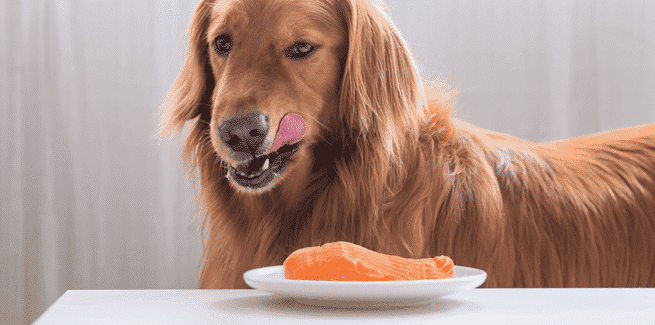
Salmon, shrimp, and tuna are all safe for dogs to eat and good sources of protein.
Salmon and tuna are rich sources of omega-3 fatty acids, which can help keep a dog’s immune system, coat, and skin healthy.
The B vitamins in shrimp can also help maintain a dog’s digestive system and promote healthy blood circulation.
It is important to cook fish before feeding it to a dog, as uncooked fish can contain harmful parasites.
Chicken
Plain, boiled chicken with no seasoning is a good option when a dog has an upset stomach.
Peanut butter
Unsalted peanut butter with no added sugar or sweeteners is safe for dogs to eat in moderation.
Peanut butter contains many beneficial elements, including vitamins E and B, niacin, healthful fats, and protein.
However, it is vital to check that the peanut butter does not contain a sweetener called xylitol, which is highly toxic to dogs.
Anyone who suspects that their dog has ingested xylitol should immediately contact a veterinarian or call an Animal Poison Control Center.
Plain popcorn
Plain popcorn, without salt, butter, or sugar, can be a nutritional treat for dogs.
Popcorn contains minerals such as magnesium, phosphorus, and zinc, which are all important for keeping dogs healthy.
Make sure dogs do not eat any unpopped popcorn kernels, as this could cause them to choke.
Pork
Unseasoned, cooked pork is safe for dogs to eat.
However, they should only consume small portions of pork, as the high fat content is hard for dogs to digest, and it can cause inflammation and pancreatitis.
Refrain from feeding dogs bacon or processed ham, due to the high salt contents.
Turkey
Cooked turkey is safe for dogs to eat, but it should be plain and unseasoned. Many commercial dog foods contain turkey, as it is a good source of protein.
Before giving cooked turkey to a dog, remove the fat first. Too much fat can cause pancreas issues in dogs.
Blueberries
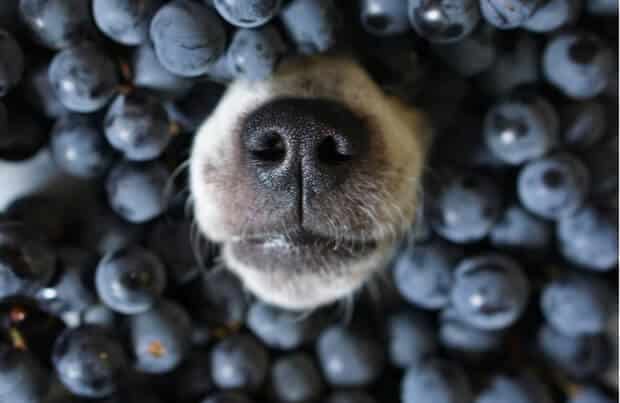
Blueberries are safe for dogs to eat and a rich source of fiber, antioxidants, and phytochemicals, which can provide a range of health benefits for dogs.
Research from 2012 suggests that antioxidants may help improve age-related issues in older dogs.
Bananas
Dogs can eat bananas in moderation. They are full of magnesium, which is important for good bone health.
Due to their high sugar content, bananas should only be an occasional treat for dogs.
Cucumbers
Cucumbers are a safe, low-calorie snack for dogs, and they can be a good option for those who are overweight.
Cucumbers also contain plenty of vitamins and minerals, such as vitamin K.
Green beans
Plain green beans are a good, healthful snack for dogs. They are a source of protein and also contain calcium, iron, and vitamin K.
Dogs can eat green beans cooked or raw. However, avoid seasoning and chop up the beans first to prevent choking.
Watermelon
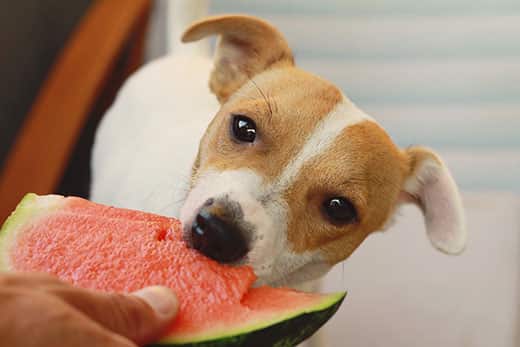
Watermelon is safe for dogs to eat, but it is important to remove all the seeds first, as these can block the intestines.
Chewing on the rind can also cause an upset stomach, so remove this too before giving the watermelon to a dog.
Watermelon has a high water content, so it can help keep dogs hydrated. It is also a good source of vitamins A, C, and B-6.
Which foods can harm dogs?
Some foods that are perfectly safe for humans can cause problems or illness in dogs.
Anyone who suspects that their dog has eaten something toxic should call a veterinarian or Animal Poison Control Center immediately.
Avoid giving a dog:
Avocado
Avocados contain a substance called persin, which is toxic to dogs and can cause vomiting and diarrhea.
Cherries
Cherry pits contain cyanide, which is poisonous. They can also be a choking hazard or block the intestines if a dog swallows them.
Never give chocolate, coffee, or anything containing caffeine to dogs.
These products contain chemicals called methylxanthines, which are highly toxic to dogs. The chemicals can cause vomiting, an abnormal heart rate, seizures, and sometimes death.
Chocolate treats are available for dogs, but these contain a special chocolate substitute that is safe for them to eat.
Raisins and grapes
Grapes, raisins, sultanas, and currants are all highly toxic to dogs. Even small quantities can cause kidney failure and, in some cases, death.
Also, refrain from giving dogs any product that may contain these foods, such as fruit cake or malt loaf.
Citrus fruits
Citrus plants and their fruits, such as oranges and lemons, contain citric acid. While eating small amounts of the peeled fruit is okay for some dogs, it can cause an upset stomach.
In larger quantities, citric acid can lead to nervous system depression.
Cinnamon
Although not toxic, large amounts of cinnamon can cause vomiting, diarrhea, and liver disease in dogs.
Coconut products
Dogs should not drink coconut water, due to its high levels of potassium.
A person should also limit how much coconut oil or flesh they give their dog, as these foods can cause upset stomach or diarrhea.
Nuts
Avoid giving nuts to dogs.
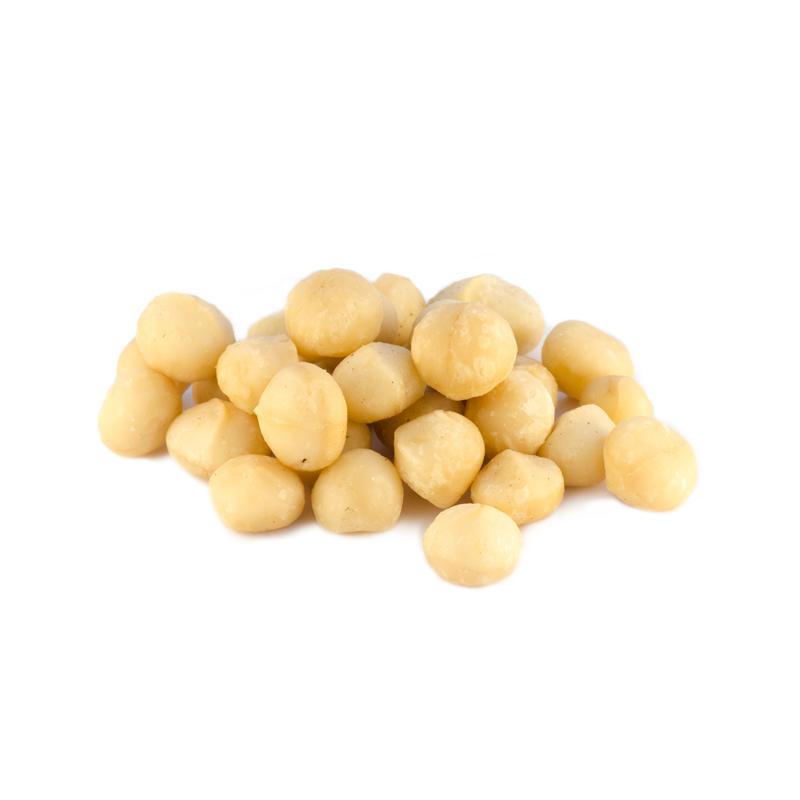
Macadamia nuts are poisonous to dogs and can cause muscle weakness, vomiting, lethargy, and hyperthermia.
Other types of nuts can cause dogs to choke.
Ice cream
Dogs should not eat ice cream, due to its high sugar content. Also, some dogs are lactose intolerant.
Onions, garlic, and chives
Onions, garlic, and chives are all part of the Allium genus. They contain substances called organosulfoxides, which are toxic to dogs and may lead to vomiting, diarrhea, and stomach pain.
Organosulfoxides can also cause anemia in dogs.
Raw or undercooked meat
Raw meat can contain Escherichia coli and Salmonella, which are types of bacteria that can cause food poisoning in dogs and humans. Cooking the meat properly kills the bacteria.
In recent years, certain manufacturers have promoted the benefits of raw meat for dogs, and some boutique products contain it.
It is important to understand that raw meat diets pose health risks to dogs and may not provide a complete nutritional balance.
Raw eggs
Eating raw eggs can lead to biotin deficiency in dogs, which may affect the health of their skin and coat.
Salty foods
Too much salt can cause excessive thirst and urination in dogs, as well as sodium ion poisoning.
Symptoms of this poisoning can include:
vomiting
diarrhea
involuntary shaking, or tremors
high temperature
seizures
Xylitol
Xylitol is a sugar substitute that manufacturers add to a variety of human foods.
However, xylitol is highly toxic to dogs. It can cause liver failure and dangerously low blood sugar levels.
Bread dough
While bread is generally safe for dogs, the dough can be very dangerous.
The yeast in dough can cause it to keep expanding inside the dog’s stomach, which can cause bloating and lead to dangerous complications. The yeast also produces ethanol, and this can cause alcohol poisoning.
Alcohol
Never give a dog alcohol or products containing it. Alcohol is very dangerous for dogs and can lead to a range of serious complications, including coma and death.
Summary
Many human foods are safe and nutritious for dogs. However, a person should generally feed dogs these foods in moderation, as larger quantities can lead to health issues.
Consult a veterinarian before giving human foods to dogs with:
diabetes
weight issues
food sensitivities
liver or kidney disease
other health concerns
It is crucial to keep any foods or substances that are dangerous for dogs out of their reach.
Foods that are especially harmful to dogs include:
anything containing alcohol
chocolate, coffee, and caffeine
products containing xylitol
If in doubt about a particular food, speak to a veterinarian before giving it to the dog.
Anyone who suspects that their dog has ingested something potentially harmful should immediately call a veterinarian or an Animal Poison Control Center for advice.
In the past couple of months, pretty much everyone I know has chosen to foster or adopt a pet. Most were prompted by a gut need for unconditional love and companionship. So, it’s no wonder that dog and cat fostering and adoption levels are at an all-time high. Kelly DiCicco, manager of adoptions promotions at the ASPCA Adoption Centre, says “there’s no doubt that the response from people across the country willing to open their homes to animals in need during this challenging time has been enormous and unprecedented.”
But as tempting as it may sound to have a furry friend to comfort you these days, there is much to consider before you bring an animal into your home, not least of which is the fact that animals will forever be dependent on you; unlike kids, who eventually (you hope!) fend for themselves, you will always need to feed, discipline and clean up after your pet.
Pat Miller, a certified professional dog trainer and behaviour consultant and the director of Peaceable Paws Academies in Fairplay, Maryland, says she sees too many people getting pets without thinking through all that it entails – a phenomenon not unique to the pandemic. “Happens all the time. We are just seeing more of it now because so many people who are sitting at home with nothing to do are deciding it’s a good time to get a pet.”
Miller says that before you get a pet, you must make sure everyone in your home is on board. That doesn’t mean everyone in the house needs to be responsible for taking care of the pet, but there needs to be some level of universal agreement around having the pet.
“Animals do not need to come into an environment where there is conflict over their presence,” she says. She suggests setting clear guidelines and rules of what the pet is allowed to do – and not do – in advance. Questions to consider: is the animal allowed on the furniture? Where will the animal sleep? Who is going to clean up, walk and feed the animal? Who is the primary trainer? What happens when everyone goes back to school and back to work? “The more you think through ahead of time, the less conflict and confusion there is for the animal.”
Miller also suggests finding a vet, groomer, pet sitter (you’ll need one someday!) and trainer before bringing an animal home. Interview them about their methods and determine whether they are on the same philosophical page as you. For example, Miller is a force-free trainer; she is adamant about not using pain coercion in training, but there are others, she says, who are not.
Other prep work to do: purchase supplies in advance, and set everything up before the pet’s arrival. DiCicco’s must-have list for cats: a collar, litter and litter box (make sure you have a spot to put them), food, toys and bowls. For dogs: a leash, collar and harness, bed, food, toys, bowls and crate.
DiCicco says you also need to make sure that your home is safe before and after you bring your pet home. Remove all items from the floor that could be eaten or chewed, and keep electrical wires out of reach. Also, check that your house plants are safe. The ASPCA has compiled a list of plants that are toxic to animals that should be removed from your home or put out of reach (aspca.org). Other potential pet hazards: vertical blinds, curtains that pool on the floor, tassels and long cords.
If you are adopting/purchasing a cat, install high-quality metal screens on all windows. And keep in mind that cats are excellent climbers, so pet-proofing for a cat means more than just keeping the floor area safe; move plants and fragile objects to a protected area. For kittens, DiCicco says to block any small hideouts where the kitten could escape or get stuck, including around and underneath appliances.
Because scratching is a natural behaviour for cats, DiCicco recommends investing in a scratching post to prevent destruction of other objects. And just as cats need to be able to scratch, dogs need to be able to chew. Provide appropriate chew toys; Miller suggests Kong dog toys (kongcompany.com), which come in a variety of sizes and firmness, or Dog Tuff toys (dogtuff.com).
If you are getting a puppy or dog who is not yet house-trained, create a special area for the dog using baby gates or a collapsible pen, so any accidents don’t damage carpets. (You should roll up and store decorative rugs until your new dog is fully house-trained.) Miller prefers baby gates that are pressure-mounted (no need to screw them into door frames) and that are easy-open walk-through. And she suggests using a crate to help train your dog. “When properly used, a crate is the easiest way to house-train and manage a puppy, because dogs come with a natural inhibition against soiling their own den.” For the house-training process, Miller says to use a smaller crate, so the dog can’t soil one side and lie comfortably on the other. Once a dog is fully house-trained, switch to a more spacious crate.
When you bring your pet home, DiCicco says to give them some space to get acquainted with the sights, sounds and scents of their new home while keeping an eye on them as they settle in. “And remember to take things at their pace and follow their lead.”
Some cats are more sensitive than others, so they may settle in better if initially confined to one room, DiCicco says. Gradually give them more space to explore over time. This helps them adjust to their environment without feeling too overwhelmed.
If you already have pets, provide the new pet with a quiet area away from the other animals while they get acclimated, potentially for their first few days or weeks, and take initial introductions very slowly. DiCicco suggests trying scent swapping – giving one animal something that smells like the other – before introducing them. This improves your chances of having a successful first introduction.
Miller is not a fan of animal doors; she says it’s best that you control when your dog goes in and out. “It’s your responsibility to make sure that your dog gets out as often as he needs to, not only to go to the bathroom, but also to exercise.” She adds: “If your animal has an accident indoors, it’s your fault.”
Lastly, Miller says to opt for a physical fence and not an invisible underground shock fence (which she thinks should be illegal). “Invisible dog fences don’t keep things out, so they don’t protect your dog from something coming in and getting them, and they contribute to unwanted aggressive behaviour.”
We may earn some commission if you click on a link in this article and buy a product or service, but we never allow this to influence our coverage
If something happened to your cat, dog or other family pet could you afford the treatment? The Money Advice Service (MAS) reports that the average pet insurance claim is £793, although the costs can run into thousands if an animal is seriously hurt or requires ongoing medical treatment.
Yet the Association of British Insurers says pet policies cost an average of £279 a year in 2018, so the cost of cover is not insignificant. No one wants to be forced to choose between their family finances and the fate of their furry friend (or lizard, or whatever). That’s why pet insurance exists, to ensure vet bills are affordable.
Many policies also offer cover for other unexpected costs including the cost of advertising a lost or stolen pet, the cost of a reward for one that has gone missing and liability cover if someone is injured as a result of your animal. Some of the best and most comprehensive policies will even cover emergency veterinary treatment abroad or kennel and cattery fees if you have to go into hospital unexpectedly.
But different polices offer different things and some have very different levels of cover. Here’s what you need to know to find the best pet insurance.
There are different kinds of cover
Most pet insurance comes with three different levels. Accident only is the most basic form of insurance. As the name suggests, it would cover your pet for an accident like swallowing a rock or being hit by a car but not if it fell ill. Then there is annual pet insurance, where you pay for 12 months of cover and renew each year, choosing the best and most cost-effective policy you can each time.
For the best and most comprehensive insurance you need lifetime cover. With this kind of policy you pay premiums each year to the same insurer, who must agree to continue insuring you regardless of how old the animal is or what ongoing conditions it develops. Those comprehensive policies are usually subject to restrictions and conditions. The premiums will usually rise each year as your pet gets older.
What should you look out for?
The small print really matters with pet insurance. Most will have an upper limit on cover and that may be per year or per condition. Per year means there’s an upper limit to the total cover paid out in any one year. Per condition means that once the upper limit is reached for a particular condition, the insurer will not pay out for any further treatment.
There are lots of different pet insurance providers and it’s important to find one that offers the best value for the most comprehensive cover you can afford.
So which are the best pet insurance providers in the UK? Here are some of the best available.
Petplan: best for long term
This is one of the most successful pet insurance providers in the UK. Their policies are straightforward and easy to understand and there are no nasty surprises lurking in the small print.
Best of all, Petplan offers a “covered for life” insurance plan for your pet, meaning you can continue to get help with any ongoing treatment. It also won’t increase the premium as a result of any claims you make – although it will rise based on your animal’s age.
The Kennel Club insurance: best for keeping it simple
With the KC there is just one standard policy available and you can choose a maximum annual cover limit of £7,500 or £15,000. It provides dental cover and part of the cost of any prescription food required. Although there are some restrictions it’s a fairly comprehensive and straightforward type of policy.
More Than: best for support
With the big name insurer More Than, you get wide-ranging and tailored pet insurance policies. It also offers a range of discounts for booking online and for multiple pets. An additional perk is its phone service, offering 24-hour advice when your pet is unwell.
Sainsbury’s: best for loyalty perks
With a Sainsbury’s policy, you can get a discount on new policies and also an additional discount for Nectar card customers. If you have a Nectar card you will also get double points on shopping and fuel while you hold the policy (there is a limit to that). On top of those perks there’s also a veterinary advice helpline running 24 hours a day, seven days a week.
Direct Line: best for first-year discounts
With any insurance policy, it’s not about finding the cheapest policy it’s about finding the best price for the cover that you need. So looking for the lowest premium might mean you end up with only limited cover when you come to claim. However, finding a decent discount does help ease the cost of insurance and that can help in the first year when it’s a new bill to think about.
Direct Line Pet Insurance offers a comprehensive level of cover, complete with an initial discount when you buy online that means you pay for only nine months in the first year. Insuring multiple pets and having other policies with Direct Line could also bag you a decent discount. It also provides access to a vet, including video calls, and access to medication at a reduced price.
As COVID-19 keeps us apart, we will let the animals in
First, the eyes. I pressed mine to the opening of a little wooden house. The park ranger behind me cleared her throat.
“Yeah, watch out because they jum–”
The shiniest eyes bugged out, followed by a little furry body.
An Australian northern quoll is fast, spotty and critically endangered. Ginger Meggs landed deftly on my neck, scuttled across my shoulders and flattened his body against my wrist. Normal quoll behaviour?
“He’s feeling your pulse,” the ranger told me. She asked if maybe I was a calm sort of a person because he stayed there, belly warm against wrist, reading my blood. No one has ever described me as calm. In the human world, I’m excitable. But maybe in quoll time my big human heart is languid, lazy.
I was living alone in a caravan in the Northern Territory Wildlife Park at the time, researching my novel about communication between humans and animals, which begins, a little too presciently, with a new flu pandemic sweeping the country. Ginger Meggs was living alone in an enclosure. We paused there together, sharing my heartbeat.
But now, in the age of coronavirus, we all live alone. Or with a couple of people, max: our bubble buddies that we are happy to share germs with and no one else. While we keep apart to protect each other, there are still many moments of connection online. We can watch author Miranda July dance in her loungeroom. We can learn how to do the #BlackfellaHug on NITV, celebrate Jacinda Ardern or deplore Scott Morrison together on Facebook. But on the last day of on-site work, I can’t hug my crying colleagues. I recently moved from Melbourne to regional New Zealand and can’t get to my family across the deep Tasman Sea. And I can’t cope with the thousands who have already died from coronavirus.
In my riverside town, people tended to holler “hello” of a morning. This week, they’ve been inadvertently reduced to a whisper, as though even a greeting might imply inappropriate social contact. Our bodies move awkwardly in public – we don’t know how to communicate togetherness and solidarity while being so physically separate.
But then a woman appears on the river bend, easy limbed, with a dog keeping pace. She doesn’t break her stride when she sees me, she smiles; she’s not alone because she’s with a dog. And that dog wags, showing us how to be in the world.
“You know who this is all working out very nicely for?” author Ella Holcomb posted online, “PETS! VERY nicely indeed.”
Another Twitter user had to take their dog, Rolo, to the vet because he sprained his tail from excessive wagging at his suddenly homebound humans. (Rolo now has an Instagram account.)
Meanwhile my cousin jokes that, “While the rest of NZ was panic buying toilet paper and tins of tomatoes, we panic bought a dog!”
Dr Liz Walker, CEO of RSPCA Victoria, tells me over a stuttering Zoom connection that, “People with pets have higher self-esteem, are less likely to be depressed, and cope with grief and stress more effectively than non-pet owners. Especially now amid Covid-19, animals give us a sense of connectedness. No matter how bad it gets, animals make you feel safe, they make you feel happy and they’re always glad to see you.”
As countries close down and our home lives get smaller, I too “joke” with my partner that now is the exact right time to rescue a rabbit. I imagine long days of watching Cottontail chewing the furniture and pooing on the rug. And indeed, pets are generally good. For us. But – and if I didn’t think so much about this I’d have a Cottontail with me right now – what about the animals? How do they fare in this new world paradigm?
Dr Siobhan O’Sullivan, an animal welfare expert from UNSW, says that in times of crises, “we’re looking out for the humans, but animals are considered dispensable for some. There’s no doubt that you’re still vulnerable when you’re a nonhuman animal, even as a companion animal”. Some people, for instance, have asked vets to put pets to death because they’re concerned that they might carry the virus. New research that cat-to-cat transmission is possible not only increases fear, but makes a pet’s position as beloved family member increasingly tenuous. When it comes down to it, will we continue to protect our companions?
Walker agrees that while it’s natural to seek support from your companion animal, “it’s also important to prioritise downtime for everyone, including animals, so that when this ends – and it will – animals can cope with the changesin the household. Cats sleep for 18 hours and if you’re home when you were once out, you’re disturbing their sleep patterns. I would get cranky too!”
If we’re to eradicate coronavirus globally, isolation will drag into months; for some of us, the birds that we see hanging around outside the window could become our only non-screen living contact for the day. Maybe having more time to watch animals and observe that they have their own lives and needs, will give us a new appreciation for them. “That feeling of connectedness that you get from animals, and watching them do their thing … it’s extremely comforting. A lot of people get a whole lot of joy out of watching animals experience happiness and freedom,” Walker says. Can we stop, look around ourselves, realise that we aren’t the centre of the universe, and try to be a different way in the world?
Our Zoom chat is broken by a terrifying screech as the New Zealand government sends an emergency alert to every mobile phone in the country, marking the beginning of phase four: total isolation: “Follow the rules and STAY HOME. Act as if you have Covid-19. This will save lives”. For the next four weeks, I’m allowed to see people on the screen and my partner in person – no one else.
But I know that when I go for my sanctioned solitary river walk, I will still see life. Everywhere. Like a scene from the novel I just published, where a strange new flu enables us to understand other animals, my senses will be heightened to them. In the skies, crawling between rocks, hopping in the long grass and waddling at the end of a lead. From their perspective, my presence might mean very little – they have their own thing going on – but my heartbeat will slow, calm for a moment. It will mean the world.
• The Animals in that Country by Laura Jean McKay is out now through Scribein paperback or as eBook
In the middle of a pandemic, it’s those closest to us that we worry about most: our friends, families and… pets.
The most pressing question for many pet owners is whether their beloved animals can catch the new coronavirus.
The World Health Organization says no.
There is no evidence to suggest that COVID-19 in the form it appears in humans can be passed onto companion animals and similarly, no evidence of a pet transmitting the virus to humans. So even if you have the disease, you shouldn’t worry about passing it to your pets.
But senior vet Sean Wensley, who works for veterinary charity PDSA, says regular hygiene measures are still important.
“There’s no evidence of any ongoing transmission of the disease by our pets,” he told Euronews.
“Nevertheless, as we seek to understand the disease, we think it’s really important that we apply the usual hygiene measures that we ought to be applying all the time, so washing our hands before and after contact with our pets, their leads, their food, their poop, but that’s just all good precautionary advice.”
Even if our pets don’t seem to be physically threatened by the disease, there’s still the matter of making sure they’re cared for properly while under lockdown. In most European countries that have introduced mandatory social-distancing measures, there are exemptions to the stay-inside directive if you need to walk your dog. But it’s important to keep the walk as short as possible and avoid other people. Most parks and dog run parks are closed to keep human contact to a minimum.
“When we’re able, if we’re not self-isolating because of suspected signs of coronavirus, and are therefore still able to take our dogs for a walk, we should make sure they’re kept on a lead, we wash our hands before we take them out and we crucially keep them two meters distance or whatever your local government advice is, away from other dog walkers,” explained Wensley.
If you’re self-isolating because you think you might have COVID-19 but can’t keep a greyhound indoors all day with you, it’s okay to reach out for help, said Wensley. Asking a friend or family member to take your dog for a walk is a good move, as long as both people take precautions.
Again, pets can’t get the disease, but items like their collar or lead could transmit it if an infected person touches them.
“That person shouldn’t come into your house, you should maintain a two-meter distance from them, and just be sensible, wash your hands, wipe your pet down, before you transfer them, ask them to bring their own lead with them.”
And just like us, pets aren’t overly fond of big changes in routine. Whatever lockdown measures look like in your household, it’s likely that the routine isn’t exactly the same as it was before the pandemic. That could be a recipe for stressed-out pets, according to Wensley.
“For some pets, having people around in the house that they wouldn’t normally have, perhaps children, if there’s a change in routine that can be stressful for some of our animals. Cats are particularly prone to that.”
“The one top tip I would give for those pets, and indeed all pets actually, because of the change of routine, is to make sure they’ve got somewhere that they can go to get away from the rest of the household and commotion, if they want to.”
Whether it’s a pet bed, or under your bed, Wensley said it’s important to identify a place where your pet can minimize their stress.
“I think we all need to in these trying times,” he said.
Coronaviruses are a large family of viruses. Some cause illness in people, and others cause illness in certain types of animals.
Coronaviruses that infect animals can sometimes be spread to people, but this is rare.
We do not know the exact source of the current outbreak of coronavirus disease 2019 (COVID-19). The first infections were linked to a live animal market, but the virus is now spreading from person to person.
CDC is aware of a very small number of pets outside the United States reported an external icon to be infected with the virus that causes COVID-19 after close contact with people with COVID-19.
We do not have evidence that companion animals, including pets, can spread COVID-19.
We do not have evidence to suggest that imported animals or animal products imported pose a risk for spreading the 2019 novel coronavirus in the United States.
Further studies are needed to understand if and how different animals could be affected by COVID-19.
Coronaviruses are a large family of viruses. Some coronaviruses cause cold-like illnesses in people, while others cause illness in certain types of animals, such as cattle, camels, and bats. Some coronaviruses, such as canine and feline coronaviruses, infect only animals and do not infect humans.
Risk of animals spreading COVID-19 to people
Some coronaviruses that infect animals can sometimes be spread to humans and then spread between people, but this is rare. Severe acute respiratory syndrome (SARS) and Middle East respiratory syndrome (MERS) are examples of diseases caused by coronaviruses that originated in animals and spread to people. This is what is suspected to have happened with the virus that caused the current outbreak of COVID-19. However, we do not know the exact source of this virus. Public health officials and partners are working hard to identify the source of COVID-19. The first infections were linked to a live animal market, but the virus is now spreading from person to person. The coronavirus most similar to the virus causing COVID-19 is the one that causes SARS.
The virus that causes COVID-19 spreads mostly from person to person through respiratory droplets from coughing and sneezing. At this time, there is no evidence that companion animals, including pets, can spread COVID-19 to people or that they might be a source of infection in the United States.
Risk from imported animals and animal products
CDC does not have any evidence to suggest that imported animals or animal products pose a risk for spreading COVID-19 in the United States. This is a rapidly evolving situation and information will be updated as it becomes available.
Regulation of imported animals and animal products
The U.S. Centers for Disease Control and Prevention (CDC), the U. S. Department of Agriculture (USDA), and the U.S. Fish and Wildlife Service (FWS) play distinct but complementary roles in regulating the importation of live animals and animal products into the United States. CDC regulates animals and animal products that pose a threat to human health; USDA regulates external icon animals and animal products that pose a threat to agriculture; and FWS regulates external icon importation of endangered species and wildlife that can harm the health and welfare of humans, the interests of agriculture, horticulture, or forestry, and the welfare and survival of wildlife resources.
Stay healthy around animals
In the United States, there is no evidence to suggest that any animals, including pets, livestock, or wildlife, might be a source of COVID-19 infection at this time. However, because all animals can carry germs that can make people sick, it’s always a good idea to practice healthy habits around pets and other animals.
Wash your hands after handling animals, their food, waste, or supplies.
Practice good pet hygiene and clean up after pets properly.
Talk to your veterinarian if you have questions about your pet’s health.
Risk of people spreading COVID-19 to pets
CDC has not received any reports of pets or other animals becoming sick with COVID-19 in the United States.
CDC is aware of a very small number of pets outside the United States reported an external icon to be infected with the virus that causes COVID-19 after close contact with people with COVID-19. To date, there is no evidence that pets can spread the virus to other animals or people. CDC is working with human and animal health partners to monitor this situation and will continue to provide updates as information becomes available. Further studies are needed to understand if and how different animals could be affected by COVID-19.
Protect pets if you are sick
If you are sick with COVID-19 (either suspected or confirmed), you should restrict contact with pets and other animals, just like you would around other people. Although there have been no reports of pets or other animals becoming sick with COVID-19, it is still recommended that people sick with COVID-19 limit contact with animals until more information is known about the virus. This can help ensure both you and your animals stay healthy.
When possible, have another member of your household care for your animals while you are sick.
Avoid contact with your pet including, petting, snuggling, being kissed or licked, and sharing food.
If you must care for your pet or be around animals while you are sick, wash your hands before and after you interact with them.
This is a question you should consider seriously before you adopt any animal. Getting a pet is not a light decision to make, so you’ll need to be very realistic about how much time you can commit.
When choosing a pet, it’s smart to consider how long it will likely live. Look at the list below to see the average lifespans of common pets.
How Long Do Pets Live?
Type of Pet
Average Life Expectancy (In Captivity)
Additional Info
Small Dog (under 20 lbs)
13 years
Chihuahuas often live 12-20 years.
Medium Dog (20-89 lbs)
11 years
An Australian cattle dog holds the record of oldest dog at 29 years.
Large Dog (over 90 lbs)
8 years
Spayed or neutered dogs live longer.
Indoor-Only Cat
12-18 years
The oldest recorded cat lived to be 28 years old!
Cat Who Lives Outside All the Time
2-5 years
Outdoor cats are more exposed to illness and accident.
Goldfish
5-10 years
The oldest captive goldfish lived 43 years!
Betta Fish
2 years
The world’s oldest specimen is 10 years old.
Neon Tetra
5 years
A ten-year-old tetra is not uncommon. In general, larger types of fish have longer life expectancies than smaller types.
Koi
25-35 years
The oldest koi on record lived 226 years!
Budgie/Parakeet
5-8 years
Budgies are prone to tumors. The oldest lived 29 years.
Cockatiel
16-25 years
The oldest recorded cockatiel lived 36 years.
Large Parrot
Macaws: 50 years Cockatoos: 65 years
One cockatoo lived 82 years. Charlie, a blue macaw born in 1899, is still alive!
Hamster
2-3 years
The oldest hamster on record lived 4.5 years.
Guinea Pig
4-8 years
14 years is the longest recorded lifespan.
Rabbit or Bunny
7-10 years
Oldest rabbit lived 14 years. Larger breeds tend to have shorter lifespans than smaller ones, and those that live outside die sooner.
Rat
2 years
Wild and store-bought “feeder” rats tend to die sooner than “fancy” types. Oldest lived 7 years.
Mouse
1-2 years
Mice are social and live longer with other mice. The oldest specimen lived almost 5 years!
Ferret
5-9 years
Oldest ferrets live from 14 to 15 years. If you wait until the ferret is mature to spay/neuter, the animal may live longer.
Snake
9 years average. Largest types can live up to 40 years.
Some snakes fare better in the wild than in captivity. One ball python lived 48 years.
Lizard
Smallest live 3-5 years; Largest live up to 20.
Many lizards live longer in the wild. Oldest bearded dragon lived 14 years; the oldest tuarara lived over 100 years.
Gecko
6-10 years
Males tend to outlive females. The oldest captive leopard gecko lived to 27. Geckos may live longer in the wild.
Turtle/Tortoise
40-50 years
Many captive turtles don’t get the care they need to live full lives. Oldest tortoise on record lived 225 years.
Chicken
8-10 years
Chickens thrive in groups, but pecking order may influence lifespan. Oldest recorded lived to 15.
Horse or Pony
25-33 years
Ponies tend to live longer than horses. The oldest horse ever recorded was 52 years old.
Choosing a Pet for Life
There are several factors to consider when choosing a type of pet.
Kids. If you have children, lifespan is an important consideration. It might be difficult for them to get attached to a pet only to lose it after a short time. On the other hand, maybe you want to choose a pet that only lasts until the kids go off to college!
Attention span. If you are the faithful, tenacious, dogged type, making a 30 year commitment won’t be hard. But if you know that you tend to get distracted or lose interest quickly, you should avoid adopting a long-lived pet.
Lifestyle. Pets need consistency. If you travel often or can’t be pinned down to a steady schedule, then many of these pets are not for you.
Housing considerations. Most animals’ lives depend on specific environmental requirements (a yard, a pen, an open window…). You might not be able to ensure consistency if you rent or move often.
Financial considerations. When you take a pet on, you commit to taking care of them financially for life. The longer a pet lives, the larger financial burden it will be.
The last years can be the hardest. Old age brings complications and visits to the vet, so you should expect your pet’s last years to be the most challenging.
There are plenty of people foods we’d love to share with our dogs, but some are much healthier than others. In fact, some foods are even toxic to our dogs. But fear not, there are certain human snacks that can actually benefit our four-legged friends. To see what they are, check out this list of the healthiest human food dogs can eat:
(As always, practice moderation and check with your vet before making any dietary changes.)
Peanut Butter. Peanut Butter is one of the best treats to give to dogs because it lasts them so long! Plus, its packed full of protein, healthy fats, niacin, vitamin B and vitamin E. Unsalted peanut butter is the best, as too much salt is just as bad for dogs as it is for people. Make sure you check your peanut butter to make sure it DOES NOT contain sugar substitutes like Xylitol, which can be deadly for dogs.
Chicken. Chicken can be fed to our dogs a variety of ways. Cooked chicken meat is a perfectly suitable snack or meal additive, but cooked bones should never be fed to dogs. On the other hand, both raw chicken and raw chicken bones are healthy for our dogs to eat. Cooked bones splinter and can be dangerous, while raw bones are soft and chewy.
Cheese. (Note: some dogs are lactose intolerant, and any dairy products should be given in small amounts.) If your dog is not lactose intolerant, cheese is an excellent treat choice. Cottage cheese is fed often by many dog owners because it’s high in protein, calcium and is bland and easy to digest.
Carrots. Carrots are high in fiber and vitamin A while being low in calories, so they make a great snack for your pooch. Chewing raw carrots is also beneficial for your dog’s teeth. If you’ve got an overweight dog, carrots are a great choice for treats because of their low calorie content.
Yogurt. Yogurt is full of protein, calcium and digestive cultures and is an excellent way to improve your pup’s digestive health. Make sure the yogurt you choose includes live active cultures and is non-fat with no sweetener or flavor.
Pumpkin. Canned pumpkin or fresh, cooked pumpkin with no added sugars and spices is a great choice for dogs with a sensitive stomach. It’s also an excellent source of vitamin A and fiber.
Eggs. Eggs can be fed raw or cooked and both have great health benefits. Raw eggs should also be fed with a shell, giving the full amount of biotin, protein, riboflavin and selenium. Cooked eggs should be prepared plain with no salt, pepper or any other seasoning.
Green beans. Green beans are highly recommended by veterinarians for owners looking to help their dogs lose weight. They are very high in fiber but low in calories, making them a healthy treat alternative that’s filling but won’t add any weight.
Salmon. Salmon is very high in health omega-3 fatty acids and is typically the fish used to make fish oils for our pets. Whether you want to give your pooch unseasoned cooked salmon or some capsules, you’ll be providing healthy vitamins for them. Do not give your dog uncooked salmon for any reason.
Sweet potatoes. Sweet potatoes work similarly to pumpkin as they are high in vitamin A, fiber and other nutrients. They are easily digestible when steamed or baked, served unseasoned.
Apples. Sliced apples are a healthy and tasty treat for dogs that are full of phytonutrients, vitamin A and vitamin C. They can be given with the skin on, but avoid feeding the seeds as they naturally contain cyanide.
Oatmeal. Oatmeal is found in many dog foods and for those not sensitive to grains, it can be a healthy additive to your dog’s meal. Not only is it packed with vitamins and minerals, it’s an excellent source of dietary fiber.

 The method of storing food can greatly affect the freshness, nutrition, and taste of food. In addition, a fairly common cause of poisoning is a spoiled product. In order to store dry food properly, you must keep it in a cool, dry place and in an airtight container. Canned food should be stored in the refrigerator (not in the freezer!) in a closed container after opening and discard after a few days if not consumed.







 Plain popcorn