Posted on Leave a comment

Fenbendazole – a reliable vet assistant

Fenbendazole
Fenbendazole

Fenbendazole for cats and Dogs

Most shelter workers have heard of the magic known as fenbendazole – is one of my favorite antiparasitic-and is a great drug for many reasons. It is generally considered a safe drug, toxicity occurs only in overdose 100x and exotic species. Fenbendazole is not systemically absorbed and more than 50% out of the animal feces. It should be administered for at least 3 days to kill parasites, as it has to stop cell division for some time before it becomes fatal to the parasite. 

Fenbendazole is labeled for use in cows, horses, pigs and dogs; but it has also been used in cats, sheep, birds, reptiles and fish. It is marked to kill roundworms, hookworms, whipworms and tapeworms some, but is not effective against the most common tapeworms, and therefore should not be relied upon to kill the tapes. increased use of fenbendazole in shelters is to kill whipworms, Giardia, and lungworms.

Fun fact: In the treatment of whipworm (Trichuris Vulpis) You may have heard of the rule of 3, try for three days, then repeat a course of three days in three weeks and again at three months. It is an easy treatment regimen and commonly recited, but did you know there is actually a scientific reason not to try this way know? Whipworm takes 3 months to mature from an egg to an adult. If you kill adults on day 1, then three weeks later there will be some immature adults who have matured, but you still have eggs and larvae of worms present. Wait up to 3 months and then try again, and do not bother with the treatment of three weeks.

Fenbendazole (carbamate 5-phenyl-thio-2-benzimidazole) has a broad spectrum of effects and cestocidal nematocides, is active against adult forms, larvae and eggs of gastrointestinal and lung and cestode parasites in animals. 
The mechanism of action of fenbendazole is the destruction of microtubules in cells of intestinal worms and disruption of energy processes, leading to the death of the parasites. 
When administered orally, fenbendazole is easily absorbed in the intestine and is distributed in organs and tissues of the animal; excreted from the body in unaltered form and as metabolites, mainly in the bile and urine partially in animals also varnished milk.

Young cattle, sheep, goats, horses, pigs, dogs and cats are prescribed for therapeutic and prophylactic purposes in the case of: 
– nematodes; 
– cestodoses.

Enter the animals once, by force to the root of the tongue in the following doses. 
Young cattle monieziosis – 150 mg per 15 kg of animal body weight; with dictyocaulosis, hemonkhoze, Bunostomiasis, esophagostomosis, nematodirosis, ostertagiasis, habertiosis, cooperiosis and strongyloidiasis – 150 mg per 20 kg of animal weight. 
Sheep and goats with moniesiosis – 150 mg per 15 kg of animal body weight; if dictyocaulosis, hemonhose, bunostomiasis, esophagostomiasis, nematodirosis, ostertagiasis, trichostrongiloidosis, habertiosis, cooperiosis, strongyloidiasis – 150 mg per 30 kg of animal weight. 
Foals with parascariasis strongyles and – 150 mg per 15 kg of animal weight.
Piglet with ascariasis, esophagostomiasis, strongyloidiasis, trichocephalosis, metastrongyloidosis – 150 mg per 30 kg of animal weight. 
Adult dogs and cats toxocariasis, Toxascaris, ankilostomiasis, Uncinaria, dipilidiosis, taeniasis – 150 mg per 1.5 kg of animal weight. 
Puppies and kittens (more than 3 weeks old) with toxocariasis toxascaridoz, ancylostomiasis, uncinariosis, dipilidiosis and taeniasis 1 time/day for 3 days in a row in a single dose of 150 mg per 3 kg animal weight. 
A special diet and use laxatives before deworming is required.

Fenbendazole 222 Helmintazole

Side effects

Side effects and complications in the use of fenbendazole in accordance with the indications and dosing regimen generally not observed. 
With increased individual sensitivity of the animal to fenbendazole and allergic reactions, drug use stops. 
Overdose symptoms in animals have not been identified.


Contraindications to the use of drug Fenbendazole

– Individual animal hypersensitivity to fenbendazole. 
Do not use the medicine: 
– animals exhausted and suffering from infectious diseases; 
– Puppies and kittens under 3 weeks of age.

Simultaneous use with bromsalanflucicides is not recommended, as in cattle with this interaction, there were cases of abortion and death in sheep. 
Slaughter of animals for meat is permitted no earlier than 14 days after deworming. In the case of the forced slaughter of a predetermined period, the meat can be used as food for carnivores or for the production of meat and bone. 
Milk of dairy animals to be used for food purposes within 3 days after worming is prohibited. The milk obtained earlier than the prescribed period may be used after heat treatment as animal feed. 
No smoking, drinking or eating food while working with the drug. At the end of the work, wash hands with soap and warm water.

You can buy a lot of different quality products with an active ingredient Fenbendazole at Homelabvet site.

The most popular products are Helmintazole 200, Helmintazole 250 Pro, Helmintazole 500, Helmintazole 222, Panacur, and many other products that you can check at the site.

Sincerely, Your Homelabvet.

Posted on Leave a comment

What is Safe Guard dewormer?

Safe guard panacur helmintazole fenbendazole best wormer
Fenbendazole, Helmintazole, Panacur C, Safe Guard, dewormers

What is Safe Guard dewormer?

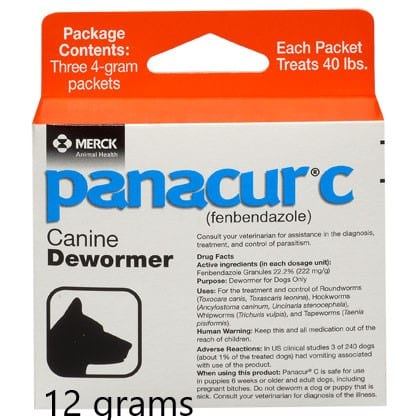
Safeguard 4 Canine De-Wormer provides safe and effective treatment and control of tapeworms, roundworms, hookworms, and whipworms in easy to feed granules that can be mixed into food. This product is safe for young puppies over the age of 6 weeks, pregnant female dogs, and heartworm infected dogs. Key Benefits

  • Treats and controls tapeworms, roundworms, hookworms, and whipworms.
  • Convenient, highly palatable granules that you can mix right into your pup’s food for hassle-free de-worming treatment.
  • Safe for any breed of young puppies over the age of 6 weeks and pregnant dogs.
  • Each pouch treats 40 lbs. Each package comes with three easy to use 4-gram pouches which should be administered for 3 consecutive days and are completely effective for up to 6 months.
  • A highly effective formula contains fenbendazole which is the same active ingredient found in prescription canine dewormers.

Also, there are a lot of different types of SafeGuard for different animals and pets, but in all types of SafeGuard, the main ingredient is Fenbendazole.

For more information about SafeGuard for dogs, you can always consult your veterinarian.

Drugs that are analogous to SafeGuard: Panacur C, Helmintazole, Helmintazole 222.

You can buy it at homelab shop.

Posted on Leave a comment

Animal dewormers and their types

Helmintazole 500mg capsules Fenbendazol panacur for dog

Dewormers and their types

Deworming (sometimes known as wormingdrenching, or “dehelmintization”) is the giving of an anthelmintic drug (a wormerdewormer, or drench) to a human or animal to rid them of helminths parasites, such as roundworm, flukes, and tapeworm. Purge dewormers for use in livestock can be formulated as a feed supplement that is eaten, a paste or gel that is deposited at the back of the animal’s mouth, a liquid drench given orally, an injectable, or as a pour-on which can be applied to the animal’s top line. In dogs and cats, purge dewormers come in many forms including a granular form to be added to food, pill form, chew tablets, and liquid suspensions.

Horses are most often dewormed with a paste or gel placed on the back of the animal’s mouth via a dosing syringe; feed dewormers are also used, both single-dose varieties and in a daily, “continuous” feed form. Deworming (drenching) a sheep is usually done with a specific drenching gun that squirts an anthelmintic into the sheep’s throat.

The Centers for Disease Control and Prevention recommends deworming treatments at 2, 4, 6, and 8 weeks of age for puppies, as well as concurrent treatments given to the mother to eliminate reactivated larvae and prevent horizontal transmission from puppies that may be shedding roundworm and hookworm eggs.[

They also recommend deworming treatments at 3, 5, 7, and 9 weeks of age for kittens and the mother.

Additionally, the Companion Animal Parasite Council (CAPC) further recommends quarterly treatments for all adult dogs and cats, depending on animal health and lifestyle factors.

When choosing a dewormer for dogs, you need to know what type of worms your dog has. You can purchase a dewormer for specific types of worms, or you can choose a broad-spectrum product. Dewormers for dogs come in several forms including tablets, granules, powders, and liquids, so talk to your veterinarian about the option that is best for your dog. Once you know what kind of dewormer you need, take a look at our top picks for the best dewormer for dogs. Best dog dewormer overall: Helmintazole 200, Helmintazole 222, and Helmintazole 500 PRO it is the same dewormer as Panacur C or Safe Guard with the same main ingredient Fenbendazole.

You can buy these dewormers at Homelabvet shop.

Posted on Leave a comment

Fenbendazole. What is fenbendazole?

panacur fenbendazole

What is fenbendazole

Fenbendazole (brand names Helmintazole®, Helmintazole Pro®, Helmintazole 200®, Helmintazole 222®, Helmintazole 500 caps®, Helmintazole 50 Tab®, Panacur®, Safe-Guard®) is a medication used to treat a variety of parasites (e.g., roundworms, hookworms, lungworm, whipworm, and certain types of tapeworms) in dogs. Its use in cats for the treatment of parasites is ‘off label’ or ‘extra-label’. Many drugs are commonly prescribed for off-label use in veterinary medicine. In these instances, follow your veterinarian’s directions and cautions very carefully.

panacur fenbendazole

How is fenbendazole given?

Fenbendazole comes as oral granules, tablets, capsules or as a liquid suspension and is given by mouth. Liquid forms must be measured carefully.

Fenbendazole should be given with food to reduce gastrointestinal upset.

Give this medication as directed by your veterinarian. Fenbendazole is often given once daily for 3 consecutive days and then again in another round 2-3 weeks later.

It is important that your pet receives all of the doses recommended by your veterinarian for best results. Do not stop early or skip doses unless recommended by your veterinarian. Retreatment may be necessary if doses are missed, the medication is stopped too soon, or if reinfection from the environment occurs.

This medication should take effect within 1 to 2 days, but visible effects will take the entire duration of treatment to be recognized.

What if I miss giving my pet the medication (or my shipment is late)?

If you miss a dose, give it when you remember. If it is close to the time for the next dose, skip the missed dose and give it at the next scheduled time. Never give your pet two doses at once or give extra doses.

Are there any potential side effects?

At regular doses, fenbendazole does not usually cause any side effects. Sometimes, substances released by the dying parasites may cause an allergic reaction, especially if fenbendazole is given at higher than regular doses. If your pet shows signs of an allergic reaction (facial swelling, itchiness, hives, diarrhea, seizures, or shock) seek veterinary care immediately.

Salivation, vomiting, and diarrhea may occur in dogs or cats receiving this medication.

This moderate-acting medication should stop working in a few days, although effects can be longer in pets with liver or kidney disease.

Are there any risk factors for this medication?

Fenbendazole is safe for use in most pets. Fenbendazole should not be used in:

  • puppies younger than 6 weeks of age.
  • sick animals

Are there any drug interactions I should be aware of?

While there are no known drug interactions with fenbendazole, be sure to tell your veterinarian about any medications (including vitamins, supplements, or herbal therapies) that your pet is taking.

Is there any monitoring that needs to be done with this medication?

Your veterinarian may recommend a fecal examination to be sure that all internal parasites have been killed and determine if additional doses are needed.

How do I store fenbendazole?

Store fenbendazole granules, tablets or capsules in a sealed container at room temperature and protected from sunlight.

If your veterinarian has made a special formulation for your pet, follow the storage recommendations on the label and expiration date for the product.

What should I do in case of emergency?

If you suspect an overdose or an adverse reaction to the medication, call your veterinary office. If they are not available, follow their directions in contacting an emergency facility.

If you want to buy Fenbendazole(Helmintazole…) online, you can buy it at Homelabvet.com, there are a lot of different types of Fenbendazole with different dosages.

Posted on Leave a comment

EXTRA AUTUMN DEWORMER SALE!

promo Helmintazole fenbendazole homelab

Today we have a great news about our dewormers. If you want to have a great discount on dewormer products you need just follow the link above.

If you follow by link above, you can buy the most popular dewormers of most popular companies. Extra sale for Helmintazole by Homelab, Panacur, Safe Guard, Fencur, fendeworm, Fenbendazole and etc. All of this dewormers includes active ingredient fenbendazole which is very effective for worm treatment.