When people aren’t debating whether cats or dogs are more intelligent, they’re equating them as mortal foes. That’s a stereotype that both cat expert Jackson Galaxy, host of the Animal Planet show My Cat From Hell, and certified dog trainer Zoe Sandor want to break.
Typically, cats are aloof and easily startled, while dogs are gregarious and territorial. This doesn’t mean, however, that they can’t share the same space—they’re just going to need your help. “If cats and dogs are brought up together in a positive, loving, encouraging environment, they’re going to be friends,” Galaxy tells Mental Floss. “Or at the very least, they’ll tolerate each other.”
The duo has teamed up to host a new Animal Planet series, Cat vs. Dog, which airs on Saturdays at 10 p.m. The show chronicles their efforts to help pet owners establish long-lasting peace—if not perfect harmony—among cats and dogs. (Yes, it’s possible.) Gleaned from both TV and off-camera experiences, here are eight tips Galaxy and Sandor say will help improve household relations between Fido and Fluffy.
TAKE PERSONALITY—NOT BREED—INTO ACCOUNT.
Contrary to popular belief, certain breeds of cats and dogs don’t typically get along better than others. According to Galaxy and Sandor, it’s more important to take their personalities and energy levels into account. If a dog is aggressive and territorial, it won’t be a good fit in a household with a skittish cat. In contrast, an aging dog would hate sharing his space with a rambunctious kitten.
If two animals don’t end up being a personality match, have a backup plan, or consider setting up a household arrangement that keeps them separated for the long term. And if you’re adopting a pet, do your homework and ask its previous owners or shelter if it’s lived with other animals before, or gets along with them.
2. TRAIN YOUR DOG.
To set your dog up for success with cats, teach it to control its impulses, Sandor says. Does it leap across the kitchen when someone drops a cookie, or go on high alert when it sees a squeaky toy? If so, it probably won’t be great with cats right off the bat, since it will likely jump up whenever it spots a feline.
Hold off Fido’s face time with Fluffy until the former is trained to stay put. And even then, keep a leash handy during the first several cat-dog meetings.
3. GIVE A CAT ITS OWN TERRITORY BEFORE IT MEETS A DOG.
Cats need a protected space—a “base camp” of sorts—that’s just theirs, Galaxy says. Make this refuge off-limits to the dog, but create safe spaces around the house, too. This way, the cat can confidently navigate shared territory without trouble from its canine sibling.
Since cats are natural climbers, Galaxy recommends taking advantage of your home’s vertical space. Buy tall cat trees, install shelves, or place a cat bed atop a bookcase. This allows your cat to observe the dog from a safe distance, or cross a room without touching the floor.
And while you’re at it, keep dogs away from the litter box. Cats should feel safe while doing their business, plus dogs sometimes (ew) like to snack on cat feces, a bad habit that can cause your pooch to contractintestinal parasites. These worms can cause a slew of health problems, including vomiting, diarrhea, weight loss, and anemia.
Baby gates work in a pinch, but since some dogs are escape artists, prepare for worst-case scenarios by keeping the litter box uncovered and in an open space. That way, the cat won’t be cornered and trapped mid-squat.
4. EXERCISE YOUR DOG’S BODY AND MIND.
“People exercise their dogs probably 20 percent of what they should really be doing,” Sandor says. “It’s really important that their energy is released somewhere else so that they have the ability to slow down their brains and really control themselves when they’re around kitties.”
Dogs also need lots of stimulation. Receiving it in a controlled manner makes them less likely to satisfy it by, say, chasing a cat. For this, Sandor recommends toys, herding-type activities, lure coursing, and high-intensity trick training.
“Instead of just taking a walk, stop and do a sit five times on every block,” she says. “And do direction changes three times on every block, or speed changes two times. It’s about unleashing their herding instincts and prey drive in an appropriate way.”
If you don’t have time for any of these activities, Zoe recommends hiring a dog walker, or enrolling in doggy daycare.
5. LET CATS AND DOGS FOLLOW THEIR NOSES.
In Galaxy’s new book, Total Cat Mojo, he says it’s a smart idea to let cats and dogs sniff each other’s bedding and toys before a face-to-face introduction. This way, they can satisfy their curiosity and avoid potential turf battles.
6. PLAN THE FIRST CAT/DOG MEETING CAREFULLY.
Just like humans, cats and dogs have just one good chance to make a great first impression. Luckily, they both love food, which might ultimately help them love each other.
Schedule the first cat-dog meeting during mealtime, but keep the dog on a leash and both animals on opposite sides of a closed door. They won’t see each other, but they will smell each other while chowing down on their respective foods. They’ll begin to associate this smell with food, thus “making it a good thing,” Galaxy says.
Do this every mealtime for several weeks, before slowly introducing visual simulation. Continue feeding the cat and dog separately, but on either side of a dog gate or screen, before finally removing it all together. By this point, “they’re eating side-by-side, pretty much ignoring each other,” Galaxy says. For safety’s sake, continue keeping the dog on a leash until you’re confident it’s safe to take it off (and even then, exercise caution).
7. KEEP THEIR FOOD AND TOYS SEPARATE.
After you’ve successfully ingratiated the cat and dog using feeding exercises, keep their food bowls separate. “A cat will walk up to the dog bowl—either while the dog’s eating, or in the vicinity—and try to eat out of it,” Galaxy says. “The dog just goes to town on them. You can’t assume that your dog isn’t food-protective or resource-protective.”
To prevent these disastrous mealtime encounters, schedule regular mealtimes for your pets (no free feeding!) and place the bowls in separate areas of the house, or the cat’s dish up on a table or another high spot.
Also, keep a close eye on the cat’s toys—competition over toys can also prompt fighting. “Dogs tend to get really into catnip,” Galaxy says. “My dog loves catnip a whole lot more than my cats do.”
8. CONSIDER RAISING A DOG AND CAT TOGETHER (IF YOU CAN).
Socializing these animals at a young age can be easier than introducing them as adults—pups are easily trainable “sponges” that soak up new information and situations, Sandor says. Plus, dogs are less confident and smaller at this stage in life, allowing the cat to “assume its rightful position at the top of the hierarchy,” she adds.
Remain watchful, though, to ensure everything goes smoothly—especially when the dog hits its rambunctious “teenage” stage before becoming a full-grown dog.
Cat vs. Dog Airs on Saturdays at 10 p.m. on Animal Planet
Deworming (sometimes known as worming, drenching, or “dehelmintization”) is the giving of an anthelmintic drug (a wormer, dewormer, or drench) to a human or animal to rid them of helminths parasites, such as roundworm, flukes, and tapeworm. Purge dewormers for use in livestock can be formulated as a feed supplement that is eaten, a paste or gel that is deposited at the back of the animal’s mouth, a liquid drench given orally, an injectable, or as a pour-on which can be applied to the animal’s top line. In dogs and cats, purge dewormers come in many forms including a granular form to be added to food, pill form, chew tablets, and liquid suspensions.
Horses are most often dewormed with a paste or gel placed on the back of the animal’s mouth via a dosing syringe; feed dewormers are also used, both single-dose varieties and in a daily, “continuous” feed form. Deworming (drenching) a sheep is usually done with a specific drenching gun that squirts an anthelmintic into the sheep’s throat.
The Centers for Disease Control and Prevention recommends deworming treatments at 2, 4, 6, and 8 weeks of age for puppies, as well as concurrent treatments given to the mother to eliminate reactivated larvae and prevent horizontal transmission from puppies that may be shedding roundworm and hookworm eggs.[
They also recommend deworming treatments at 3, 5, 7, and 9 weeks of age for kittens and the mother.
Additionally, the Companion Animal Parasite Council (CAPC) further recommends quarterly treatments for all adult dogs and cats, depending on animal health and lifestyle factors.
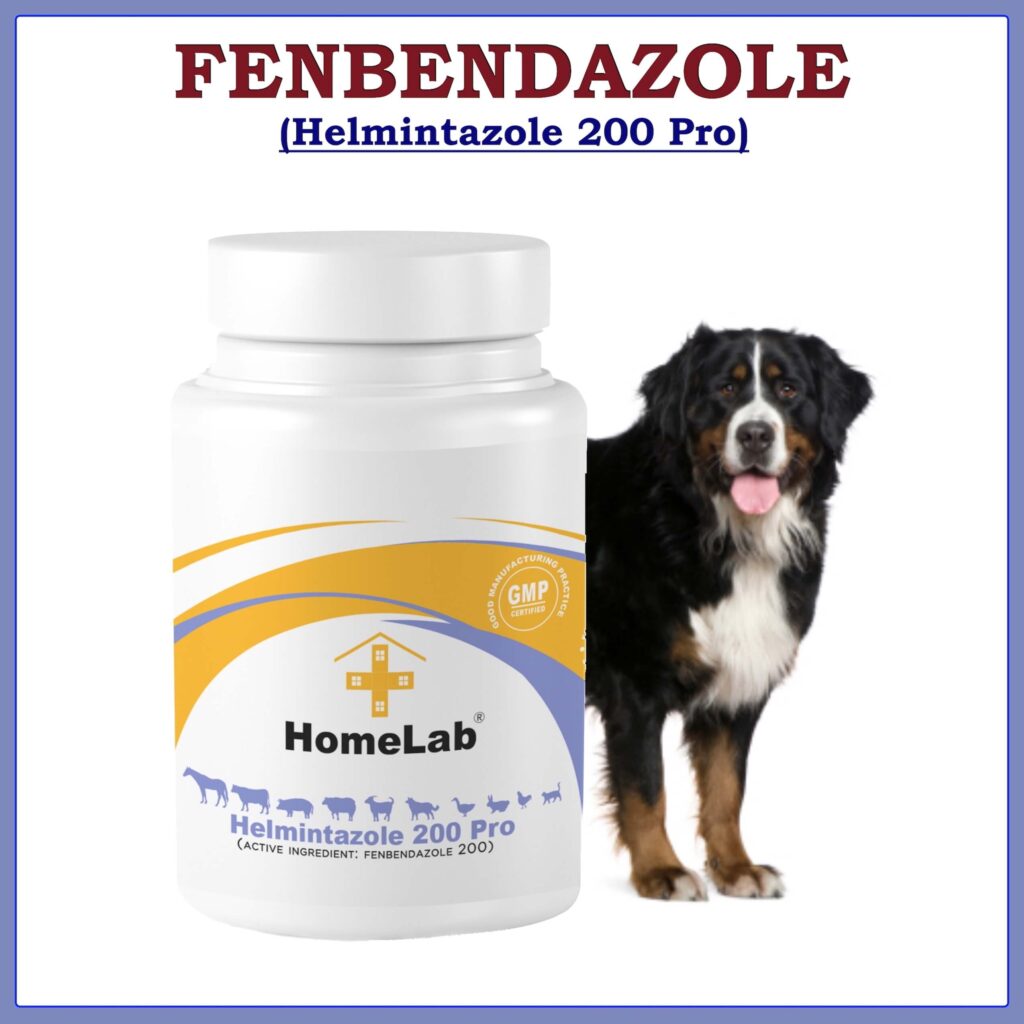
When choosing a dewormer for dogs, you need to know what type of worms your dog has. You can purchase a dewormer for specific types of worms, or you can choose a broad-spectrum product. Dewormers for dogs come in several forms including tablets, granules, powders, and liquids, so talk to your veterinarian about the option that is best for your dog. Once you know what kind of dewormer you need, take a look at our top picks for the best dewormer for dogs. Best dog dewormer overall: Helmintazole 200, Helmintazole 222, and Helmintazole 500 PRO it is the same dewormer as Panacur C or Safe Guard with the same main ingredient Fenbendazole.
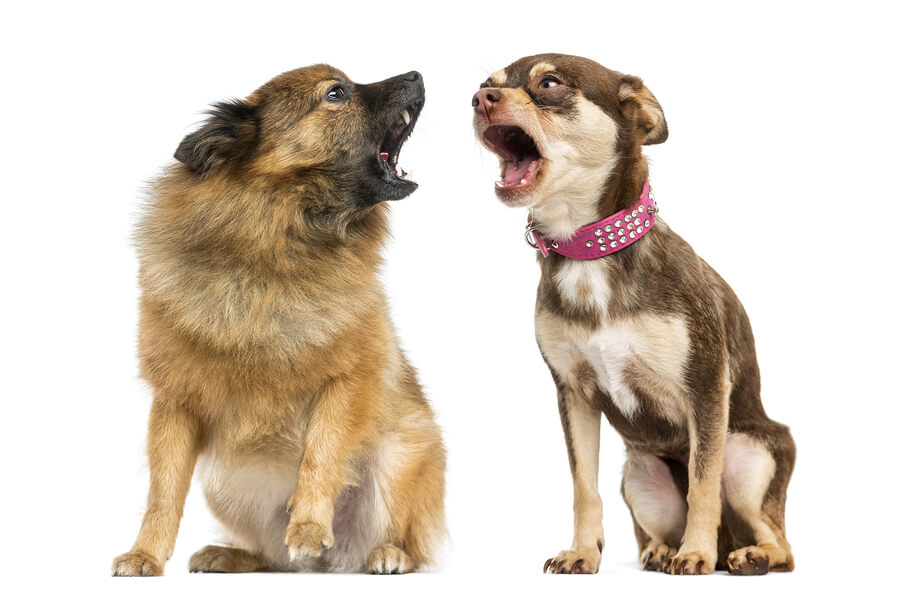
Bringing a dog into the house, the owners rarely think that there may be a problem with causeless barking. Sometimes, pets can bark early in the morning, waking up the whole house. Neighbors are not happy, and the owners are not always ready to get up at 6 in the morning. But some have children who, due to this situation, may not get enough sleep and go to school in a bad mood. All this gives reason to think about why this barking arises, what the dog wants and how to avoid it.
An unrelated dog is more dangerous for your family than for a potential stranger who threatens your property. Well-communicated dogs can also bark at a stranger who approaches your home. The dog does not need to go down to bite a stranger. Laat is enough to warn a stranger and protect his family.
Most dog breeds, such as jogging and intense physical exercise. An old French proverb says that you don’t stop a dog from barking or liars. The Ukrainian wisdom of change says that a dog barks because he cannot sing. What if your pet’s bark is not only a source of smiles of wisdom, but also a real problem? What if your dog barks out of boredom in your absence and cancels neighbors who can no longer stand?
REASONS FOR BARKING
Many people to the question why dogs bark, answer that they talk like that. This is partly true. Dogs communicate with each other through guttural sounds. The most common communication between dogs is roaring or whining. Why then do dogs bark? This is exactly what we’ll try to figure out now.
During barking, the dog is excited. What it can be caused by:
It should be remembered that barking is absolutely natural for a dog. Dogs use it in a variety of situations, when they call to play, they signal their uncertainty or impending dangers. If the dog husky functions and serves its purpose, then everything is in order. But if a dog barks without stopping, for example, when he is alone at home, and his excitement passes through a hysterical sting, then this is a problem.
To avoid this dog’s habit, you need to discover the cause of his barking. Most often it is the boredom of loneliness and, unfortunately, also fear. A dog is a social being, if left alone for a few hours, it is a little unnatural for him. If this happens, every person copes with it. One destroys the equipment at home, the other – all day.
In order to try to solve the problem with barking, it is necessary to understand its cause. If the reason is not established. And the dog barks, seemingly for no reason, it is worth contacting the veterinarian. To do a survey in this case does not hurt. Perhaps the dog feels pain and needs to be treated.
Several ways to get dogs barking. The simplest thing is to leave the TV or radio on you during your absence. You can help with an old broken shirt that will make you feel when you are not around. A good helper can also be a complicated toy that you will give only to your dog while you are away and who will like it for a long time. It is an ideal solution to leave the dog for a long walk before leaving, but in the morning it is not always a waste of time.
However, after returning home, do not forget to leave the dog for a while, take a walk with him, play with him, practice in the teams, just do what he likes. If a dog barks in your presence, for example, at passersby, always give the command “Silence”. When it is quiet, reward him with a brochure. Never order him to shout, you are only afraid of him, or he will believe that you are barking too, and you will strengthen his habit. If the dog is at rest and does not strike, you can praise him and reward him in these moments to realize that being good is worth it.
DOG BREEDER ERRORS
If the owner decided to fight dog bark, then in no case can he be encouraged. Encouraging barking at least once, trying to get rid of him will be much more difficult. After all, encouraging a dog for something. The dog thinks she is good and will always do so.
In order to wean the dog barking, you should follow these recommendations:
And if you are reasonable at the end, you all tried, and the dog barks like a bitch, without stopping, then you can try. Although dogs are social animals, they spend most of their time at home. Some dogs suffer from loneliness rather well, others show signs of stress. Stress can be mild to severe and can also be a so-called separation disorder. Dogs in stress often destroy the apartment, destroy household goods and equipment, bark loudly or eat.
Dogs are often behavioral disorders and can worsen if you do not cope with this. For dog owners, this is an unpleasant situation, barking often haunts neighbors and may have legal modifications. This is the most common reason why owners of their dogs give up. Therefore, it is important to prevent the occurrence of the problem or to begin its solution as soon as possible and not to delay the visit of the veterinarian or behavioral specialist.
It is necessary to teach the dog the command “quietly”. True, this method will not be effective in the absence of home owners.
During barking you should not pay attention to the dog, even a negative manifestation of attention by the dog will be considered as encouragement.
A dog, like a person, requires attention to itself. Need more time to spend with your pet.
If you want to wean from barking, it is worthwhile to approach the dog only after it calms down and stops barking. Otherwise, the dog will understand that barking can attract the attention of the owner to him.
When weaning off barking, you cannot use physical influence.
If, after your departure, the dog began to bark, you should not return. You must stand and listen to how long she will bark. If after 15 minutes she did not calm down. That will have to resort to methods of cupping barking.
BEHAVIOR ADJUSTMENT OPTIONS
You can correct the pet’s behavior. But this may take more time. Than on learning a new team. But if the decision on the adjustment was made, then you should not retreat. Adjusting the behavior of the dog, the state of the owner should be calm, no emotions should be shown. And so correction methods:
ARE THESE THE ONLY SIGNS OF A DOG’S SEPARATION ANXIETY?
Separative anxiety is a response to the behavior of a dog that cannot cope with the situation when he has to stay alone at home. While some dogs are noticeable, as we mentioned above, others are less recognizable.
How do I know if these problems affect my dog?
What can we do to reduce anxiety about dog separation at home? Visit a veterinarian or behavioral specialist and learn more about the behavior change plan.
Keep in mind that troubleshooting behavior may take longer. For best results, all family members should be prepared to follow a plan. The above video will give you some tips on how to help your dog cope with the situation when he should stay at home.
If the dog barks during the absence of the owners, you can resort to:
It is good to leave your dog before you leave. As mentioned above, the dog must be tired. In this case, the dog will eat, drink and rest.
Soothing preparations. In veterinary pharmacies, you can purchase sedatives, they are able to relieve anxiety. When resorting to such measures, it is worthwhile to thoroughly study the instructions for the selected drugs.
In addition to soothing drugs, you can resort to using various collars. Collars can be: vibrating, spray, ultrasonic, ESHO. All of these collars will help prevent dog barking.
THE CARDINAL METHOD OF ELIMINATING BARKING
If everything that was possible, have already tried. But the result was not achieved, then you can use the cardinal method. This method is guaranteed to get rid of dog barking, but it is very dangerous. This method consists in cutting the vocal cords. This is a full-fledged operation, so before you decide on it, you should weigh the pros and cons. The nuances of this method are as follows:
Additional tips on how to reduce your initial symptoms or help your dog overcome anxiety about separation. Give your dog a place where you will feel safe when he is at home, for example, a bed, a room or a cage – but only if your dog does not behave destructively and nervously, when he has limited space. Reward your dog whenever he behaves calmly – practice “lie down and stay” with him and reward him for his calm behavior in a safe place. Make sure your dog has enough movement and havoc before leaving it at home. Let your dog have an interesting toy or pizza bowl to eat to work while you are away. Make sure your departures and arrivals are calm, just say “Go” and leave, and gently “hello” when you return. If your dog is behaving destructively or devastated in an apartment when you are not, never try it, it only increases stress. If these measures are not effective, visit your veterinarian or behavioral disorder specialist. This means replacing the cartridge at appropriate intervals. . Repeat this every day – as soon as you close the door of your apartment, your dog will be waiting for you to leave and start a daily concert.
This procedure occurs under the action of anesthesia, which is bad for the health of the dog.
Anesthesia can sometimes lead to the death of the animal.
Dogs of small breeds more difficult to tolerate anesthesia.
The operation is very complicated, the mistake of the doctor can be very expensive.
After such an operation there can be a lot of complications.
So it’s up to you to decide whether the dog should be operated on or not by the owner, but do not forget that it is very dangerous. You must first try all the more simple ways, because dogs are very intelligent animals, it may be that everything will go without surgery.
You are helpless because all the measures taken so far have failed. In addition, you are afraid that the behavior of the dog will not end in court. Yes, barking dogs can still be classified as a violation of the law and may be in court. Dog owners must ensure silence so that the dog is not disturbed by the annoying noise of barking and whining. The owner of the dog must also make sure that his dog is not sent to the neighboring area. If you look at the behavior of the dog from the point of view of the neighbor, you feel that he is right.
BARKING IN MODERATION WITHOUT DISTURBING THE NEIGHBORS
Also for you a constant barking day or night will be unbearable. Dog bark is natural. Even before the dogs were domesticated, they served as guard dogs, helping to protect the property. At a time when dogs were barking at night, it often happened that someone in the neighborhood was not expected. The owners got up, controlled the farm, the property, if it turned out that everything was in order, the dog calmed down so that he would not interrupt his dream of barking.
With the help of barking, the dog expresses its emotions and communicates with its congeners. She can bark happily, menacingly or frightened. The dog never barks just like that, there is always a reason. Therefore, before you punish your pet, you need to figure out why this is happening. The reasons for the constant barking can be:
Dog bored. This happens when the owner goes to work all day, while the four-legged friend is left alone. If a dog is tied up in a private house, it also becomes boring, and it begins not only to bark, but also to howl.
Barking can also be an expression of dog protest. She does not agree with the fact that she alone was locked in a separate room or cell. The sound of such a bark is demanding, sonorous. The dog can sit at the door for a long time, lifting his head up, protesting out loud.
A four-legged friend can bark at another animal that he cannot reach. For example, this happens when a cat or another dog is walking outside. If the stimulus is constantly in front of the dog, the barking will not stop until the desired object disappears from view.
Monotonous barking at night suggests that the dog is scared. She may be afraid of night sounds or she is afraid to be alone.
He will bark until strangers leave home.
HOW TO WEAN THE HABIT OF BARKING
This situation may not be an easy cracking nut. You sit at work and just helplessly imagine what is happening in the apartment, because the dog was alone. Once and for all, you can limit the barking of a dog. You think you all tried to stop the barking of dogs?
A dog barking in an apartment is not special, as many dog hunters face this problem after leaving the apartment. Most owners are already in despair, as the barking of the dog bothers the neighbors. It is sometimes very difficult to shrug a dog barking with typical commands and measures. Limit the barking of the dog, the collar, which will take care of the dogs to their hands when the apartment door closes behind you in a few hours.
so that the dog does not bark in the absence of the owner of the house, he must leave several different toys. When he wakes up, he will get down to business, for example, as shown in the video, he will begin to nibble his favorite ball or toy in the form of a bone. Many hours of fun can serve as a brain bone, a plastic bottle, a rubber tire. In the toy, you can hide a treat. The dog will be keen on finding delicious, time flies by unnoticed by her;
the pet owner should review the pet day routine. A long walk with a game and exercise will tire the dog. Training, swimming, running – this exhausts the dog. Having come home, he will fall asleep. If they bark, it will end quickly.
There is also an unusual method to discourage a dog from barking for no reason. Pet stores sell special collars. They have special sensors that respond to vibrations of the vocal cords. During barking in the face water splashes. The dog is discouraged and forgets about barking. After the third or fourth time, the animal begins to understand that every “wow” will be punished by a stream of water. This collar is used for small breeds of dogs.
The most effective, based on our experience, are electronic pulse impulse collars. Depending on the model, they send a pulse at a given level, or the pulse gradually increases if the dog does not stop barking. However, nonetheless, the pulse level threatens the dog.
The more antidote to the collar, the easier it will be for your dog to learn. The most important functions that the collar should have are an acoustic signal and an electrostatic pulse. Most modern electronic anti-vibration collars have these features, supplemented by vibration or other types of correction. You can meet the following types of collars.
For large breeds or stubborn dogs that are difficult to train, there are other collars. Instead of water, they emit an electrical impulse. First comes a warning signal, and then a stronger impulse, which the dog cannot ignore.
Lai dog at all says that he is not socialized. The owner with a pet needs to walk in crowded places as often as possible. To accustom him to the crowd, it is necessary to take the animal on a leash and at a fast pace to walk in crowded places of the city. While running the dog will not be to the people around her. This is one of the most effective exercises to teach the dog to various stimuli.
Sound antiseptic collars: Sound warning should always precede the impulse. The dog will very quickly understand that before the unpleasant pulse the collar sends a sound and reacts to correction. In practice, this is the most frequently activated correction.
Bright anti-slip collars: usually serves as a step between the sound signal and the electrostatic pulse, if the dog does not respond to the sound warning. Vibration intensity may be available at several levels. If the collar is only vibration, this is the main function, the effectiveness of this type of collar is limited, we recommend them mainly for dogs, smaller and more restful.
For large breeds, a strict collar is used at the beginning of the training, because even a strong person cannot easily control an active pet of large size. Training consists in stable twitching of an animal, switching attention to the owner. When a stimulus appears, the pet’s attention must be switched to another object, for example, to a treat or a ball. Rapid movement begins with the command “Near”. From time to time you need to seat the dog next to it and continue moving again.
Individual approach is necessary for four-legged friends suffering from hysteria, fear of public places. The method of sharp entry into a noisy place is not for them. In this case, the method of gradual habituation of a pet to crowded places will do. First you need to walk, where not many people.
The owner of the dog will be useful to make friends with other owners of four-legged friends. Joint walks with congeners will give the dog confidence.
When living in an apartment, its important to know whether or not the dog breed you have or are thinking of getting will be comfortable and adaptable to apartment life.
In short, dachshunds are wonderful apartment dogs who will generally do just fine within a smaller living space.
Ultimately, you need to know the temperament of your particular dog to know if they will adjust to apartment life.
There are some considerations, however, that you need to be aware of when dealing with dachshunds and apartments. We’ll go through some of those within the article below.
Speak with your landlord
Communication is key and knowing your building’s pet policy is extremely important before signing a lease.
You may love the building and decide that getting a dachshund just isn’t in the cards, or you may simply want to move on to the next apartment that is pet friendly.
The good news is that even if they have size requirements for pets that they allow, a dachshund’s small stature will work in its favor.
You may be required to put an additional deposit down for any damage that may occur from your doxie, however, this is normal and should be stated clearly in your lease.
Don’t be sneaky! There is no way you’re going to be able to keep your dachshund’s presence a secret from your neighbors or landlord.
You will get caught and then you will be forced to move or give up your dog.
Small size is a plus
The most obvious thing going for a dachshund and apartment living is their small size.
It goes without saying that it is much easier having a smaller dog breed living with you in your apartment than a large breed – i.e. a German Shepherd.
Dachshunds won’t knock into everything within your apartment or need a large space to roam.
Providing that they feel comfortable within your apartment and have the necessary items to keep them occupied, their size is ideal for small space living.
Barking
It’s no secret that dachshunds can bark quite a lot and sometimes it can be annoying.
It’s one thing to be annoyed at your dog’s bark within the confines of your house, it’s another thing to have your dachshund barking within an apartment.
You will get to know your neighbors fairly quickly if your dog is barking in your apartment.
They will not be impressed and may take the issue up with you directly (hopefully) or worse file a complaint with the apartment superintendent about the noise of your dog.
Either way, you will have a problem on your hands.
Here are some tips to help with your dachshund barking in your apartment:
Block their view as this will prevent them from getting excited by perceived threats or something exciting they may see in the window.
Give them something to do by providing them with a tennis ball or maybe even better – cutting the tennis ball open slightly and stuffing some treats within it.
This will keep your dachshund occupied for hours as they try and get at the treats.
Exercise your feline friend before you leave for the day. This can do wonders for their restlessness and will tire them out for the morning.
A quick walk in a nearby park or even along the sidewalk outside your apartment will hopefully use up some of their energy.
Blankets are a great idea if your dachshund likes to dig and explore as this will also keep them occupied and busy.
Leave the TV on with low volume if you think this will help your dachshund feel like someone else is with them in the room.
Having them in a crate for a short time may actually settle them down and make them feel secure, thus lessening the chance of them barking.
Seek professional dog training as a last resort if their barking doesn’t seem to be under control.
If they seem to bark at the slightest noise or movement, even when you’re home with them in your apartment, then you probably need further techniques.
A qualified dog trainer can help with this.
Adaptable
Like anything in life, moving from a spacious home to an apartment will take some adjustment. Is your dachshund a puppy?
Great, it will be fairly easy as they just don’t know any better and apartment life will become the ‘norm’.
But what if your dachshund previously lived in a home with easy access to a yard?
This will be more of a challenge and depending on the age and temperament of your dog you will need to take this into consideration.
Know that dachshunds like to burn off energy, so if you can create a consistent exercise routine of going outside often then you should have no issue with your dog adapting to apartment life.
Apartments can be noisy
Most apartment buildings are located in the city close to traffic, sirens, buses and lots of people. Do not assume that your dachshund will be ok with his or her new home.
You’ll want to introduce your doxie to these changes slowly and make sure they are comfortable with their new surroundings.
You may need to spend extra time with your dog and provide more leash time for your four legged friend.
Set time aside to give them activity each and every day to ensure their transition to apartment life is a good one.
Need for exercise
Dachshunds don’t necessarily need as much exercise as other dog breeds, however, they are still fairly active and need to burn off energy.
Just because you will be living in an apartment doesn’t mean you should break their routine of going out and exercising often.
Yes, it will take more effort to go down the hallway, into the elevator, and out the building – but it will be worth it.
Your dachshund will love you for it and will make their apartment experience a positive one.
Potty training
Depending on your situation, you may need to consider a pee pad or dog litter box in your apartment until you can successfully potty train your doxie.
Pee pads will usually contain a scent that will attract your dachshund to go on the pad.
Make sure to praise your feline friend when they successfully use it or to place your dog on the pad when its showing the classic signs of needing to go.
Try to find pads that are reusable and washable.
Dog litter boxes can be a square of synthetic grass on top of a tray, a pan that holds litter or can even be actual grass delivered to you by monthly subscription.
You can keep this in the corner of your apartment or even put it outside on your balcony if possible.
Vaccinations
Ensuring your dachshund is free of parasites and vaccinated is extremely important within an apartment complex.
Should the worst happen and your dog bites someone, you’ll need to prove that it was vaccinated.
Because you are going to be on shared common areas and interacting with children and other folks, this is very important and you shouldn’t neglect this task.
Other dogs within building
Get to know your neighbors and tenants within your building so that you can network with other dog owners.
Dogs like to have companionship and maybe its possible you can coordinate your dog walks with another dog so that your dachshund has someone to be friends with.
Sometimes there is a teenager or retiree who would be more than happy to walk your dog. It could be complimentary or you could pay them a small amount for the gesture.
What’s great about being in an apartment is the proximity to everyone, so there is a better chance of getting to know people compared to being in a house.
First floor
Do you need to be on the first floor when you own a dog in an apartment? Not necessarily, but having said that it would certainly help.
If you can simply open your sliding door and walk out to the common areas with your dog it can be tremendously convenient.
Obviously there are downsides to a first floor apartment unit, namely security and increased noise from outside.
Having said this, all the benefits that come with it for dog owners may be worth it.
Setting up rules and guidelines
You’re going to be living in a confined space. This doesn’t mean that your dog gets to takeover your apartment.
You’ll need to train your dachshund to know if its OK to lounge on your sofa or pick a spot on your bed.
Set up clear guidelines and training for your dog when it comes to your apartment space.
Just because the space is smaller, doesn’t mean that you should forego rules as to what areas of the apartment are off limits.
Reassure neighbors
Your neighbors may be dog people already or they may not. Be proactive and introduce your doxie to them whenever you can.
It’s important that they know that you are training your dog within your apartment and that you take care of it with love and direction.
Give them your cell number or email address and ask them to contact you should there be any issues with barking or anything else that is of concern.
This will put them at ease and show that you are a responsible dog owner.
Conclusion
Dachshunds love affection and companionship.
Whether that means they are close to you in an apartment or house is of no consequence to them providing they feel loved and wanted.
If you are often away from your home, then this will cause more of a problem in an apartment then it would a house.
I would advise against having any dog in an apartment if it will be left alone for long periods of time.
With regular exercise, interaction, potty training and play time, your dachshund will adjust very well to apartment life.
Welcome to our blog , we want to tell 10 facts of animal homelessness! The 10 facts you want are below, and the sources for the facts are at the very bottom of the page.
Only 1 out of every 10 dogs born will find a permanent home.
The main reasons animals are in shelters: owners give them up, or animal control finds them on the street.
Each year, approximately 2.7 million dogs and cats are killed every year because shelters are too full and there aren’t enough adoptive homes. Act as a publicist for your local shelter so pets can find homes.
Approximately 7.6 million companion animals enter animal shelters nationwide every year. Of those, approximately 3.9 million are dogs and 3.4 million are cats.
According to the National Council on Pet Population Study and Policy (NCPPSP), less than 2% of cats and only 15 to 20% of dogs are returned to their owners.
25% of dogs that enter local shelters are purebred.
About twice as many animals enter shelters as strays compared to the number that are relinquished by their owners.
It’s impossible to determine how many stray dogs and cats live in the United States. Estimates for cats alone range up to 70 million.
Only 10% of the animals received by shelters have been spayed or neutered. Overpopulation, due to owners letting their pets accidentally or intentionally reproduce, sees millions of these “excess” animals killed annually.
Many strays are lost pets that were not kept properly indoors or provided with identification.
With more than 190 dog breeds and varieties registered with the American Kennel Club, each dog was assigned to one of seven groups that detail its particular functions, roles, and characteristics. Here are the seven types of dog breeds, their histories, and what pet owners can expect when taking one of these four-legged friends home.
Dogs in the sporting group were bred to be a hunter’s best sidekick—their purpose is to assist with catching feathered game. Thanks to the invention of the gun, sporting dogs were developed as hunters found they needed a canine’s help with retrieving upland game birds or waterfowl.
There are four basic types of Sporting dogs: spaniels, pointers, retrievers, and setters. Some of the breeds in this group, such as retrievers, are especially adept at swimming and specialize in waterfowl like ducks, while setters, spaniels, and pointing breeds are known experts in hunting quail, pheasant, and other game birds in the grasslands.
While these breeds may be known for performing multiple tasks to aid the hunter, typically pointers and setters would identify and mark game by pointing, spaniels would flush game, and retrievers would be in charge of recovering dead and wounded game.
All of the Sporting Group dogs are characterized by their natural active and alert personalities, stable temperaments, and their instincts both in the water and out in the woods. Sporting dogs make lovable, well-rounded pets and are the perfect addition to active families, as these energetic, alert dogs will require plenty of exercise and time spent outdoors.
Hound Group
Originally, dogs in the Hound Group were also used for hunting and classified as Sporting Dogs; however, in 1930, the American Kennel Club introduced the Hound Group to include dogs that have specifically been bred to pursue warm-blooded quarry.
Though Hounds share their astute hunting skills, this group encompasses a diverse array of breeds. Sleek, long-legged sighthounds rely on their explosive speed, incredible stamina, and sharp, wide vision to chase fast animals like jackrabbits and antelope and either bring them down or hold them at bay until the hunter arrives. Scent hounds are responsible for using their acute sense of smell to track game, and are known for being more rugged and durable and having the ability to trail just about anything—whether it’s a squirrel or a missing person.
While it’s difficult to make generalizations about such a diverse group of dogs, generally, the charming, affectionate dogs in this group will make loyal companions and family pets, and some will require more vigorous exercise than others.
Toy Group
In existence for centuries, the toy breed was bred for the purpose of serving as companions for their humans. These small, easily portable dogs can be most often found sitting in the lap of their humans—or being carried around. Ideal for apartment living or anyone with limited space, many of these dogs have been bred down from their larger cousins.
The breeds categorized in the Toy group tend to be affectionate and easily adaptable to their family’s environment. They are intelligent, sociable, and full of energy, and despite their small stature, many do have strong protective instincts and big personalities.
Non-Sporting Group
A group for dogs that don’t quite fit in anywhere else, the Non-Sporting Group encompasses a variety of breeds with jobs that don’t satisfy the requirements of the other six groups. The AKC originally registered dogs as either Sporting or Non-Sporting, and over time, hounds and terriers were separated from the Sporting Group while Toy and Working dogs developed from the Non-Sporting. There was eventually a separate category to distinguish Herding dogs from Working dogs.
The Non-Sporting Group are all the dogs that remain, and thus have a variety of sizes, functions, and history. Most of these dogs make generally good house dogs and watchdogs, but with breeds ranging from the French Bulldog to the Poodle, their differences are so vast that it makes it difficult to generalize their individual traits.
Working Group
The dogs in the Working Group dogs split off from the Non-Sporting Group, with the role of performing specific jobs related to guarding property or performing rescues. Considered the blue-collar workers of the canine community, dogs that are categorized into the Working Group have historically been responsible for tasks ranging from pulling sleds and carts to guarding flocks and homes.
While the appearances and jobs of the dogs in this group vary, most are powerful and intelligent, and can be relied on to perform rescues and any other tasks to protect their families. These dogs include farm and draft animals, security, police, and military dogs, as well as guide and service dogs. As such, they make dependable, loyal pets with incredible intelligence and energy.
Herding Group
Categorized by the AKC in 1983, the Herding Group includes the breeds with possibly the most straightforward task. Once included with the Working Group dogs, the group includes 30 breeds in a wide variety of sizes, from the Corgi to the German Shepherd.
Herding dogs have historically been bred to gather, herd, and protect livestock, and work closely with human shepherds. The intelligence and natural responsiveness of these dogs makes them highly trainable. Though all of these dogs share the natural skill of guiding and controlling the movements of other animals, those that are kept as pets will use their instinctual urges to herd their humans—which is why they’re especially great with children. Additionally, they tend to be affectionate and loyal companions and respond very well to training.
Terrier Group
The vast majority of the dogs in the Terrier Group originated in the British Isles and evolved with particular duties based upon the geography of their specific area, including killing vermin and guarding their family’s home or barn. Most of these dogs were bred for tasks such as hunting small animals including rats, otters, and badgers.
There are a few variations of terriers; short-legged terriers were bred to pursuit rodents underground, while terriers with long legs are able to dig out these creatures rather than burrowing in after them. “Bull” breeds were once created for bull baiting and dogfights, but, happily, are now some of today’s go-to companion dogs.
All of these dogs share the common trait of self-confidence and courage, as they are determined to do what it takes to locate its quarry no matter the terrain, whether it’s water or mountains. Dogs in the Terrier Group tend to be energetic and feisty. While they do make lovable pets, they tend to have stubborn personalities and some breeds may require special grooming.
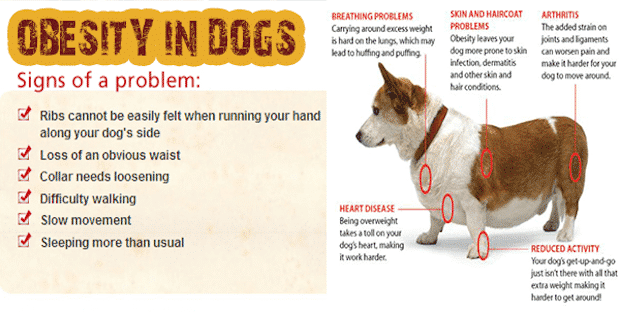
In North America, obesity is the most common preventable disease in dogs. Approximately 25-30% of the general canine population is obese, with 40-45% of dogs aged 5-11 years old weighing in higher than normal.
What is obesity?
Obesity is an accumulation of excess body fat. Extra body weight and extra body fat tend to go hand in hand, so most overweight dogs will have excess body fat.
Body weight is easy to measure when assessing if a dog is overweight or obese – easier than trying to measure body fat. Using body weight as a guide, dogs are considered to be overweight when they weigh 10-20% above their ideal body weight. They are considered obese when they weigh 20% or more above their ideal body weight.
What are the risks with obesity?
Obesity shortens a dog’s life and makes them more likely to develop disease. It was always accepted that heavy dogs lived a shorter lifespan than lean dogs, usually by 6-12 months. But a large, lifetime study of Labrador Retrievers has found that being even moderately overweight can reduce a dog’s life expectancy by nearly two years compared to their leaner counterparts. This is a sobering statistic.
Previously, fat was considered to be relatively inactive tissue, simply storing excess energy calories and adding to body mass. However, scientific evidence now reveals that fat tissue is biologically active. It secretes inflammatory hormones and creates oxidative stress on the body’s tissue, both of which contribute to many diseases. Thinking of obesity as a chronic, low-level inflammatory condition is a new approach.
“Excess fat negatively impacts a dog’s health and longevity.”
Obese dogs develop an increased risk for:
many types of cancer, diabetes mellitus, heart disease, and hypertension
osteoarthritis and a faster degeneration of affected joints
urinary bladder stones
anesthetic complications as they are less heat tolerant
On the other hand, obesity may be an indicator of disease, such as hypothyroidism (an underactive thyroid gland) or Cushing’s disease (overactive adrenal glands).
How do I know if my dog is obese?
The very first step in dealing with an overweight or obese dog is to recognize and acknowledge that there is a problem. Unfortunately, we are inundated with images in the media of dogs that are consistently too heavy, which makes it challenging to understand what normal looks like. Your veterinarian and veterinary health care team can assist with an assessment.
Rib coverage is not only an important measurement to help you identify if your dog is overweight, but it is also easy for you to do at home, on your own. If you hold your hand palm down and feel your knuckles with the flats of the fingers on the opposite hand, this is how your dog’s ribs should feel just behind the shoulder blades. It is also a good method for measuring weight loss progress between formal weigh-ins.
Your veterinary health care team will provide an estimated ideal body weight to use as a target, but it is important that they also do regular body condition assessments to ensure progress is being made toward normal body weight and body condition. Most veterinary practices use a body condition scoring system on a scale of either 1-5 (3 is normal) or 1-9 (4.5 is normal).
How do I adjust my dog’s meals to help him lose weight?
Once you have identified that your dog is overweight or obese, it is important to adjust feedings specifically for weight loss – using a specific nutritional product, a specific portion, and a specific meal frequency. There are scientifically formulated nutritional products to help with healthy and safe weight reduction in dogs such as Hills® Prescription Diet® Metabolic, Royal Canin® Satiety Support Weight Management, and Purina Overweight Management®. It is not appropriate to simply reduce the volume of their current food. This will cause malnourishment over time.
It is appropriate and important to feed a nutritional product that has lower overall calorie density, yet maintains an appropriate nutrient balance. Your veterinary health care team can help you determine which nutritional products are best for your dog.
Once the new food has been selected and the new portions are determined, it is critical that you be consistent with feeding – portions and meal frequency – and to resist the temptation to provide inappropriate snacks. Treats should make up no more than 10% of your dog’s daily calorie intake. Fresh or frozen green beans, broccoli, and cauliflower, as well as air-popped popcorn all make excellent snacks if approved by your veterinarian.
“It is not appropriate to simply reduce the volume of their current food. This will cause malnourishment over time.”
Regular weigh-ins, every 2-3 weeks (or at minimum once per month), are an important component of successful canine weight loss and it keeps everyone accountable – Weight Watchers® has been using this principle for decades. It is important to verify weight loss, to ensure that weight loss is neither too rapid nor excessive, and to determine when enough weight has been lost.
For further tips on reducing your dog’s weight, see the handout “Creating a Weight Reduction Plan for Dogs” and “Walking Your Dog for Weight Loss”.
What happens when we reach our weight loss goal?
Once an ideal body weight and condition has been achieved, it is important to maintain that weight. Once again, your veterinary health care team can help you find an appropriate food and portion for weight maintenance.
Portion control is critical at this stage to prevent regaining weight. After so much hard work, a relapse in obesity would be disappointing. Yo-yo weight loss and gain is no healthier for dogs than for humans. The benefits of normalizing body weight and condition make the effort well worth it.
The unique tandem of cats and women has always attracted attention and generated many different theories about their relationship with each other. Although cats have always been distinguished by their independence and dissimilarity to other living beings, their similarities with women and their special relationship with them require a special discussion.
Pure Beauty
The main common feature that a woman and a cat have is the desire of both beauty and conquest of the world. Such a tradition originated in the depths of centuries, and even in ancient times cats were always depicted next to the most beautiful women, and any beauty was automatically compared in her grace and grace to representatives of the cat family. And, of course, cats and women always got along very well. For example, in Turkey, statuettes were found dating back to the 6th millennium BC, which depicts women playing with cats. And even then, each mistress of the house reserved for her pet the most privileged place in the house.
This is not surprising, because a woman and a cat have one more thing in common – independence, bordering on affection. It was the gentleness of a woman who always attracted a cat to her side, and thanks to this, the feline race was closely intertwined with the human one, and the cat began not only to decorate the house with itself but also to protect it from various dangers. Soon, in almost every country, special rules and laws appeared that require respectful and reverent treatment of cats:
in Britain there was a code of laws determining the value of a cat and prescribing punishment for cruelty to it;
in America, a cat immediately became an object of exchange trade, as well as the patroness of many houses, which she saved from epidemics and other disasters;
in Paraguay, at the legislative level, it has been established that every cat is worth a pound of gold;
in Ancient Russia in the 14th-century laws existed that penalized cat larceny and imposed huge fines on thieves.
And in each of the situations, the behavior of cats was not important: animals were considered sacred even when they showed their difficult character, and it was women who played a significant role in recognizing their sacred value.
Unattainable ideal
In addition, from time immemorial, women and cats have in common many common features – both appearance and character:
resourcefulness and intelligence inherent in both
quick reaction and agility,
excellent plastic
undeniable external beauty
some detachment.
Thanks to this, women gave their hearts to cats many centuries ago. And today this tradition continues, because it is in the graceful representatives of feline women that they see a real ideal, which is often unattainable for themselves.
A cat for women is a living embodiment of beauty, and the independent behavior of cats is an example to follow. This is not surprising, because:
cats do not have problems with being overweight,
cats do not need fur coats – their silky and delicate fur is admired by everyone;
cats do not need to fawn in front of people to be stroked – it only allows you to do this if she liked the person;
the cat is always beautiful, no matter what she does;
the cat does not need to take care of its kittens all its life and even think about who it is pregnant from;
the cat is patient and ready to faithfully listen to all the sorrows of its owners, without giving them any stupid advice,
the behavior of cats can be anything, but no one can be angry for a graceful and touching animal for a long time.
And, of course, there are some comic “differences” between women and cats, which men often like to talk about:
the cat is fluffy throughout the body, and not just on the head,
for beauty, the cat doesn’t need makeup,
the cat remains graceful in any situation,
the cat eats less
the cat can purr beautifully,
the cat is easy to keep on your lap
if her owner gets sick, the cat will just sleep next to him, without disturbing him,
the cat will never whimper and complain
the cat is always clean and takes care of itself,
the cat will not be offended by you if you are tired and you are not up to it,
a good word will always please a cat,
the cat doesn’t need new outfits,
Getting a cat in the house is always very easy!
However, even in spite of these small “differences”, it is the woman and the cat who always get along best with each other. And even if the owner of the animal is just the man, his pet can easily neglect it, and all attention will be paid to his chosen one!
Also, if you want your lovely cat always be happy and healthy, you should give to your cat antihelminth treatment like Helmintazole with the active ingredient Fenbendazole (펜 벤다 졸). If you need Fenbendazole for worm treatment you can always buy it at Homelabvet.com.
Nature provided the cat with everything you need – hunting skills, excellent eyesight and hearing, retractable claws, flexibility and unique grace, functional and beautiful wool. Cats are very clean animals, but can not maintain a neat and healthy coat, especially long – haired cats, on their own.
Cleanliness
In order that the cat’s coat not deliver to it and various other disadvantages and to look good, the owner must periodically perform a series of hygiene procedures. If enough for the owners shorthairs your pet comb several times a week with a brush massage, then owners species long hair need to do this every day with various types of brushes. Bathing a pet with long hair and an inner layer developed also be organized more often than for short hair.
In addition, it is necessary to wash the hair using dry shampoo monthly or special spray, regular application of antistatic conditioners, lotions and balms health of wool. Otherwise, mats, which needs to be cut, and all kinds of skin diseases are formed.
When do I need to cut cats?
No need to cut a pet if there is an opportunity to organize good nutrition, vitamin support for animals and care all stages of their six. Cat grooming is needed in certain cases:
– the animal is difficult to tolerate heat due to the wool in bulk;
– the cat resists hygiene procedures will not be allowed to be bathed and combed;
– Skin diseases;
– the presence of mats;
– as one of the measures prolonged moulting caused for several reasons;
– pedestrian street animal wool adverse weather conditions;
– get the wool in the digestive tract, with consequences as vomiting and defecation problems;
– participation in exhibitions.
Lack of time to take care of animal hair and regular cleaning of the room, the presence of allergic reactions among family members of the owners or house guests, also among the reasons why the cat owners apply to animal groomers. The list price for haircuts dogs and cats includes decorative and haircuts from a purely hygienic orientation. There are restrictions on the choice of cat hair cuts – even for decorative purposes can not cut off the head, mustache, hair in the ears and the tip of the tail cats.
Effects of cats grooming
After shearing, the condition of the animal ‘s hair may change. The possible consequences of the procedure:
– change the structure of wool and skin elasticity of the animal;
– wool in the abdomen and back after cutting has a darker shade;
– deteriorating adaptation to temperature changes;
– Alopecia or all sorts of problems with fouling hair.
To teach cats hygiene procedures and haircut, preferably from childhood. Otherwise, any tampering with the animal ‘s fur can bring great stress for the pet. Do not cut the cat yourself, as it can harm the animal. A hairdresser with experience is able to find an approach to a scared client, so you do not need the use of muzzles, collars and other means to maintain strength for a pet.
Some cats may be cut only with the use of sedatives. Correctly designate the correct means can only be a veterinarian, start your reception should be a couple of days prior to the procedure. In some cases, a haircut can be done only with the use of immobilization of pharmacological medications or under anesthesia. Any anesthesia must be selected and controlled by a veterinarian. Anesthesia has many contraindications and can adversely affect the health of the pet.
We love our pets. But sometimes they make us sick – literally. In fact, all sorts of animals – including dogs, cats, and farm animals – can spread illness to humans. Some so-called “zoonoses” are mild, but some can be serious or even fatal.
Here’s the dirt on 10 diseases animals can give you, based on information provided by the Centers for Disease Control and Prevention.
Catch scratch disease
A bacterial infection, cat scratch disease – a.k.a. cat scratch fever – can spread to humans via the bite or scratch of an infected feline. Most people with CSD develop a mild infection, though some get swollen lymph nodes, fever, and fatigue. The illness can be particularly severe for people with reduced immunity.
About 40% of cats carry the disease-causing bacterium B. henselae at some point. But be careful, as your cat probably won’t show signs of infection.
Psittacosis
People get psittacosis by breathing in dust from dried droppings of infected birds, so bird owners and pet store workers are at special risk. Though it’s commonly called parrot fever, psittacosis can also be spread by pigeons, ducks, turkeys, and other birds. The illness typically lasts one to three weeks, with symptoms including fever, chills, diarrhea, and dry cough. Not to worry, antibiotics can cure man and bird alike.
Brucellosis
Blood test and blood/tissue cultures. CT scan or MRI. Ultrasound. Lumbar puncture. Joint aspiration. Electrocardiogram.
Brucellosis strikes people and dogs as well as farm animals. It’ typically transmitted by drinking the milk of a contaminated cow or goat, although it’s also possible to get brucellosis if a cut on your skin comes into contact with an animal’s blood or saliva. The resulting illness causes pain and flu-like symptoms and is treated with antibiotics.
Tuberculosis
Tuberculosis is an infection caused by bacteria. infected person
Humans can get TB from deer, cattle, and other animals – even elephants. In 2009, eight employees at an elephant sanctuary in Tennessee came down with TB – possibly after coming into contact with elephant waste or even germy elephant sneezes. TB symptoms include chest pain, cough, fever, and fatigue.
Cryptosporidiosis
Also known as crypto, cryptosporidiosis can spread to humans who have contact with the poop of an infected dog, cat, or farm animal. The parasitic disease can cause fever, nausea, abdominal cramps, vomiting, and diarrhea. Crypto generally goes away without treatment, unless the person’s immune system is compromised. Then it can be deadly.
Mad cow disease
Mad cow is the familiar name for bovine spongiform encephalopathy (BSE), a deadly neurological disorder caused by virus-like infectious agents known as prions. Cows can get mad cow by eating feed made from the bodies of infected cattle, and humans get a mad cow variant by eating contaminated beef. The human variant progresses rapidly, destroying brain cells, causing dementia, memory loss, hallucinations, personality changes, seizures, and ultimately death.
Hookworm
Hookworm is a parasite that lives in the small intestines of infected dogs and cats. The animal hosts excrete hookworm eggs, and humans become infected after having contact with worm-containing soil (maybe something to think about before rolling around in the back yard with your favorite pooch). If the hookworm enters through the skin, a person can get painful itchy infections. If the worms are ingested, intestinal bleeding, inflammation, and abdominal pains are possible. The illness can be cured with anthelmintic (antiparasite) drugs.
Rabies
Rabies is, of course, the most notorious of all zoonotic diseases. It’s spread by a virus that is commonly found in raccoons, skunks, bats, and foxes. The disease can be spread by contact with saliva from an infected animal, whether from a wild animal or a pet dog that has had a brush with one. Rabies starts with flu-like symptoms. Without treatment, it leads to agitation, delirium, hallucinations, and partial paralysis. Worldwide, the disease causes 55,000 deaths a year. The rabies vaccine used to require painful shots to the abdomen, but the modern vaccine involves only three to five shots in the shoulder.
Toxoplasmosis
Humans contract toxoplasmosis when they come into contact with the feces of a cat infected with the Toxoplasma parasite. Though often mild, the disease can cause severe flu-like symptoms in children and in those with weakened immune systems. Since toxoplasmosis can affect fetal health, doctors say pregnant women should be especially careful around cats – and give up cleaning litter boxes.
Escherichia coli O157:H7
E. coli is the scientific name of a bacterium that causes a potentially serious illness marked by severe diarrhea, fever, cramps, nausea, and vomiting. People commonly get the disease by eating contaminated meat, but coming into contact with cow manure can also cause infection. Cooking meat thoroughly helps. So does washing your hands (or a child’s) after a trip to a ranch or petting zoo.
Also, there are a lot of diseases that you can treat with the active ingredient – fenbendazole, this drug is rather universal treatment for many diseases, you can buy this drug as Fenbendazole or Helmintazole (active ingredient – fenbendazole) on Homelabvet.com.