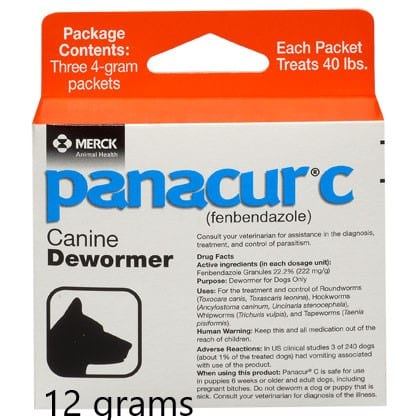
The bestbroad spectrum benzimidazole anthelmintic for Dogs, for Cats, for Fish and Chickens is Fenbendazole
Fenbendazole is a broad spectrum benzimidazole anthelmintic used against gastrointestinal parasites including: giardia, roundworms, hookworms, whipworms, the tapeworm genus Taenia (but not effective against Dipylidium caninum, a common dog tapeworm), pinworms, aelurostrongylus, paragonimiasis, strongyles, and strongyloides that can be administered to sheep, cattle, horses, fish, dogs, cats, rabbits, and seals.
In this article, we would like to tell you a little about such an affordable and at the same time very effective veterinary remedy as Fenbendezole. To begin with, we would like to say a few words about its pharmacological properties.
Pharmacological (biological) properties and effects of Fenbendazole (Panacur)
Panacur C (fenbendazole)
Fenbendezole is an anthelmintic of the benzimidazole group. Fenbendazole (5-phenyl-thio-2-benzimidazole carbamate) has a wide spectrum of nematodocidal and cestodocidal action, is active against adult forms, larvae and eggs of gastrointestinal and lung nematodes, as well as cestodes that are parasitic in animals.
The mechanism of action of fenbendazole is the destruction of microtubules in the intestinal cells of helminths and disruption of energy processes, which leads to the death of parasites.
When administered orally, fenbendazole is easily absorbed in the intestine and distributed in the organs and tissues of the animal; it is excreted from the body in unchanged form and as metabolites, mainly with bile and partially with urine, in lactating animals also with milk.
In the recommended doses, it is very well tolerated by animals without any side effects.
This drug is prescribed to young cattle, sheep, goats, foals, piglets, dogs and cats for therapeutic and preventive purposes.:
— nematodes;
— cestodoses.
Application procedure
Fenbendezole is administered to animals according to the type and dosage of Fenbendazole (powder, tablets, capsules …), in the following doses. Young cattle with moniesiasis – 150 mg per 15 kg of animal weight; with dictyocaulosis, haemonhoses, bunostomiasis, esophagostomiasis, nematodyrosis, ostertagiasis, habertiosis, cooperiosis and strongyloidiasis – 150 mg per 20 kg of animal weight.
Sheep and goats with moniesiosis – 150 mg per 15 kg of animal weight; with dictyocaulosis, hemonchosis, bunostomosis, esophagostomosis, nematodirosis, ostertagiosis, trichostrongyloidosis, habertiosis, cooperiosis, strongyloidosis – 150 mg per 30 kg of animal weight.
Foals with paraskaridosis and strongylatosis – 150 mg per 15 kg of animal weight.
Piglets with ascariasis, esophagostomosis, strongyloidosis, trichocephalosis, metastrongyloidosis – 150 mg per 30 kg of animal weight.
Adult dogs and cats with toxocarosis, toxascaridosis, hookworm, uncinariosis, dipilidiosis, teniidosis – 150 mg per 1.5 kg of animal weight.
Puppies and kittens (aged over 3 weeks) with toxocarosis, toxascaridosis, hookworm, uncinariosis, dipilidiosis and teniidosis 1 time/day for 3 consecutive days in a single dose of 150 mg per 3 kg of animal weight.
Special diets and laxatives are not required before deworming.
Side effect
Side effects and complications when using fenbendazole in accordance with the indications and dosage regimen, as a rule, are not observed.
With increased individual sensitivity of the animal to fenbendazole and the appearance of allergic reactions, the use of the drug is discontinued.
Symptoms of overdose in animals were not detected.
Contraindications to the use of the drug FENBENDAZOLE
— individual hypersensitivity of the animal to fenbendazole.
Do not use the drug:
— emaciated and sick with infectious diseases animals;
— puppies and kittens younger than 3 weeks of age.
Special instructions and personal prevention measures
Slaughter of animals for meat is allowed no earlier than 14 days after deworming. In case of forced slaughter before the deadline, the meat can be used as food for carnivores or for the production of meat and bone meal.
Milk from dairy animals should not be used for food purposes within 3 days after deworming. Milk obtained earlier than the deadline can be used after heat treatment in animal feed.
It is forbidden to smoke drink or eat while working with the medicine. At the end of work, wash your hands with warm water and soap.
If you decide to deworm your animal with Fenbendezole, you can safely recommend the following products, but please note that fenebendazole exists in different forms (powder, tablets, capsules, liquid), first decide in what form it will be more convenient for you to give it. From myself, I would like to make a small note that Fenbendezole in the form of capsules is very convenient to use, except for the smallest animals.
Most of the drugs listed below are anthelmintic (antihelminthic) drugs. These are chemical preparations that effectively destroy various parasitic helminths (“worms”). With regard to fish parasites, this group includes trematodes, nematodes and cestodes (tapeworms). These medicines are given to the fish by mouth with food, although some are also effective in the form of baths. Anthelmintics used for bath treatments have been shown to be effective against non-helminth ectoparasites such as Argulus or Argulus carp lice. If the dosage for a specific drug is not listed, you should consult your veterinarian.
Many of the anthelmintic drugs used to treat fish are also used in humans, so in some countries they can only be obtained through a veterinarian. Other such agents, for example trichlorfon, are organophosphorus compounds. These are extremely toxic chemicals, and their sale is highly regulated.
It is important to remember that the life cycle of ectoparasites is quite complex and includes many stages. Some stages are resistant to chemicals, others are more vulnerable. Since resistant stages can remain viable for a long time, re-treatment is often necessary to completely eradicate the parasites.
In addition to the chemicals listed below, there are a number of specialty aquarium medicines on the market for some of the larger ectoparasites. They should be used in accordance with the manufacturer’s instructions. It is very important to follow through with the recommended course of treatment. Allow enough time for the eggs or cysts that are resistant to chemicals to hatch into larvae.
Bendazole Fenbendazole (Panacur)
Fenbendazole is used primarily to treat worms in horses. In addition, it is useful in the fight against fish nematodes such as Camallanus. It can be purchased as an equine anthelmintic. In the aquarium hobby, this medicine is used as a powder or granule, not a dough. A three-week course of treatment is carried out by the method of long baths with a dose of 2 – 3 mg/liter, and on the 7th and 14th days, the procedure is repeated.
Fenbendazole (PANACUR) aquarium dosage
Also be aware that fenbendazole seems to soak into the porous live rock and be absorbed indefinitely. I know one hobbyist who transferred a small piece of live rock that had been treated with fenbendazole (Panacur) months earlier into a reef tank, where it killed the resident starfish and Astrea snails. So enough of the medication may be retained within treated live rock to impact sensitive animals months after the fenbendazole was administered. Don’t treat live rock intended for reef systems with fenbendazole (Panacur)!
At the lower dosage recommended for nursery tanks (1/16 tsp. Per 10 gallons), fenbendazole normally does not harm cleaner shrimp and decorative shrimp. With the exception of Astrids (Astrea), Coit and Worden have found it does not usually affect the types of snails typically used as cleanup crews (e.g., Nassarius, Ceriths, and Nerites). It will kill starfish but copepods, hermit crabs, and shrimp are normally not affected.
Macroalgae such as the feathery or long-bladed varieties of Caulerpa or Hawaiian Ogo (Gracilaria) are not harmed by exposure to fenbendazole at even triple the normal dose. In fact, if you will be using Caulerpa in your nursery tanks to provide hitching posts for the fry and serve as a form of natural filtration, it’s a very wise precaution indeed to treat them with a regimen of fenbendazole beforehand.
Fenbendazole 10% fish bendazole Liquid SUSPENSION PANACUR
So fenbendazole (FBZ) or Panacur is primarily useful for ridding bare-bottomed nursery tanks and dwarf seahorses setups of hydroids and Aiptasia anemones, ridding Caulerpa and other macroalge of hydroids or Aiptasia before its goes into the aquarium, and cleansing live rock of bristle worms, hydroids, and Aiptasia rock anemones before it is introduced to the aquarium. If you are serious about raising seahorse fry, fenbendazole is must-have med for keeping your nurseries hydroid free.
It can also be used to eradicate bristle worms, hydroids, an Aiptasia from an established aquarium if it does not house sensitive animals such as live corals and gorgonians, starfish, Astrea snails, or tubeworms and other desirable worms that may be harmed by FBZ, providing you monitor the ammonia levels closely and are prepared to deal with the ammonia spike that may result from the sudden death of the worm population.
Caution: For aquarium and ornamental fish only. not for human use. keep out of the reach of children. keep the container tightly closed and in a cool dry place. not to be given to fish intended for food use.
Most shelter workers have heard of the magic known as fenbendazole – is one of my favorite antiparasitic-and is a great drug for many reasons. It is generally considered a safe drug, toxicity occurs only in overdose 100x and exotic species. Fenbendazole is not systemically absorbed and more than 50% out of the animal feces. It should be administered for at least 3 days to kill parasites, as it has to stop cell division for some time before it becomes fatal to the parasite.
Fenbendazole is labeled for use in cows, horses, pigs and dogs; but it has also been used in cats, sheep, birds, reptiles and fish. It is marked to kill roundworms, hookworms, whipworms and tapeworms some, but is not effective against the most common tapeworms, and therefore should not be relied upon to kill the tapes. increased use of fenbendazole in shelters is to kill whipworms, Giardia, and lungworms.
Fun fact: In the treatment of whipworm (Trichuris Vulpis) You may have heard of the rule of 3, try for three days, then repeat a course of three days in three weeks and again at three months. It is an easy treatment regimen and commonly recited, but did you know there is actually a scientific reason not to try this way know? Whipworm takes 3 months to mature from an egg to an adult. If you kill adults on day 1, then three weeks later there will be some immature adults who have matured, but you still have eggs and larvae of worms present. Wait up to 3 months and then try again, and do not bother with the treatment of three weeks.
Fenbendazole (carbamate 5-phenyl-thio-2-benzimidazole) has a broad spectrum of effects and cestocidal nematocides, is active against adult forms, larvae and eggs of gastrointestinal and lung and cestode parasites in animals. The mechanism of action of fenbendazole is the destruction of microtubules in cells of intestinal worms and disruption of energy processes, leading to the death of the parasites. When administered orally, fenbendazole is easily absorbed in the intestine and is distributed in organs and tissues of the animal; excreted from the body in unaltered form and as metabolites, mainly in the bile and urine partially in animals also varnished milk.
Young cattle, sheep, goats, horses, pigs, dogs and cats are prescribed for therapeutic and prophylactic purposes in the case of: – nematodes; – cestodoses.
Enter the animals once, by force to the root of the tongue in the following doses. Young cattle monieziosis – 150 mg per 15 kg of animal body weight; with dictyocaulosis, hemonkhoze, Bunostomiasis, esophagostomosis, nematodirosis, ostertagiasis, habertiosis, cooperiosis and strongyloidiasis – 150 mg per 20 kg of animal weight. Sheep and goats with moniesiosis – 150 mg per 15 kg of animal body weight; if dictyocaulosis, hemonhose, bunostomiasis, esophagostomiasis, nematodirosis, ostertagiasis, trichostrongiloidosis, habertiosis, cooperiosis, strongyloidiasis – 150 mg per 30 kg of animal weight. Foals with parascariasis strongyles and – 150 mg per 15 kg of animal weight. Piglet with ascariasis, esophagostomiasis, strongyloidiasis, trichocephalosis, metastrongyloidosis – 150 mg per 30 kg of animal weight. Adult dogs and cats toxocariasis, Toxascaris, ankilostomiasis, Uncinaria, dipilidiosis, taeniasis – 150 mg per 1.5 kg of animal weight. Puppies and kittens (more than 3 weeks old) with toxocariasis toxascaridoz, ancylostomiasis, uncinariosis, dipilidiosis and taeniasis 1 time/day for 3 days in a row in a single dose of 150 mg per 3 kg animal weight. A special diet and use laxatives before deworming is required.
Fenbendazole 222 Helmintazole
Side effects
Side effects and complications in the use of fenbendazole in accordance with the indications and dosing regimen generally not observed. With increased individual sensitivity of the animal to fenbendazole and allergic reactions, drug use stops. Overdose symptoms in animals have not been identified.
Contraindications to the use of drug Fenbendazole
– Individual animal hypersensitivity to fenbendazole. Do not use the medicine: – animals exhausted and suffering from infectious diseases; – Puppies and kittens under 3 weeks of age.
Simultaneous use with bromsalanflucicides is not recommended, as in cattle with this interaction, there were cases of abortion and death in sheep. Slaughter of animals for meat is permitted no earlier than 14 days after deworming. In the case of the forced slaughter of a predetermined period, the meat can be used as food for carnivores or for the production of meat and bone. Milk of dairy animals to be used for food purposes within 3 days after worming is prohibited. The milk obtained earlier than the prescribed period may be used after heat treatment as animal feed. No smoking, drinking or eating food while working with the drug. At the end of the work, wash hands with soap and warm water.
You can buy a lot of different quality products with an active ingredient Fenbendazole at Homelabvet site.
Researchers at Monash University found Ivermectin can kills COVID-19 cells
The anti-parasite drug killed off the cells within two days and is widely available
Scientists are moving towards human trials but expect it to be at least a month
An anti-parasitic head lice drug – Ivermectin available around the world has been found to kill COVID-19 in the lab within 48 hours.
A Monash University-led study has shown a single dose of the drug Ivermectin could stop the SARS-CoV-2 virus growing in cell culture.
‘We found that even a single dose could essentially remove all viral RNA (effectively removed all genetic material of the virus) by 48 hours and that even at 24 hours there was a really significant reduction in it,’ Monash Biomedicine Discovery Institute’s Dr Kylie Wagstaff said on Friday.
While it’s not known how Ivermectin works on the virus, the drug likely stops the virus dampening the host cells’ ability to clear it.
The next step is for scientists to determine the correct human dosage, to make sure the level used in vitro is safe for humans.
‘In times when we’re having a global pandemic and there isn’t an approved treatment, if we had a compound that was already available around the world then that might help people sooner, Dr Wagstaff said.
‘Realistically it’s going to be a while before a vaccine is broadly available.’
Scientists expect it could be at least a month before human trials.
Before Ivermectin can be used to combat coronavirus, funding is needed to get it to pre-clinical testing and clinical trials.
Ivermectin is an FDA-approved anti-parasitic drug also shown to be effective in vitro against viruses including HIV, dengue and influenza.
The study is the joint work of Monash Biomedicine Discovery Institute (MBDI) and the Peter Doherty Institute of Infection and Immunity.
The study findings have been published in Antiviral Research.
Ivermectin is used to treat head lice, scabies, and river blindness and is widely available.
You can buy different types of quality Ivermectin of different brands at Homelabvet, you can buy the drug in powder, in tablets, in oral or injectable solution.
Freelancer journalist makes a personal little research about how and from what countries people search about COVID-19 treatment, so the popular words of searches are farmaco ivermectin, ivermectin coronavirus australia, antiviral research, antiviral research ivermectin,ivermectina covid, monash university, monash university covid, ivermectin comprar, farmaco coronavirus, ivermectina covid 19, messaggero, ivermectina comprar, ivermectin, who makes ivermectin, ivermectin kills covid, ivermectin SARS cov 2, ivermectin y coronavirus, cura coronavirus, ivermectina compresse, ivermectina nombre comercial, biomedicine discovery institute and etc…
As we can see by this research language the most searches are made from Italy and US.
For example, if you need you can buy different products with this main ingredient:
Your veterinarian has several options for treating pets with cancer. There are 3 common treatment options for animal cancers: surgery, chemotherapy, and radiation therapy (also called radiotherapy). Each of these options can be used alone or in combination with other treatments. The specific treatment program your veterinarian will recommend will depend on the specifics of your pet’s condition. In selecting the treatment, your veterinarian will consider the type of cancer, how quickly it grows and spreads (the stage or grade of the cancer), and the location of the cancer.
The goal of any cancer treatment program is to completely and permanently eradicate the cancer. Sadly, a complete cure is often not possible. For pets whose cancer cannot be cured, the veterinary team can provide treatment to minimize the animal’s pain and discomfort and enhance its quality of life.
Oncology is the medical specialty that deals with all aspects of cancer in both humans and animals. Veterinary oncologists are veterinarians who study cancer in animals, including prevention, development, diagnosis, and treatment. A veterinary oncologist may be a part of the medical team treating your pet or the treatment may be conducted by your regular veterinarian and veterinary clinic staff.
Surgery
Surgery is considered the cornerstone for treating most cancers in animals. It is one of the oldest forms of cancer treatment and frequently the most effective one. Today, surgery may be combined with radiation therapy and/or chemotherapy, depending on the characteristics of the case.
When cancer surgery is performed, the main goal is usually to remove all the cancerous cells in the animal’s body. Sometimes, if the cancer is detected early (before it grows too large or spreads to other parts of the body), surgery can completely cure the animal. Other goals of cancer surgery can include removing an unsightly tumor to improve the animal’s appearance or comfort or removal of a tumor that is interfering with the animal’s normal body functions. These goals can improve the quality of life for the animal.
Surgery is most successful when the cancer involves a tumor that has not spread beyond its original location. Unfortunately, however, not all tumors can be surgically removed. Some are in inaccessible sites. And, there are times when the costs to the animal might outweigh the benefits. For example, removing a large tumor might require removing a vital organ or may cause a pet to lose a vital body function. If the cancer is in more than one location or has spread (metastasized), then surgery is not as likely to be an effective treatment.
A biopsy is a surgical procedure in which a piece of a tumor is removed for study and analysis by a pathologist. The pathologist’s report will provide important information such as the type of cancer and its characteristics. Combined with information about the size and location of the cancer, your veterinarian can develop the best treatment program for your pet.
Even if surgery cannot be used to completely remove a tumor, it can be used to remove part of a tumor, a process known as debulking. There are several possible benefits to debulking. First, partially removing a tumor can reduce the signs of cancer and make the animal more comfortable through improved mobility or reduced pain. Debulking can also be used to improve the effectiveness of radiation therapy or chemotherapy. These cancer treatments have the greatest chance for success when fewer cancer cells are present.
Surgery may also be prescribed by your veterinarian to manage or reduce the side effects of other treatments. During radiation therapy, for example, normal, healthy tissue may be damaged. Removal of the damaged tissue will encourage more rapid healing. In other cases, the surgical placement of a feeding tube may be necessary when either the cancer or its treatment makes normal eating physically impossible or very painful.
Pain management is an important part of surgical treatment . After the surgery, medication is usually provided to reduce pain and make the animal more comfortable.
Radiation Therapy
One of the most common treatments for cancer in both humans and animals is radiation therapy. This treatment is sometimes also called x-ray therapy, radioisotope irradiation, or cobalt therapy.
Cancer cells divide more frequently than normal cells. Cancer cells also have a weakness; they do not recover from radiation damage as quickly or completely as normal cells. Radiation works as a treatment for cancer because it kills cells that divide rapidly or, in other cases, because it damages the cancer cells so severely that they cannot divide and grow. Radiation therapists work to deliver just enough radiation to the cancer cells to destroy or injure them and prevent them from reproducing.
Radiation therapy is often used in addition to treatment with surgery or chemotherapy or both. The therapy or combination of therapies prescribed for a particular animal will be selected by your veterinarian based on which options offer the best chance of controlling or eradicating your pet’s cancer. For brain tumors, nasal tumors, and other tumors in the head and neck, radiation therapy may be the treatment of choice. For cancers of the spine or pelvis, it may be the only practical treatment option.
Great strides have been made in recent years in radiation therapy. There has been a dramatic improvement in the sophistication of radiation therapy equipment and methods and a parallel rise in its success in eradicating cancer. Pet owners have also increased their requests for this treatment for their pets. However, radiation therapy is not a cure-all for cancer. Not all cancers are easily killed by radiation. Some cancers are highly resistant to radiation therapy and cancers of these types cannot be treated effectively with radiation. Thus, whether or not radiation therapy will be prescribed will depend, to a great extent, on the type of cancer to be treated.
Often, radiation therapy is used to either help make chemotherapy more effective or to decrease the size of a tumor in order to make surgical removal possible or more likely to succeed. Thus, radiation therapy is frequently used as a part of a combination treatment program.
Radiation therapy is not administered in a single “zap.” It is delivered in a series of doses over an extended period. By administering the radiation in this way, the killing effect on the cancer cells is maximized while the toxic effects on healthy cells are minimized. This schedule allows healthy cells to repair themselves after radiation exposure. The exact dose and the schedule for delivery will be carefully set based on the type of cancer being treated, how advanced the cancer is, the animal’s response to radiation therapy, and the goal of the treatment. For example, if the treatment goal is to reduce the size of a tumor prior to surgery, the treatment dose and schedule will be different than if the goal is to completely eradicate a tumor. Overall, a radiation therapy program will typically involve 5 doses per week for a period of 4 to 6 weeks.
A cancer cure is not the only possible goal for radiation therapy. In some cases, the radiation therapy goal is to provide some relief from the impact of a tumor or from the spread of cancer to other parts of the body. These steps may allow the animal to feel better even if its life is not lengthened by the treatment.
Great accuracy is required to target the radiation to destroy cancer cells while protecting healthy cells. However, even with great care and accuracy, radiation can damage normal cells close to the cancer. The cells most likely to be damaged are those that normally divide rapidly. These include the lining of the mouth, esophagus, and intestines; hair follicles; bone marrow; and the skin. Radiation can also damage the ovaries or testes.
There are some recognized adverse effects from radiation therapy. The extent and severity of these effects will depend on the size of the area being treated, the dose administered, and the location being radiated. When the radiation site is near sensitive tissues, the effects are likely to be more severe and prolonged. For example, treatment for tumors on the head or neck often causes damage to the overlying skin. Treatment of head tumors may cause inflammation or irritation of the lining of the mouth. For animals with this condition, a feeding tube may be recommended to reduce the discomfort of eating with a sore mouth. Dry eye is another side effect associated with radiation to the head. It is caused by a decrease in tear production due to the impact of radiation on the eyelids. This can sometimes be a permanent condition. Eye drops and other medications are available to help prevent sores from developing and relieve eye irritation. Radiation to any portion of the digestive tract may cause irritation resulting in nausea, lack of appetite, or diarrhea. For these animals, a change in diet may help control the signs.
Chemotherapy
Certain drugs destroy cancer cells. This type of treatment is called chemotherapy. It can be used to manage and treat several types of cancer. When it is used, the most common treatment goal is to shrink, stop the growth of, or destroy the cancer without longterm negative effects on the quality of life for the animal. Veterinarians will prescribe chemotherapy based on the type of cancer to be treated, the stage of the cancer, the overall condition of the animal to be treated, and any financial constraints that may be present.
In an ideal situation, a chemotherapy drug would kill cancer cells in an animal’s body without harming normal healthy cells. Few such drugs have been found. Today, the drugs selected for chemotherapy have been designed to be more damaging to cancer cells than to normal cells. They specifically target cells that divide and grow rapidly. Normal cells will be affected to some extent by chemotherapy drugs; sometimes the drugs can have adverse effects.
Chemotherapy drugs are delivered either through the mouth or by injection. If injection is used, it can be into a vein (intravenous), muscle (intramuscular), or under the skin (subcutaneous). The delivery method will be selected with the comfort and quality of life for the pet in mind balanced against the goal of effective delivery of the drugs.
Some cancers do not respond to chemotherapy. How a cancer responds to a particular drug will depend on the type, size, rate of growth and spread, and location of the cancer. These factors are some of the most important ones in the selection of chemotherapy drugs, their combination, and their dosage. As is the case with other cancer treatments, chemotherapy is most effective when the tumor is small, is at an early stage in development, and has not spread to other parts of the body. When these conditions exist, most cancer cells divide quickly and the chemotherapy drugs are able to kill a larger number of the cancer cells.
Chemotherapy alone usually cannot cure cancer in pets. It is used most often to control cancer and its spread. Thus, chemotherapy is often used to treat cancers that affect the whole body, such as cancer of the lymphatic system (lymphoma). In other cases, chemotherapy is used to fight the remaining cancer cells when a tumor cannot be completely removed with surgery. Chemotherapy is also used to fight types of cancer that spread around the body early in their development.
Many of the chemotherapy drugs used to control cancer in people are used for the same purpose in pets. However, animals require dosages that are adjusted for their size and body type. In most cases, a combination of drugs will be used. Your veterinarian will evaluate the individual cancer and the particular needs of your pet when selecting the drug combination, dosage, and administration schedule. Quality of life issues, medical and nutritional support concerns, and pain control are other considerations that the prescribing veterinarian must evaluate when selecting a chemotherapy program. In all cases, your veterinarian must weigh the expected benefits of the drugs with possible adverse effects to select the most appropriate treatment for your pet. The veterinarian will carefully monitor your pet’s physical and behavioral response to the treatment and adjust the dosage to maximize the effect on the cancer while reducing the side effects.
While improvements have been made in chemotherapy for humans—many of the well-known side effects such as nausea, vomiting, hair loss, and fatigue have been reduced in recent years—people still regard chemotherapy as a distinctly unpleasant experience. Animals generally appear able to tolerate chemotherapy better than people, but treatment with some chemotherapy drugs may lead to vomiting or a lack of interest in food. This side effect can be treated with anti-nausea medicine. Intravenous fluids can be used to control such side effects as vomiting, diarrhea, and dehydration. Some chemotherapy drugs may cause a reduction in the number of red blood cells (anemia), white blood cells (leukopenia), or the cells that clot blood (platelets). The loss of white blood cells is probably the most significant of these effects because white blood cell loss lowers your pet’s ability to fight off infections. Your veterinarian will monitor your pet’s condition by taking blood samples. If the white blood cell count becomes too low, antibiotics may be prescribed to prevent infections. For animals with a low platelet count, there is an increased risk of bleeding.
Hair loss is a common side effect of chemotherapy among people. This is less common in pets, though it varies among breeds.
Dogs and cats receiving chemotherapy usually have good to excellent quality of life throughout the treatment program. Side effects, if any, are usually mild. The risk of life-threatening adverse effects is estimated at less than 5% for most types of chemotherapy. The most risky side effects can often be anticipated and either controlled or prevented entirely. If your pet will be undergoing chemotherapy, you should discuss the treatment program with your veterinarian in advance. You need to come to a mutual understanding about what can be expected for your pet and the level of risk that can be accepted.
Chemotherapy may be stopped before the end of the scheduled treatment program if the cancer being treated is not affected by the drugs or starts regrowing following a period of remission. A prescribed chemotherapy program may also be stopped when the animal has received the maximum acceptable total dose for a particular drug or if there are unacceptable adverse effects.
Combination Therapy
The term combination therapy refers to the use of 2 or more treatment options in the fight against cancer. Today, combination therapy is the most frequently used approach to treat cancer in pets. It offers the best opportunity to cure the cancer while maintaining the best possible quality of life for the animal.
Combination chemotherapy offers many advantages over single drug treatment programs. For example, when multiple chemotherapy drugs are used, and each one uses a different mechanism to kill cancer cells, it is less likely that the cancer will become drug resistant. This improves the chances that the treatment will be successful. Also, a combination of drugs can target different cancerous sites, increasing the likelihood of controlling any spread of the cancer. When using drugs with different side effects in combination, the probability is high that any side effects will be no worse than with a single drug given separately. These benefits combine to make a combination therapy program the best choice in many cases.
There is no single best treatment for all cancers. For some cancers, the best approach is one that combines surgery, radiation therapy, and chemotherapy. Tumors and other cancers that are confined to a localized area are often best treated with surgery or radiation therapy. Chemotherapy has the advantage of treating cancer cells that have spread from their original location. In other cases, radiation or chemotherapy is used to shrink a tumor to a size that makes surgical removal possible or more likely to succeed. Radiation or chemotherapy may be used following surgery to kill any cancer cells that may remain.
The stage of cancer development is a factor in selecting the treatment, whether a single treatment mode or a combination of treatment methods. For animals with advanced cancers that cannot be treated with surgery or radiation therapy, combination chemotherapy can be used to reduce the signs of the disease and prolong life.
Prospects for a Cure
During the past century, researchers have made enormous strides toward finding a cure for cancer. But we are not there yet. There is no single and complete cure for cancer in either humans or animals. However, much has been learned about managing and treating this ancient disease. Veterinarians have been successful in using surgery, chemotherapy, and radiation therapy to cure many animal cancers. Meanwhile, research is continuing and the prospects for better cancer treatments are strong.
Having a cat can mean different things to different people. Some want a cat to cuddle and sit on their laps; others are happy to live with a very independent cat which spends most of its time outside and doesn’t want too much human interaction.
What is important is that you try to find a cat that will interact with you if you want it to. All cats are not the same and how each individual cat behaves with you can depend on its inherent personality and early experiences (or lack of experiences), which can make it fearful or confident with people and life in general.
The environment in which you keep a cat is also extremely significant – for example if it lives with many other cats which do not get on, then it will be stressed and will react differently than if it was on its own.
While there is no guaranteed way to choose the perfect cat for you and your lifestyle, understanding your expectations as well as what makes cats tick will help you to bring home a cat that should be able to cope with its new environment and be the pet that you want too.
To care for a cat you will need to:
Provide plenty of human companionship
Provide regular, suitable meals with a constant supply of fresh water
Provide a clean and comfortable bed
Provide the cat with outdoor access or be prepared to empty and clean a litter tray on a daily basis
Provide it with a stimulating and safe environment
Groom it regularly. Longhaired cats require daily grooming
Have it neutered between 4 and 6 months old
Vaccinate against the major feline diseases regularly
Worm regularly and provide treatment for fleas
Take the cat to the vet when it shows any sign of illness
Insure your cat or make sure you can afford the cost of any veterinary treatment it may need
How much care and attention does a cat need?
As pets go, cats are relatively low maintenance compared to dogs which need companionship, walking, training etc. However, like any pet, they do need care, and some cats need more care than others. Do you want to spend a lot of time with your cat, do you want it to be demanding, or do you have limited time? Cats can fit into busy, modern lifestyles more easily than dogs, as they are pretty independent, can be left alone much more easily and are more suitable for smaller flats or houses. Cats are often chosen by people who have busy and stressful lifestyles and who want some companionship when they go home to relax.
What do you want from your relationship with a cat? If you’re the kind of person who really needs to have a close relationship with your cat and to be able to handle it and have it interact with you, then you’ll be disappointed if you take on a nervous cat that hides every time you come into the room. You may want to think about one of the pedigree breeds which can be more interactive and perhaps more needy of human company than some moggies. This may however become a problem for the cat if you are out at work all day and only available to give attention on evenings or weekends.
Some cats need to know exactly what’s going to happen when, in order to feel relaxed. Such cats would be quite happy living with an old lady who rarely has visitors and leads a very quiet life, but would probably find it quite stressful living in a home full of kids and other animals with lots of visitors and activity. Other cats, however, might thrive on different interactions with lots of people and fit in perfectly well in a busy household.
If you’re not likely to have the time or inclination to groom a cat on a daily basis, don’t even think of getting a Persian or a cat with a long coat. In pedigree jargon, any cat with a longer coat, aside from a Persian, is called semi-longhaired because the coat is not as full as the Persian’s and does not have such a thick undercoat; however, it is still long and requires grooming. In addition, if you are extremely house-proud, you may not want lots of hair everywhere.
A shorthaired cat is a much easier option, as most cats are fanatical about their coats and keep them in immaculate condition. That’s not to say that they don’t leave hairs around – bear this in mind if you’re thinking of getting a white cat but have dark furniture, or vice versa. Likewise, a cat is quite likely to sharpen its claws indoors, often on the stair carpet, sometimes on the furniture or even on the wallpaper. Whether your cat does this can depend on the cat itself and also the environment you provide for it; however there are things you can do to try and deal with this, but it is best to acknowledge from the outset that your cat is an animal with free will and natural behaviour that may not suit someone who needs to have an immaculate house.
Can I keep a cat on vegetarian food?
Are you a vegetarian and want your cat to be one too? If you want a vegetarian pet that won’t challenge your beliefs, then it would be better to get a rabbit – a cat is a carnivore first and foremost, and looks and behaves as it does for just this reason. A cat is what is called an obligate carnivore – it has an absolute need for some of the nutrients found in meat and all of its senses of smell and taste are atuned to being a carnivore – it would be unfair and very dangerous to health to even attempt keeping it as a vegetarian.
Is there a type of cat which doesn’t hunt?
You may have a great aversion to your cat hunting outside. Perhaps you are a bird lover, or are simply unable to deal with small carcases on the floor. Hunting is normal behaviour for cats. Keeping a cat indoors may prevent it actually killing anything, but it will still need an outlet for this, its most instinctive behaviour, and not all cats will be happy with an indoor lifestyle. Likewise, if you’re simply getting a cat to keep vermin at bay, you won’t want to find yourself with one which isn’t especially interested in huntin’, shootin’ and fishin’ and prefers being a couch potato! Older cats are likely to hunt much less than younger ones and some cats don’t bother at all, but there is no easy way to know how a cat will behave.
Can I keep a cat indoors?
If you think about the lifestyle of a cat which has access outdoors you will realise that being outdoors brings a huge variety to its life and allows it to use all of its hunting behaviours if it wants to. Of course, there are risks outside for cats, but you need to balance these with the very positive aspects of physical and mental stimulation and an outlet for natural behaviour.
Can I have a cat with a baby or young children?
There is no reason not to have a cat or kitten if you have children. It is up to parents to teach their children from the very beginning how to approach, stroke and handle cats and to treat them kindly. Many children have fantastic relationships with their cats and learn about respecting other creatures and being gentle – it is done successfully all the time, but it is up to parents to lay down the rules. Perhaps taking on a new kitten when you have a new baby or a toddler might be a lot to handle at once, so ensuring you have time for all the parties is part of a successful relationship. Likewise, if you are pregnant there is no need to get rid of the cat. Simple and basic hygiene precautions and common sense management of the cat, while the baby is small, can ensure all cohabit happily and safely.
Should I get an adult cat or a kitten?
A kitten gives you the opportunity to take on an animal right from the beginning and treat it and care for it so that it gets the best start in life. You will also be able to get some idea of its character. However, kittens require a lot of attention and some forethought to prevent them from getting into trouble. If you leave them alone you have to make sure they will be safe while you are away. You may also have to organise neutering, initial vaccinations and so on, depending on where you get your kitten from.
While kittens have a huge ‘cute’ factor, it is worth remembering that they don’t stay kittens for very long – just six months out of a potential 14 years or more.
With adult cats, it is at least clear if they are long or short haired. You should be able to get a good idea of a cat’s personality, although if it is being kept in less than ideal circumstances and is stressed or frightened it may act very differently compared to when it is relaxed. A confident adult cat is likely to move in and settle down quite quickly; a nervous one may take more time. It will be much easier to leave an older cat alone in the knowledge that it is not going to get itself into trouble, and it will generally be much less hard work and worry than a kitten. An adult cat will probably already be neutered and vaccinated.
What sex of cat should I get?
The sex of a kitten doesn’t really matter, as long as you neuter your kitten before it reaches puberty (at about four months of age) when the influence of sex hormones kick in. Un-neutered cats may exhibit unwelcome reproductive behaviours. For example, un-neutered male cats will mark their territory with strong smelling urine while un-neutered female cats can come into season every two weeks if they do not become pregnant.
If you are getting just one cat or kitten, it doesn’t matter which sex you choose. Equally, if you want two kittens and you are getting two from the same litter, the sex of either cat is probably not important. However, if you have a resident cat and are getting just one kitten or another cat, it may be worth considering going for one of the opposite sex to try and remove some of the competition factor. A kitten may be a better option than another adult cat in such cases as the young cat’s immaturity seems to remove this competition factor – for a while anyway during which time you hope they will get to like each other! Neutering also removes the need for so much competition and makes the choice of sex much less important.
Should I choose a specific breed or moggie?
The majority of cats kept as pets are what we call moggies or domestic short or long haired cats – that is they are a random mixture of lots of different cats, we have often have little idea about their parentage (well the father anyway). This means we have no control over the colour, body shape, coat length or anything else that the kittens can inherit from their parents. So, for example, if your kitten is from a moggie mum but its father is unknown, it may develop a longer coat than you desire if the father was indeed longhaired.
There is more to choosing a pedigree cat than just liking a certain coat colour or length – there are ethical considerations with some breeds if you really want to consider the cat’s welfare. There are also health issues which you need to check with the breeder and things you need to ask. Good breeders aim to breed healthy, people-friendly cats and avoid (or seek to deal with) inherited disorders which arise.
What breed of cat should I choose?
There are many different breeds, some of which will require extra care and attention, for example if they have a very long coat or even no coat at all. Some pedigree cats are more people orientated and may not like to be left alone for long periods. If you are out all day at work it may be worth getting two kittens together for company – do your research about the breed you are interested in. Always make sure that health comes first, no matter what the ‘look’.
Can I have a cat if I have a dog?
If you have other pets there should not be a problem in getting a cat, but you just need to make sure that you take everything into consideration. If you have a dog you just need to make sure that you make introductions carefully so that your new cat is not chased or injured while the dog gets used to it. Not all dog types make good companions for cats.
How many cats can I have together?
It’s very easy to ‘collect’ cats – they’re addictively beautiful, they’re small and they’re quite easy to care for. Even if they don’t get on, they tend to remove themselves from the situation rather than fight. However, there may be a great deal of tension between cats which owners just don’t pick up on. Cats originate from a largely solitary species and although they can live in groups these are usually related individuals or are self-selected so that cats are not sharing space with cats that they don’t get on with. Cats may start to spray or soil in the house because they’re trying to deal with a situation where they feel under stress because of other cats, and this might be all that owners notice.
If you have two cats living together very successfully then think very carefully before you add more. If you have three cats living well together then thank your stars and quit while you’re ahead! The trouble with adding more is that it might not be just the relationship between the resident cats and the new one that causes problems; it may upset the whole equilibrium of the resident cats’ relationship and introduce difficulties even between the original cats as tension and stress levels rise. Any new cat needs careful introduction.
The best way to have two compatible cats is to choose siblings. These will have grown up together, and this usually bodes well for a good future relationship (although never guaranteed!).
What does it cost to keep a cat?
If you are buying a pedigree cat then there will be associated costs and these may be quite large. Pedigree kittens usually come vaccinated and in some cases already neutered. If you are getting a cat from a rescue organisation then they may ask for a donation or a fee and again it will probably come already neutered and vaccinated. Kittens or cats from friends or neighbours don’t usually come neutered or vaccinated, wormed, treated for fleas or anything else and it will be up to you to register with a vet and get these things done. Neutering is obviously a one-off cost, but several vaccinations will be required to make sure that a kitten is protected from infectious diseases; thereafter a regular booster vaccination will help to protect it during its life (requirements depend on the cat’s lifestyle and risks associated with that – your vet can advise you). Then there is food, preventive health care regarding treatment for fleas and ticks and worms, cat litter if you want or need an indoor litter tray, beds and grooming equipment if you take on a longhaired cat. Microchipping is also recommended in case your cat goes missing. We recommend that you also insure your cat so that if an accident or illness happens then you do not have to worry about the costs. Choose your insurance carefully to make sure you get what you expect or need.
I am allergic to cats – is there any breed which is better than others?
Many people think it’s a cat’s hair that causes us to react to them by sneezing, wheezing or itching. In fact it’s a protein or allergen called Fd1, present in feline saliva, which causes the allergy. Because cats groom themselves regularly they have saliva all over their coat. This dries on the coat and when the cat scratches, moves or brushes past objects the dust or dander and the hairs which contain the allergen are spread about. Cat-lovers who really want to have a cat but are allergic sometimes think that by choosing a breed with less, little or no coat they can avoid the problem. However, as it is saliva that causes the problem, this is unlikely to help, and although longhaired cats do seem to cause more allergic reactions that’s probably only because, having more hair, they’re also covered with more allergen.
It’s worth trying out different cats by visiting friends with cats to see if they elicit less of an allergic reaction. Unfortunately it’s a very difficult problem to get around for people who react or who have family members who are allergic.
What should I do with my cat when I go on holiday?
If you go away on holiday you also need to consider who is going to look after your cat. If you are only away for a day or two you can ask a neighbour to pop in and feed it and check it is OK. If you are away for more than this you may want to consider a boarding cattery, as many cats may wander looking for company. If you have a nervous cat it may hide when the feeder comes and he or she may not be able to be sure that everything is all right. A good boarding cattery will keep your cat safe and you can relax while you are away. There are bad boarding catteries however.
When should I get a new cat?
If you are considering getting a new cat or kitten, choose a time when it is quiet in your house (not in the middle of a family celebration etc) and perhaps when you have a day or two when you can help it to settle in and be there while it finds its way around, not just before you go on holiday etc.
Where do I get a cat from and how do I choose it?
Once you have thought about the responsibilities and costs of keeping a cat and what type you want, then consider where you are going to get it and how you are going to choose your cat or kitten.
Safeguard 4 Canine De-Wormer provides safe and effective treatment and control of tapeworms, roundworms, hookworms, and whipworms in easy to feed granules that can be mixed into food. This product is safe for young puppies over the age of 6 weeks, pregnant female dogs, and heartworm infected dogs. Key Benefits
Treats and controls tapeworms, roundworms, hookworms, and whipworms.
Convenient, highly palatable granules that you can mix right into your pup’s food for hassle-free de-worming treatment.
Safe for any breed of young puppies over the age of 6 weeks and pregnant dogs.
Each pouch treats 40 lbs. Each package comes with three easy to use 4-gram pouches which should be administered for 3 consecutive days and are completely effective for up to 6 months.
A highly effective formula contains fenbendazole which is the same active ingredient found in prescription canine dewormers.
Also, there are a lot of different types of SafeGuard for different animals and pets, but in all types of SafeGuard, the main ingredient is Fenbendazole.
For more information about SafeGuard for dogs, you can always consult your veterinarian.
Every once in awhile, your veterinarian gives you unpleasant news. Sometimes, that news sounds like this:
“Your dog has worms.”
Nobody wants to hear that her dog has internal parasites, but worms in dogs are more common than you might think. They are also usually treatable. One of the medications veterinarians frequently prescribe for dogs with worms is Panacur, a deworming medication used to treat several species of canine parasites.
What Is Panacur?
Panacur is the brand name of an oral deworming medication with the active ingredient fenbendazole. It is used to treat internal parasites in domestic animals, including dogs, cats, horses, and livestock. In dogs, Panacur is most often used to treat hookworm, roundworm, tapeworm (Taenia), and whipworm infections, although it is important to note that Panacur is not effective against Dipylidium tapeworms.
In addition to these worms, Panacur (fenbendazole) is approved in Europe to treat Giardia in dogs and is sometimes used off-label in the U.S. to deal with Giardia infections. It is also occasionally used off-label to combat lungworm infections.
How Does Panacur Work?
Deworming medications work in different ways to eliminate parasites. Some target specific life stages, while others attack the biological processes of the parasite. Fenbendazole kills parasites by binding to tubulin (a type of protein), which interferes with the parasites’ ability to form microtubules, which combine to form the structure of the worm cells.
So how do you introduce this parasite eliminator into your dog’s system? Panacur is given orally, either in granules, a suspension, or a paste. Talk to your veterinarian about the best formulation for your dog and for tips about how to properly administer a dewormer.
Side Effects of Panacur for Dogs
Panacur is generally considered a very safe medication and is one of the safest dewormers on the market. Its active ingredient has a selective affinity for parasitic tissue, which means it usually ignores your dog’s body tissues unless given in very high doses, and even then dogs can tolerate doses up to 100 times higher than recommended. Manufacturers list vomiting as a possible side effect, and some formulations, like Panacur Plus, contain other medications, such as ivermectin and praziquantel, which can have more serious side effects.
Even though the drug is generally safe, you still need to exercise caution. Some dogs may have an allergic reaction to the dying parasites themselves. Watch out for symptoms of an allergic reaction in dogs, which include facial swelling, itchiness, hives, diarrhea, vomiting, seizures, shock, pale gums, cold limbs, and coma. You should also talk to your vet about giving Panacur to pregnant dogs. Your veterinarian may have to adjust the dosage, and Panacur is not recommended for puppies under six weeks old.
How Much Panacur Should I Give My Dog?
When it comes to the dosage and duration of Panacur or any other medication, talk to your veterinarian. While the Internet is a great source of initial information about drug dosages, your veterinarian may have his or her own reasons for adjusting your dog’s dose and duration. These changes are based on your dog’s medical history or condition, and an inaccurate dosage and duration estimate could harm your dog and lead to parasite resistance.
The dosage and duration of the drug also depends on the intended use. Your veterinarian might prescribe a different dosage for Giardia than he would for roundworms, for instance, so make sure you follow his instructions to ensure that your dog receives the full benefit of the medication.
For more information about Panacur for dogs, you can always consult your veterinarian.
It can be quite alarming when a poultry owner gets a consistent five eggs, daily, from five hens, only to find just one egg for a few days. This sudden drop in egg-laying takes us all into detective mode – are they hiding the eggs? Are they sick?
Below you’ll find some of the most common reasons for decreased egg production to put your mind at ease and hopefully get your girls laying consistently again.
Why do hens stop laying eggs?
Molt. At 15-18 months of age, and every year thereafter, chickens will replace their feathers. Feathers will fall out to make room for new feather growth. During this time, hens will stop laying eggs.
Lighting. Chickens need about 15-16 hours of light per day to produce eggs. The first year, most laying breeds will lay through the winter without artificial lighting.
Too many goodies. Think of kids, if you unleashed your kids at a buffet, and told them they could get whatever they want, most would load up at the dessert table. Your girls will do the same thing, filling up on bread, table scraps etc. they may not be getting what they need to produce eggs. This is usually a slowdown, more than a stoppage.
Too much lovin’. One rooster can easily handle 12-18 hens. If this ratio is too low, he will overmount the girls and bare patches will appear on their backs and the backs of their heads. This stress can drop them out of production.
Dehydration. It doesn’t take much water deprivation, especially in hot weather, to take your hens right out of production. Many times alpha hens will not allow submissive hens (bottom of the pecking order) to drink. They are attempting to “vote them off the island”, but the first thing that will happen is an egg stoppage. We recommend adding water stations during warm weather.
Any undue stress. Maybe the coop is secure, but they are still being harassed by raccoons, neighbor’s dogs, or other predators.
Egg eating by the hens, or theft by 2 or 4 legged scoundrels! They may be laying, but the wrong critter is getting the eggs. Believe it or not, human egg-stealing is more common than people think – I’ve even seen it on a game camera.
Change in the pecking order. Adding new hens, a new rooster or removing a hen can cause a power void and/or drama. Drama=stress=egg production drop
Illnesses/parasites. The reasons above may likely be the cause but parasites or illness can also cause stress on a hen.
If the reason is parasites or worms, you should buy a dewormer such as Helmintazole or Panacur with active ingredient Fenbendazole, also you can buy a Tylosin or Tyclosin – this treatment is very good for chicken treatment.
Deworming (sometimes known as worming, drenching, or “dehelmintization”) is the giving of an anthelmintic drug (a wormer, dewormer, or drench) to a human or animal to rid them of helminths parasites, such as roundworm, flukes, and tapeworm. Purge dewormers for use in livestock can be formulated as a feed supplement that is eaten, a paste or gel that is deposited at the back of the animal’s mouth, a liquid drench given orally, an injectable, or as a pour-on which can be applied to the animal’s top line. In dogs and cats, purge dewormers come in many forms including a granular form to be added to food, pill form, chew tablets, and liquid suspensions.
Horses are most often dewormed with a paste or gel placed on the back of the animal’s mouth via a dosing syringe; feed dewormers are also used, both single-dose varieties and in a daily, “continuous” feed form. Deworming (drenching) a sheep is usually done with a specific drenching gun that squirts an anthelmintic into the sheep’s throat.
The Centers for Disease Control and Prevention recommends deworming treatments at 2, 4, 6, and 8 weeks of age for puppies, as well as concurrent treatments given to the mother to eliminate reactivated larvae and prevent horizontal transmission from puppies that may be shedding roundworm and hookworm eggs.[
They also recommend deworming treatments at 3, 5, 7, and 9 weeks of age for kittens and the mother.
Additionally, the Companion Animal Parasite Council (CAPC) further recommends quarterly treatments for all adult dogs and cats, depending on animal health and lifestyle factors.
When choosing a dewormer for dogs, you need to know what type of worms your dog has. You can purchase a dewormer for specific types of worms, or you can choose a broad-spectrum product. Dewormers for dogs come in several forms including tablets, granules, powders, and liquids, so talk to your veterinarian about the option that is best for your dog. Once you know what kind of dewormer you need, take a look at our top picks for the best dewormer for dogs. Best dog dewormer overall: Helmintazole 200, Helmintazole 222, and Helmintazole 500 PRO it is the same dewormer as Panacur C or Safe Guard with the same main ingredient Fenbendazole.