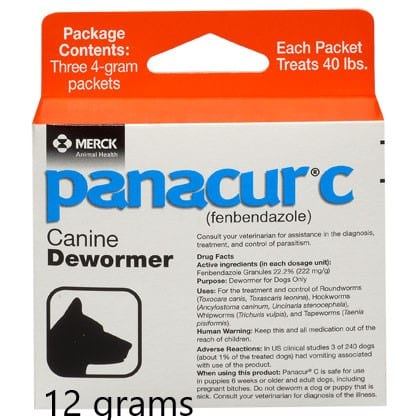
Fenbendazole (brand names Helmintazole®, Helmintazole Pro®, Helmintazole 200®, Helmintazole 222®, Helmintazole 500 caps®, Helmintazole 50 Tab®, Panacur®, Safe-Guard®) is a medication used to treat a variety of parasites (e.g., roundworms, hookworms, lungworm, whipworm, and certain types of tapeworms) in dogs. Its use in cats for the treatment of parasites is ‘off label’ or ‘extra-label’. Many drugs are commonly prescribed for off-label use in veterinary medicine. In these instances, follow your veterinarian’s directions and cautions very carefully.
panacur fenbendazole
How is fenbendazole given?
Fenbendazole comes as oral granules, tablets, capsules or as a liquid suspension and is given by mouth. Liquid forms must be measured carefully.
Fenbendazole should be given with food to reduce gastrointestinal upset.
Give this medication as directed by your veterinarian. Fenbendazole is often given once daily for 3 consecutive days and then again in another round 2-3 weeks later.
It is important that your pet receives all of the doses recommended by your veterinarian for best results. Do not stop early or skip doses unless recommended by your veterinarian. Retreatment may be necessary if doses are missed, the medication is stopped too soon, or if reinfection from the environment occurs.
This medication should take effect within 1 to 2 days, but visible effects will take the entire duration of treatment to be recognized.
What if I miss giving my pet the medication (or my shipment is late)?
If you miss a dose, give it when you remember. If it is close to the time for the next dose, skip the missed dose and give it at the next scheduled time. Never give your pet two doses at once or give extra doses.
Are there any potential side effects?
At regular doses, fenbendazole does not usually cause any side effects. Sometimes, substances released by the dying parasites may cause an allergic reaction, especially if fenbendazole is given at higher than regular doses. If your pet shows signs of an allergic reaction (facial swelling, itchiness, hives, diarrhea, seizures, or shock) seek veterinary care immediately.
Salivation, vomiting, and diarrhea may occur in dogs or cats receiving this medication.
This moderate-acting medication should stop working in a few days, although effects can be longer in pets with liver or kidney disease.
Are there any risk factors for this medication?
Fenbendazole is safe for use in most pets. Fenbendazole should not be used in:
puppies younger than 6 weeks of age.
sick animals
Are there any drug interactions I should be aware of?
While there are no known drug interactions with fenbendazole, be sure to tell your veterinarian about any medications (including vitamins, supplements, or herbal therapies) that your pet is taking.
Is there any monitoring that needs to be done with this medication?
Your veterinarian may recommend a fecal examination to be sure that all internal parasites have been killed and determine if additional doses are needed.
How do I store fenbendazole?
Store fenbendazole granules, tablets or capsules in a sealed container at room temperature and protected from sunlight.
If your veterinarian has made a special formulation for your pet, follow the storage recommendations on the label and expiration date for the product.
What should I do in case of emergency?
If you suspect an overdose or an adverse reaction to the medication, call your veterinary office. If they are not available, follow their directions in contacting an emergency facility.
If you want to buy Fenbendazole(Helmintazole…) online, you can buy it at Homelabvet.com, there are a lot of different types of Fenbendazole with different dosages.
The unique tandem of cats and women has always attracted attention and generated many different theories about their relationship with each other. Although cats have always been distinguished by their independence and dissimilarity to other living beings, their similarities with women and their special relationship with them require a special discussion.
Pure Beauty
The main common feature that a woman and a cat have is the desire of both beauty and conquest of the world. Such a tradition originated in the depths of centuries, and even in ancient times cats were always depicted next to the most beautiful women, and any beauty was automatically compared in her grace and grace to representatives of the cat family. And, of course, cats and women always got along very well. For example, in Turkey, statuettes were found dating back to the 6th millennium BC, which depicts women playing with cats. And even then, each mistress of the house reserved for her pet the most privileged place in the house.
This is not surprising, because a woman and a cat have one more thing in common – independence, bordering on affection. It was the gentleness of a woman who always attracted a cat to her side, and thanks to this, the feline race was closely intertwined with the human one, and the cat began not only to decorate the house with itself but also to protect it from various dangers. Soon, in almost every country, special rules and laws appeared that require respectful and reverent treatment of cats:
in Britain there was a code of laws determining the value of a cat and prescribing punishment for cruelty to it;
in America, a cat immediately became an object of exchange trade, as well as the patroness of many houses, which she saved from epidemics and other disasters;
in Paraguay, at the legislative level, it has been established that every cat is worth a pound of gold;
in Ancient Russia in the 14th-century laws existed that penalized cat larceny and imposed huge fines on thieves.
And in each of the situations, the behavior of cats was not important: animals were considered sacred even when they showed their difficult character, and it was women who played a significant role in recognizing their sacred value.
Unattainable ideal
In addition, from time immemorial, women and cats have in common many common features – both appearance and character:
resourcefulness and intelligence inherent in both
quick reaction and agility,
excellent plastic
undeniable external beauty
some detachment.
Thanks to this, women gave their hearts to cats many centuries ago. And today this tradition continues, because it is in the graceful representatives of feline women that they see a real ideal, which is often unattainable for themselves.
A cat for women is a living embodiment of beauty, and the independent behavior of cats is an example to follow. This is not surprising, because:
cats do not have problems with being overweight,
cats do not need fur coats – their silky and delicate fur is admired by everyone;
cats do not need to fawn in front of people to be stroked – it only allows you to do this if she liked the person;
the cat is always beautiful, no matter what she does;
the cat does not need to take care of its kittens all its life and even think about who it is pregnant from;
the cat is patient and ready to faithfully listen to all the sorrows of its owners, without giving them any stupid advice,
the behavior of cats can be anything, but no one can be angry for a graceful and touching animal for a long time.
And, of course, there are some comic “differences” between women and cats, which men often like to talk about:
the cat is fluffy throughout the body, and not just on the head,
for beauty, the cat doesn’t need makeup,
the cat remains graceful in any situation,
the cat eats less
the cat can purr beautifully,
the cat is easy to keep on your lap
if her owner gets sick, the cat will just sleep next to him, without disturbing him,
the cat will never whimper and complain
the cat is always clean and takes care of itself,
the cat will not be offended by you if you are tired and you are not up to it,
a good word will always please a cat,
the cat doesn’t need new outfits,
Getting a cat in the house is always very easy!
However, even in spite of these small “differences”, it is the woman and the cat who always get along best with each other. And even if the owner of the animal is just the man, his pet can easily neglect it, and all attention will be paid to his chosen one!
Also, if you want your lovely cat always be happy and healthy, you should give to your cat antihelminth treatment like Helmintazole with the active ingredient Fenbendazole (펜 벤다 졸). If you need Fenbendazole for worm treatment you can always buy it at Homelabvet.com.
Today we have a great news about our dewormers. If you want to have a great discount on dewormer products you need just follow the link above.
If you follow by link above, you can buy the most popular dewormers of most popular companies. Extra sale for Helmintazole by Homelab, Panacur, Safe Guard, Fencur, fendeworm, Fenbendazole and etc. All of this dewormers includes active ingredient fenbendazole which is very effective for worm treatment.
Nature provided the cat with everything you need – hunting skills, excellent eyesight and hearing, retractable claws, flexibility and unique grace, functional and beautiful wool. Cats are very clean animals, but can not maintain a neat and healthy coat, especially long – haired cats, on their own.
Cleanliness
In order that the cat’s coat not deliver to it and various other disadvantages and to look good, the owner must periodically perform a series of hygiene procedures. If enough for the owners shorthairs your pet comb several times a week with a brush massage, then owners species long hair need to do this every day with various types of brushes. Bathing a pet with long hair and an inner layer developed also be organized more often than for short hair.
In addition, it is necessary to wash the hair using dry shampoo monthly or special spray, regular application of antistatic conditioners, lotions and balms health of wool. Otherwise, mats, which needs to be cut, and all kinds of skin diseases are formed.
When do I need to cut cats?
No need to cut a pet if there is an opportunity to organize good nutrition, vitamin support for animals and care all stages of their six. Cat grooming is needed in certain cases:
– the animal is difficult to tolerate heat due to the wool in bulk;
– the cat resists hygiene procedures will not be allowed to be bathed and combed;
– Skin diseases;
– the presence of mats;
– as one of the measures prolonged moulting caused for several reasons;
– pedestrian street animal wool adverse weather conditions;
– get the wool in the digestive tract, with consequences as vomiting and defecation problems;
– participation in exhibitions.
Lack of time to take care of animal hair and regular cleaning of the room, the presence of allergic reactions among family members of the owners or house guests, also among the reasons why the cat owners apply to animal groomers. The list price for haircuts dogs and cats includes decorative and haircuts from a purely hygienic orientation. There are restrictions on the choice of cat hair cuts – even for decorative purposes can not cut off the head, mustache, hair in the ears and the tip of the tail cats.
Effects of cats grooming
After shearing, the condition of the animal ‘s hair may change. The possible consequences of the procedure:
– change the structure of wool and skin elasticity of the animal;
– wool in the abdomen and back after cutting has a darker shade;
– deteriorating adaptation to temperature changes;
– Alopecia or all sorts of problems with fouling hair.
To teach cats hygiene procedures and haircut, preferably from childhood. Otherwise, any tampering with the animal ‘s fur can bring great stress for the pet. Do not cut the cat yourself, as it can harm the animal. A hairdresser with experience is able to find an approach to a scared client, so you do not need the use of muzzles, collars and other means to maintain strength for a pet.
Some cats may be cut only with the use of sedatives. Correctly designate the correct means can only be a veterinarian, start your reception should be a couple of days prior to the procedure. In some cases, a haircut can be done only with the use of immobilization of pharmacological medications or under anesthesia. Any anesthesia must be selected and controlled by a veterinarian. Anesthesia has many contraindications and can adversely affect the health of the pet.
We love our pets. But sometimes they make us sick – literally. In fact, all sorts of animals – including dogs, cats, and farm animals – can spread illness to humans. Some so-called “zoonoses” are mild, but some can be serious or even fatal.
Here’s the dirt on 10 diseases animals can give you, based on information provided by the Centers for Disease Control and Prevention.
Catch scratch disease
A bacterial infection, cat scratch disease – a.k.a. cat scratch fever – can spread to humans via the bite or scratch of an infected feline. Most people with CSD develop a mild infection, though some get swollen lymph nodes, fever, and fatigue. The illness can be particularly severe for people with reduced immunity.
About 40% of cats carry the disease-causing bacterium B. henselae at some point. But be careful, as your cat probably won’t show signs of infection.
Psittacosis
People get psittacosis by breathing in dust from dried droppings of infected birds, so bird owners and pet store workers are at special risk. Though it’s commonly called parrot fever, psittacosis can also be spread by pigeons, ducks, turkeys, and other birds. The illness typically lasts one to three weeks, with symptoms including fever, chills, diarrhea, and dry cough. Not to worry, antibiotics can cure man and bird alike.
Brucellosis
Blood test and blood/tissue cultures. CT scan or MRI. Ultrasound. Lumbar puncture. Joint aspiration. Electrocardiogram.
Brucellosis strikes people and dogs as well as farm animals. It’ typically transmitted by drinking the milk of a contaminated cow or goat, although it’s also possible to get brucellosis if a cut on your skin comes into contact with an animal’s blood or saliva. The resulting illness causes pain and flu-like symptoms and is treated with antibiotics.
Tuberculosis
Tuberculosis is an infection caused by bacteria. infected person
Humans can get TB from deer, cattle, and other animals – even elephants. In 2009, eight employees at an elephant sanctuary in Tennessee came down with TB – possibly after coming into contact with elephant waste or even germy elephant sneezes. TB symptoms include chest pain, cough, fever, and fatigue.
Cryptosporidiosis
Also known as crypto, cryptosporidiosis can spread to humans who have contact with the poop of an infected dog, cat, or farm animal. The parasitic disease can cause fever, nausea, abdominal cramps, vomiting, and diarrhea. Crypto generally goes away without treatment, unless the person’s immune system is compromised. Then it can be deadly.
Mad cow disease
Mad cow is the familiar name for bovine spongiform encephalopathy (BSE), a deadly neurological disorder caused by virus-like infectious agents known as prions. Cows can get mad cow by eating feed made from the bodies of infected cattle, and humans get a mad cow variant by eating contaminated beef. The human variant progresses rapidly, destroying brain cells, causing dementia, memory loss, hallucinations, personality changes, seizures, and ultimately death.
Hookworm
Hookworm is a parasite that lives in the small intestines of infected dogs and cats. The animal hosts excrete hookworm eggs, and humans become infected after having contact with worm-containing soil (maybe something to think about before rolling around in the back yard with your favorite pooch). If the hookworm enters through the skin, a person can get painful itchy infections. If the worms are ingested, intestinal bleeding, inflammation, and abdominal pains are possible. The illness can be cured with anthelmintic (antiparasite) drugs.
Rabies
Rabies is, of course, the most notorious of all zoonotic diseases. It’s spread by a virus that is commonly found in raccoons, skunks, bats, and foxes. The disease can be spread by contact with saliva from an infected animal, whether from a wild animal or a pet dog that has had a brush with one. Rabies starts with flu-like symptoms. Without treatment, it leads to agitation, delirium, hallucinations, and partial paralysis. Worldwide, the disease causes 55,000 deaths a year. The rabies vaccine used to require painful shots to the abdomen, but the modern vaccine involves only three to five shots in the shoulder.
Toxoplasmosis
Humans contract toxoplasmosis when they come into contact with the feces of a cat infected with the Toxoplasma parasite. Though often mild, the disease can cause severe flu-like symptoms in children and in those with weakened immune systems. Since toxoplasmosis can affect fetal health, doctors say pregnant women should be especially careful around cats – and give up cleaning litter boxes.
Escherichia coli O157:H7
E. coli is the scientific name of a bacterium that causes a potentially serious illness marked by severe diarrhea, fever, cramps, nausea, and vomiting. People commonly get the disease by eating contaminated meat, but coming into contact with cow manure can also cause infection. Cooking meat thoroughly helps. So does washing your hands (or a child’s) after a trip to a ranch or petting zoo.
Also, there are a lot of diseases that you can treat with the active ingredient – fenbendazole, this drug is rather universal treatment for many diseases, you can buy this drug as Fenbendazole or Helmintazole (active ingredient – fenbendazole) on Homelabvet.com.
Human diseases that are dangerous for your dog or puppy
Everyone knows that after communicating with the animal, you need to wash your hands thoroughly to avoid infection. But few people realize that pets, after talking with people, also sometimes need to “wash their paws”. The fact is that there are human diseases that are dangerous for dogs!
Diseases common to humans and animals are called “anthropozoonoses.” In practice, of course, they are rare. More precisely, cases of infection of animals from humans are rare, but reverse situations are much more typical. Most often, such a scenario is recorded in the poorest countries of the world, where people and almost semi-wild animals are in the same room all the time (and often eat from the same dishes). In addition, the category of anthropozoonoses includes very dangerous infectious diseases, the causative agents of which are characterized by a high degree of virulence. However, it is the latter reason that makes possible the manifestation of these pathologies in states with a much higher standard of living. In addition, everyone needs to remember that if some of the diseases described below are detected, they should immediately notify the medical organizations and the sanitary-epidemiological service of the area where sick people and animals live! Many of the pathologies listed below are deadly, their foci should be immediately eliminated!
Disease 1 – Anthrax
Infectious disease of humans and animals, accompanied by the development of severe, acute fever. The causative agent belongs to the class of bacilli. Its peculiarity is the formation of very stable capsules, which in the external environment can persist for decades, or even centuries (in places with permafrost). Infection usually occurs by contact with decomposition products of corpses. Slaughterhouses and cattle cemeteries are especially dangerous, as well as areas where leather and wool processing enterprises were located in the past. In addition, there are cases of infection of people and animals in territories where military laboratories were located in the past. Refers to diseases used as bacteriological weapons. Each case is immediately reported to the veterinary and medical services, as well as the bodies of the Ministry of Internal Affairs. If at least one fact of infection is recorded (regardless of who is ill), quarantine is entered. As for the infection of animals, this sometimes happens with the pets of the owners working in meat processing enterprises, as well as in light industry enterprises involved in the processing of wool and leather. The causative agent enters the body of animals through the mucous membranes, less often through damaged areas of the skin. Fortunately, anthrax, although it belongs to the category of especially dangerous diseases, can be treated very simply and without much effort: old antibiotics of the penicillin series (except for the extremely dangerous acute pulmonary form) help a lot.
Disease 2 – Rabies
Just note that cases of transmission of rabies from person to animal science are unknown. But this is theoretically possible and it is possible that this happens in remote areas of Africa and Southeast Asia. Rabies itself is a deadly and incurable disease after the onset of symptoms. Each of his cases is immediately notified not only of the veterinary but also of the medical service of a particular locality. With two or more episodes of infection, quarantine is entered. Rabies can occur in three forms: Wild, classic. It is characterized by severe aggression, fear of water, lack of appetite, and constant salivation. Paralytic, quiet form.
There is usually no aggression, an animal or person dies from complete muscle paralysis.
Atypical rabies. It is characterized by gastrointestinal lesions.
There is no treatment. The only way to protect is vaccination. Strictly required for people working with animals or in conditions where contact with wild/stray animals is possible
Disease 3 – Leptospirosis
In contrast to both of the above diseases, leptospirosis is transmitted more often from people to animals. The causative agent is excreted in the urine, and therefore the dog may well get sick by drinking from a puddle that the sick person had relieved before. The disease is characterized by severe intermittent fever, high body temperature, blood appears in the urine of a sick dog (or person), and yellowness of mucous membranes and even skin is characteristic. It is treated using antibiotics.
Disease 4 – Psittacosis
Avian pathology, which is often transmitted both from animals to humans, and vice versa. In birds, it often is asymptomatic, but in humans, it is accompanied by severe chills, weakness, and apathy. Ill breeders can infect their pets, as the virus is transmitted by airborne droplets. As in the past case, antibiotics are prescribed (they will not kill the virus itself, but will prevent the development of secondary infections).
According to new research, the love of a dog is a much deeper appreciation for the food.
Dr. Gregory Burns (Gregory Berns) is ready to dispel the controversy about dogged loyalty. According to the New York Times, neuroscientists have taken a thorough look at the functions of the brain of dogs to learn more about what dogs really think, and tell Dr. Gregory on the results of his research in his book What it means to be a dog. What was new for him to learn? First, the dog loves a man, not only because it feeds…
Dr. Burns undertook this work after losing his own dog, pug Newton. After Newton’s death, the doctor began to ask himself more and more about what the dog was thinking about him.
In their experiments, Dr. Burns, he sets out to find out if dogs use their brain functions as people.
” We have conducted an experiment in which dogs were given a hot dog, and sometimes simply praised. By comparing their reactions, we saw many dogs respond to praise and food in the same way, “said the doctor.
The study results, Dr. Burns concluded that dogs love their owners, at least as much as food. Of all the dogs involved in the study, 20% showed increased activity when brain function is used to respond to praise, and this may mean that these dogs love attention from their owners more than the food you give them.
In addition, Dr. Burns, dogs also showed pictures of various objects and people and found that a separate part of the brain was involved in processing faces. This means that initially the brains of dogs were created to process and perceive individuals.
The first rule is the vaccination of dogs vaccination exceptionally healthy pets. It is for this reason that vaccinations are carried out after a thorough examination of the animal. As a general rule, depending on the type and manufacturer of the vaccine, the doctor makes individual programming of preventive vaccines. For example, dogs are grafted parainfluenza and plague, hepatitis and viral enteritis, rabies, and leptospirosis. Dog residence is not decisive in vaccination. This is due to the high resistance of the virus to various conditions. Even a pet that does not appear on the street can easily become infected with any brought by the owner on the outer clothing or shoe infection.
The second rule vaccination of dogs is a special preparation of the animal, including obligatory-worming and treatment of wool and ticks. Limit all contact with outsiders pets and other animals. This training is carried out for a couple of weeks before vaccination.
The third rule for vaccinating dogs is to hold two or three months before the proposed pairing. Otherwise, the possibility of lower descent is great.
Vaccination of puppies
The vaccination schedule for puppies involves the first vaccination when the animal is 8 to 9 weeks old. repeated revaccination is performed at the age of 12 weeks. Before this period, it is not recommended to perform the procedure, since the development of immunity the baby is hampered by the high content of antibodies in their blood that received colostrum mother in the early days of their life.
The degree of antibodies in the blood of puppies is gradually decreasing and can be prone to infections when they become 6 to 12 weeks old. Because pathogens comprising vaccines are not as aggressive as natural forms, the immune response to the vaccine in the puppy may only be formed at a level lower antibodies, ie, at a later date: 8 to 12 weeks.
strong immune protection against infection develops only 1-2 weeks after vaccination. It is important to remember that during this period the puppy’s body weakens and even more susceptible to natural infection. For vaccines that need to be reintroduced, with the initial vaccination, the final immunity to infection after 14 days has passed since the REVACCINATION, takes place two weeks after the re-introduction of the vaccine.
In the future, in order to maintain immunity, vaccination is carried out once a year. Vaccination of dogs against rabies is performed, starting at age 12 weeks, inoculation is performed once, and then annual revaccination is made.
All dog owners should know that it is not a puppy in life, the so-called immune gap is the period of time immunity from the mother transmits with colostrum is no longer protected, and the vaccine has not been formed. At this time, especially careful to protect the puppy from possible infection. It is not necessary to allow contact with the puppies with the alleged sources of infection also must ensure that the pet does not have fatigue, hypothermia, and stress.
Special attention should be paid to a diet full, balanced contains vitamins and minerals. After vaccination, at least for 10 days, do not allow the puppy to exercise for long periods of time to avoid overcooling or overheating, exclude long and tedious journeys, and not in contact with other dogs. After the animal was vaccinated, you need to look for a couple of days. If there are any complications, you should contact your veterinarian.
You can find some vaccination and other veterinary drugs athomelabvet.com.
– a drug having antiparasitic activity against a large number of helminths. Disastrously it affects adult forms and larval stages, which has the broadest spectrum of action among anthelmintic agents and is effective against most nematodes, tapeworms, and flukes.
Albendazole based drugs are used not only to treat people but also actively used in veterinary medicine. Used to treat such diseases in animals and birds as diktiokaulez, nematodirosis, bunostomosis, co-operiosis, ascariasis, and others.
Diseases caused by parasitic worms (helminths) people are known since antiquity. At present highly effective anthelmintic preparations are synthesized. Its function is low toxicity. Many of these drugs have a very important property – the versatility of action, ie act immediately in several parasites. One of the most interesting and effective anthelmintic drugs is
Albendazole belongs to the group of benzimidazole carbamate. Of this group of compounds, a well – known as mebendazole, also known as drug Vermox (vormin), it was synthesized. But nevertheless, Albendazole significantly exceeds mebendazole in both the efficiency and amplitude spectrum.
Albendazole is effective against most intestinal nematodes and (larval forms) cestodiasis larvae. Perhaps, for today there is an antiparasitic drug broad spectrum of action.
Mechanism of action.
Albendazole, other carbamate benzimidazoles, disrupts the function of the microtubules apparatus of the cell, causing damage to the protein tubulin. The consequence of this is the biochemical disorders in the cell – the suppression of glucose transport and fumarate reductase, underlying the suppression of cell division in the metaphase stage and which is associated with the oppression of oviposition and development of helminth larvae.
Albendazole is characterized by low absolute absorption. When absorbed, it becomes albendazole sulfoxide, which is present in plasma and tissues in high concentrations. It is this compound that ensures the high efficiency of the drug.
Albendazole tolerability was studied in experimental animals. It was found that the drug in doses of 25 mg/kg body weight and above inhibits leucopoiesis causing embryotoxic and teratogenic activity undisturbed postnatally. The reproductive capacity of males is not disturbed, nor are morphological changes in the testes. No toxic effects were found in Albendazole in other organs and systems. However, with prolonged use of high doses of the drug developed fatty degeneration of hepatocytes. It was found that the drug is not mutagenic. Based on the experimental data, the possibility of developing allergic reactions in animals with prolonged use of high doses of Albendazole is established. Accumulation occurs moderately. Albendazole is continuously absorbed (9.4 hours). The retention time of the drug in the body is 17.3 hours.
In the experiment, the efficacy of Albendazole was established for most intestinal nematodes and cestodes tissue and tissue. Therapeutic doses of the drug were much lower than toxic doses. This allowed us to recommend for practical use. Numerous clinical trials have confirmed high efficacy and good tolerability of Albendazole.
Remember that before the appointment of Albendazole, as well as any other anthelmintic preparation, you should carefully clean the room, washing children ‘s toys before going to bed and after a shower, and change your underwear. The bedding is recommended for treatment days and a few days after taking the medication iron with a hot iron.
Treatment of intestinal nematodes
Intestinal nematodes are represented by a large group of helminths, excretion of which has its own peculiarities, due to the peculiarities of the biology of parasites and the development cycle. Consider the most common of them.
Ascaridosis.
Pathogen – round Ascaris lumbricoides helminth parasites in the small intestine of a person. The difficulties in treating this helminthiasis are due to the fact that the parasite is cycled rather complex development in the human body, including the migration of helminth larvae throughout the body. Most drugs used to treat ascariasis are effective only in relation to intestinal helminths at this stage. Albendazole is effective against all stages of parasite development. Albendazole is prescribed at a dose of 400 mg per day once or in two divided doses. Special training and diet are required. Efficiency is 95-100%.
Trichocephalosis (withers head).
Pathogen Trichocephalus round Trichiurus is a helminth parasite in the human large intestine mainly in the region of the blind. Albendazole – the most effective treatment drug trichocephalosis. The medicine is prescribed at a dose of 400 mg per day, once after eating. Special training and diet is required. Efficiency reaches 90%. In rare cases, the second course of treatment is required.
Enterobiasis (pinworm).
Pathogen – a parasite Enterobius vermicularis round. Parasitize a person in the lower portions of the thin and upper parts of the large intestine. Albendazole is an excellent drug for the treatment of roundworms. It is enough to prescribe the drug at a dose/kg body weight 5 mg once. Without training, no diet is not required. After 14 days, the course of treatment must be repeated at the same dose and in the same regime. Efficiency is 100%.
Strongyloidiasis.
Pathogen – round Strongiloides Stercorarius helminth parasites in the small intestine of humans. The disease is common in regions with a warm and humid climate but also occurs in the middle lane, for example. Infection occurs when communicating with the ground: when working in the garden, walking barefoot on the floor, on the beach. In the body, the larvae migrate through the blood and lymph vessels, then sit on top of the small intestine and grow into adult individuals. helminths adults lay eggs, which hatch larvae in the intestine. These larvae can migrate throughout the body, causing a variety of allergic symptoms. If the patient is severely impaired immunity, Strongylid migration can take a long time, the number of migration increases larvae. All this can cause serious violations of many organs and systems. Strongyloidiasis is particularly severe in patients with AIDS, as well as people taking immunosuppressant long. In these cases, from the common strongyloidiasis, lethal outcomes are possible. The treatment of strongyloidiasis is a difficult task. With the arrival of Albendazole, the situation has changed. Drug efficacy for the treatment of intestinal strongyloidiasis. Efficacy is 91 -100%
Preparation and diet for the appointment of Albendazole is not necessary. The medicine is prescribed at a dose of 10 mg/kg body weight once per three days. After a week, we recommend repeating the treatment cycle at the same doses.
Ankylostomidosis (twisted head).
The agents of this disease are round helminths duodenale and Necator americanus Ancylostoma. Helminths parasitize on the part duodenum and upper small intestine. Infection occurs through the skin, less frequently through the mouth with the ingestion of larvae. In these invasions, iron deficiency anemia develops. Albendazole is highly effective in treating ancylostomiasis. Doses of the drug are the same as in the treatment of strongyloidiasis. With a one – day treatment, the efficiency is 85%, and an increase in the course of 2-3 days, increases.
Treating tissue nematodes
Trichinosis.
Trichinosis is known since ancient times and is one of the most severe human helminths. Infection occurs when meat infected with Trichinella, more often eat pork, but cases of infection bear, badger meat are not uncommon. When larvae fall digested meat in the stomach, then with food into the small intestine, where they grow to adults, from which larvae appear. The larvae migrate to all organs but eventually settle in striated muscle, which curls into a spiral, wearing a capsule, in which calcium salts are deposited. Such larvae remain in the muscles for many years.
During the migration period, the larvae grow, change their shell several times (muda). Trichinella migration is very allergic. With the massive invasion serious lungs, heart, brain, immune nature to develop. With the intensive invasion and the lack of timely treatment, the disease often ends lethally. Larvae are extremely resistant to high temperatures, so the conventional cooking methods do not cause death in Trichinella.
While the parasite is in the small intestine (intestinal phase), virtually no drug antinematodic are effective. However, in-migration phases and muscle, most drugs are less effective or totally ineffective.
Albendazole is effective against all stages of Trichinella. There is no standard treatment for trichinosis regimes. The treatment is carried out individually, taking into account the time of the invasion, clinical manifestations, and severity of the patient’s condition.
Albendazole is prescribed at a dose of 10 mg/kg body weight per day (average dose of 800 mg per day) in 2 doses for 7-10 days. In case of severe invasion and organ damage (myocarditis, pneumonitis, meningoencephalitis), glucocorticoids and symptomatic agents are also prescribed. Treatment efficiency is evaluated by the clinical, laboratory, and instrumental indicators (temperature normalization, cessation of muscle pain, the disappearance of edema, normalization of the electrocardiogram, the disappearance of physical and radiological signs of pulmonary disease, regression neurological symptoms, decreased blood eosinophilia, etc.)
Toxocariasis.
This is one of the most surprising and difficult to diagnose helminth infections in animals. Pathogen – Toxocara canis, a parasite of dogs. Infection of a person occurs from dogs through the mouth when eggs Toxocara contact soil particles contaminated with feces of infected dogs Toxocara. For toxocary people are random (atypical) hosts. In humans, helminth parasites only in the larval stage, settling in the tissues of many organs, where migration refreshed periodically for many years. Toxocariasis is most common in children aged 1.5-4 years. Adults get sick much less often. Risk groups are workers veterinarians, dog breeders, excavators, and community service workers who have frequent contact with the ground. Toxocariasis occurs with severe allergy symptoms, obstructive syndrome develops, it is possible to form bronchial asthma, often the defeat of other organs.
Toxocarosal treatment is poorly developed. Greater efficiency was obtained with the use of albendazole. There are no standard treatment regimens for individual toxocariasis. Albendazole is prescribed at a dose of 10 mg/kg body weight per day in two divided doses for 10 days. One month – as a rule, repeated cycles of treatment with an interval of 2 weeks are required. Adverse reactions are rare, manifested by disorders of mild disability. An increase in the level of transaminases is extremely rare. During treatment, control peripheral blood (once every 5-7 days) and simultaneously minotransferases necessary.
Treatment tissue cestodes
echinococcosis Gadatidosis
The causative agent is the larval stage of Echinococcus granulosus tapeworm. Parasitically sexually mature in the intestines of dogs, dogs more often. Infection of a person occurs through the mouth when in contact with the dog as parasite eggs contact the contaminated soil particles with dog feces. In the stomach of eggs, larvae hatch, which migrate through the liver mesenteric vessels where most larvae settle. Here they grow, becoming a cyst. The larvae can enter the lungs, less often in other organs, and become a cyst. Tapeworm treatment is usually quick. Chemotherapy is carried out in cases of rupture of cysts and colonization of the body, in the postoperative period, when there is a risk of seeding if the integrity of the cyst is compromised during the surgery, and in cases of multiple lesions with small cysts (no more than 3-5 cm). Treatment is recommended against relapse after surgery when it is not possible to exclude the presence of other location’s tiny parasite size. Large cysts can not be treated because of inefficiency and the possibility of complications due to the disruption of the integrity of the cyst under the influence of drugs.
Albendazole – the most effective for the treatment of drug hydatid echinococcosis. Before the appointment of the drug requires clinical blood analysis, a biochemical examination of blood (liver-kidney complex). The treatment is carried out at normal laboratory parameters.
Albendazole is prescribed at a dose of 10 mg/kg body weight in 2 to 3 doses after a meal. The duration of the treatment cycle is 4 weeks. During treatment, blood and aminotransferases are examined every 5-7 days. With a decrease in white blood cells below 3.0 x 10⁹ / L and an increase of 5-6 times the level of aminotransferase, it is necessary to suspend treatment until normalization or significant improvement in the indexes. In cases of progressive and hyprefermentemia leucopenia, drug withdrawal is required. The appointment of hepatoprotectives during treatment and in cases of toxic manifestations is ineffective, it is necessary to cancel the drug. Tapeworm treatment of various currencies. Albendazole designate courses at intervals of 2 weeks-one months.
Treatment efficacy was assessed by monitoring and surveillance dynamics title instrumental specific antibodies. With specific instructions correctly for prescription drugs and observation of dose and regimen of the treatment course, recovery is observed.
equinococosis alveolar
– serious, difficult to diagnose helminthiasis. It belongs to the group of natural focal diseases. Pathogen – Echinococcus multilocularis tapeworm larvae. helmintharasitizes sexually mature in the small intestine of dogs – dogs, foxes, wolves, etc. Infection occurs when dogs are taken care of , skins are treated when unwashed berries and wild herbs growing contaminated with feces from wild animals invaded enter their mouths. In humans, the parasite is always located in the liver, growing infiltrative, germinating in the tissues of the body vessels, bile ducts, can metastasize to other organs. Treatment of alveolar echinococcosis is operating. Chemotherapy is an additional resource. The most effective medicine for this is helminthiasis
Albendazole. The drug inhibits the growth of the pathogen without causing complete death. Doses of albendazole and its mode of administration are the same as for hydatid echinococcosis. The duration of the treatment course is determined by the patient’s condition and tolerability of the drug. Full recovery when used the only Albendazole does not occur.
cysticercosis
The causative agent is Cysticercus celluloses, the larval stage of the parasite tape pigtail. Infection occurs through the use of meat pig helminths invaded. An adult parasite develops from larvae tape in the human small intestine. In the segments of the helminth eggs there (oncospheres), which in some cases directly into the intestine develop into larvae. These larvae through the vessels carry various organs. Cysticercosis develops. Especially dangerous is the entrance of larvae in the brain and eyes. In this case, cysticercosis of the brain or ocular cysticercosis develops. Treatment of this helminth is difficult. Most antiparasitic agents are ineffective in cysticercosis. The greatest effect when set using albendazole. Albendazole is prescribed at a dose of 15 mg/kg in three divided doses after meals. Course duration is 28-30 days. 2 days before taking the drug and in the first week (sometimes more), glucocorticosteroids (40-50 mg of prednisolone) are prescribed. Before treatment, for drug and end of the same control as in the treatment of echinococcosis.
In ocular cysticercosis, deworming is contraindicated because of the possibility of serious complications (retinal detachment) and the development of blindness.
Treatment efficacy of cysticercosis brain is controlled by the clinical parameters and results of X-ray CT of the brain and nuclear magnetic resonance. With effective treatment, foci disappear and / or calcified. It is often necessary to carry out repeated cycles of treatment. It must be remembered that even in cases of the good treatment effect of complete regression, no clinical symptoms may occur due to persistent structural changes in brain tissue formed.
Practice shows that Albendazole is a highly effective antiparasitic drug polyvalent action. Most existing helminthiases can be treated.
Here you can buy Albendazole powders and emulsions. Homelab has a large selection of different concentrations of the drug :
Most shelter workers have heard of the magic known as antiparasitic FENBENDAZOLE-is one of my favorite antiparasitic-and is a great drug for many reasons. Fenbendazole, the active ingredient is a benzimidazole dewormer that prevents cell division. Is generally considered a safe drug, toxicity occurs only in overdose 100x and exotic species. Fenbendazole is not systemically absorbed and more than 50% out of the animal feces. It should be administered for at least 3 days to kill parasites, as it has to stop cell division for some time before it becomes fatal to the parasite.
Fenbendazole is labeled for use in cows, horses, pigs, and dogs; but it has also been used in cats, sheep, birds, reptiles, and fish. It is marked to kill roundworms, hookworms, whipworms, and tapeworms, but is not effective against the most common tapeworms, and therefore should not be relied upon to kill the tapes. increased use of fenbendazole in shelters is to kill whipworms, Giardia, and lungworms.
Fun fact: In the treatment of whipworm (Trichuris Vulpis) You may have heard of the rule of 3, try for three days, then repeat a course of three days in three weeks and again at three months. It is an easy treatment regimen and commonly recited, but did you know there is actually a scientific reason not to try this way now? Whipworm takes 3 months to mature from an egg to an adult. If you kill adults on day 1, then three weeks later there will be some immature adults who have matured, but you still have eggs and larvae of worms present. Wait up to 3 months and then try again, and do not bother with the treatment of three weeks.
Pharmacological (biological) properties and effects
Benzimidazole anthelmintic agent group. Fenbendazole (carbamate 5-phenyl-thio-2-benzimidazole) has a broad spectrum of effects and cestocidal nematocides, is active against adult forms, larvae and eggs of gastrointestinal and lung and cestode parasites in animals. The mechanism of action of fenbendazole is the destruction of microtubules in cells of intestinal worms and disruption of energy processes, leading to the death of the parasites. When administered orally, fenbendazole is easily absorbed in the intestine and is distributed in organs and tissues of the animal; excreted from the body in unaltered form and as metabolites, mainly in the bile and urine partially in animals also varnished milk.
Indications for use of the drug Fenbendazole
Young cattle, sheep, goats, horses, pigs, dogs, and cats are prescribed for therapeutic and prophylactic purposes in the case of: – nematodoses; – cestodoses.
Application procedure
Enter the animals once, by force to the root of the tongue in the following doses. Young cattle monieziosis – 150 mg per 15 kg of animal body weight; with dictyocaulosis, hemonkhoze, Bunostomiasis, esophagostomosis, nematodirosis, ostertagiasis, habertiosis, cooperiosis and strongyloidosis – 150 mg per 20 kg of animal weight. Sheep and goats with moniesiosis – 150 mg per 15 kg of animal body weight; if dictyocaulosis, hemonhose, bunostomiasis, esophagostomiasis, nematodirosis, ostertagiasis, trichostrongiloidosis, habertiosis, cooperiosis, strongyloidosis – 150 mg per 30 kg of animal weight. Foals with parascariasis strongyles and – 150 mg per 15 kg of animal weight. Piglet with ascariasis, esophagostomiasis, strongyloidiasis, trichocephalosis, metastrongyloidosis – 150 mg per 30 kg of animal weight. Adult dogs and cats toxocariasis, Toxascaris, ankilostomiasis, Uncinaria, dipilidiosis, taeniasis – 150 mg per 1.5 kg of animal weight. Puppies and kittens (more than 3 weeks old) with toxocariasis toxascaridoz, ankilostomiasis, uncinariosis, dipilidiosis and taeniasis 1 time/day for 3 days in a row in a single dose of 150 mg per 3 kg animal weight. A special diet and use of laxatives before deworming are required.
Side effects
Side effects and complications in the use of fenbendazole in accordance with the indications and dosing regimen generally not observed. With increased individual sensitivity of the animal to fenbendazole and allergic reactions, drug use stops. Overdose symptoms in animals have not been identified.
Contraindications to the use of drug Fenbendazole
– Individual animal hypersensitivity to fenbendazole. Do not use the medicine: – animals exhausted and suffering from infectious diseases; – Puppies and kittens under 3 weeks of age.
Special instructions and personal prevention measures
Simultaneous use with bromsalanflucicides is not recommended, as in cattle with this interaction, there were cases of abortion and death in sheep. Slaughter of animals for meat is permitted no earlier than 14 days after deworming. In the case of the forced slaughter of a predetermined period, the meat can be used as food for carnivores or for the production of meat and bone. Milk of dairy animals to be used for food purposes within 3 days after worming is prohibited. The milk obtained earlier than the prescribed period may be used after heat treatment as animal feed. No smoking, drinking, or eating food while working with the drug. At the end of the work, wash hands with soap and warm water.
Where to buy?
There are a large number of fenbendazole sellers on the market, one of the quality sellers is Homelab. Helmintazole 200 Pro and Helmintazole 200 Pet with active ingredient Fenbendazole 200. There are a lot of different medicines like Helmintazole 200 Pro, different types of Panacur… but the active ingredient of all of these medicines is Fenbendazole. You can buy it and other quality veterinary medicine at Homelabvet.com.











 The love of a dog



 Fenbendazole

