Posted on Leave a comment

Things You Should Know About Canine and Feline Arthritis

Dog Arthritis

Arthritis

is an infamous problem among dogs. Many vets and dog owners struggle for years, trying to control the lameness, soreness, and reduced activity level associated with canine osteoarthritis. But in recent years veterinarians have made significant strides towards understanding more about osteoarthritis in cats – mainly from the standpoint of simply recognizing that it does happen and that it can cause significant pain and discomfort in our feline friends.

Because cats are so good at hiding their medical problems from us, it’s important that cat owners understand how to recognize potential problems before they become serious. Read on to learn about the symptoms associated with arthritis, and some strategies for successfully dealing with this problem.

Just how big of a problem is this?

One study looked at the x-rays of 100 cats that were randomly selected and between ages 6 months and 20 years. The study found signs of osteoarthritis in 91% of cats in their front and rear leg joints. It found evidence of arthritis in the spine of 55% of these cats. The study also found that the incidence of arthritis increased dramatically as cats aged.

What’s even more interesting is that arthritis is often what we consider an “incidental” finding on the x-rays of cats, meaning that the vets weren’t even taking the x-rays because they suspected a problem in that location. That fact alone should really drive home the point that many, many cats are living with this problem, and very few of them are telling us about it.

Most of the time when people say “arthritis”, they mean “osteoarthritis”. But there are other types, and it’s worth a couple of minutes of our time to understand exactly what we mean when we diagnose the problem.

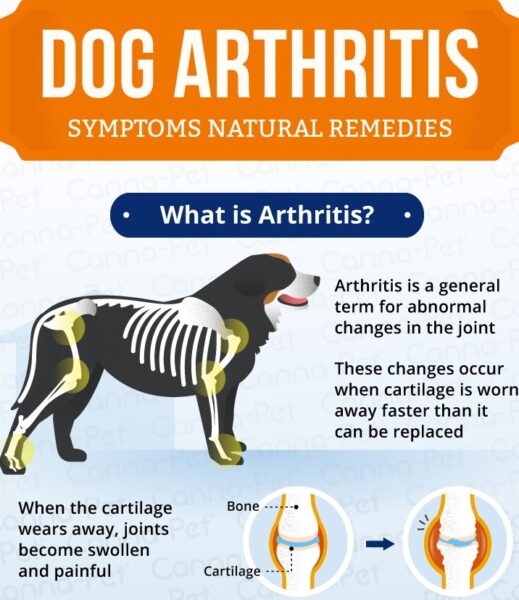
Osteoarthritis is the most common type of arthritis in both dogs and cats. It occurs when the cartilage that covers the surface of joints wears away, eventually causing bone to contact bone and exposing the exquisitely sensitive pain receptors in these areas. The body tries really hard to fix the problem by creating new cartilage, but unfortunately cartilage doesn’t regenerate very well, and the “new” surface is often bumpy and uneven.

Why does the cartilage gets worn in the first place? Most of the time it’s due to either previous joint damage, such as might occur if a cat is hit by a car or falls from a high place, or due to a birth defect that resulted in improper formation of the joint. We’re really just starting to understand that hip dysplasia, previously thought to be almost exclusively a problem of large dogs, is pretty common in our feline friends as well.

Other types of arthritis include septic arthritis, due to infection in the bloodstream, and immune-mediated arthritis, such as what we see in people who have rheumatoid arthritis. Both of these kinds of arthritis do occur in cats, but much less often than osteoarthritis.

My cat doesn’t have arthritis. I’ve never even seen him limping.

Another fascinating finding about feline arthritis is that cats with the disease typically don’t look anything like dogs with the disease. We’re used to seeing “gimpy” old dogs, that hobble around due to osteoarthritis, so it makes sense that we’d expect the same from cats. However, we’re commonly reminded in vet school that cats aren’t small dogs, and this is just one of the many ways that they’re different. Cats with arthritis typically don’t display signs of lameness.

So how are you supposed to get the hint that your cat might have osteoarthritis? The signs are subtle, but if you pay attention you’ll see changes in your cat that will prompt you to go to the vet, who can do a thorough orthopedic exam and hopefully zero in on areas of pain. Signs of arthritis in cats include sudden aggression towards people or other animals in the house (especially in cats that used to be happy and peaceful), difficulty jumping, loss of interest in surroundings, decreased activity levels, avoiding the litter box (even when previously trained well), vocalizing, and decreased grooming (especially overgrown claws).

The most interesting symptom to me in this list is the development of litter box problems. Failure to use the litter box is the number one reason that cats are relinquished to shelters in the U.S. How truly sad to think that many of these cats might really be painful, and have problems getting into and out of the box, or with squatting. This is one of the reasons that fixing litter box problems always starts with a complete medical workup.

But my cat’s not old!

Unfortunately, arthritis is a disease that can happen to young cats as well as old cats. This is especially true in cats that have previously experienced trauma. Even if the injury was repaired, the potential for in congruencies in a previously normal joint is there. When the joint isn’t properly fitted together, there’s room for laxity, and this laxity creates the cartilage erosion that leads to osteoarthritis.

Can’t I just give my cat some aspirin?

аспирин

No, please don’t! We counsel owners frequently about whether to treat cats at home for pain. While it can be dangerous to use over-the-counter human pain relievers in dogs, it’s absolutely critical that drugs like aspirin, Tylenol, and Advil NOT be given to cats. Aspirin and Advil (and other drugs like them such as Motrin) create severe gastrointestinal problems as well as kidney failure. Tylenol produces a severe and life-threatening problem called Heinz body anemia in cats.

Unfortunately, cats do not do well with most of the pain relievers that we easily use to treat arthritis in dogs. However, with close observation, they can tolerate some drugs well and provide significant relief and improvement in clinical signs. The opioid drug buprenorphine can be administered orally to cats and has excellent analgesic effects. The downside is that it tends to be expensive with prolonged use and can cause constipation. Tramadol is a synthetic opioid that has long been used in humans and may provide more cost-effective relief for cats. And gabapentin helps many cats feel better. VetExpert Arthrovet Capsules and Canina Petvital Arthro Tablets are very effective for cats and dogs. You can buy these drugs from the Homelabvet Online Store.

Currently, Metacam appears to be the only veterinary drug that is both effective and generally safe for long-term use in cats for inflammatory pain associated with arthritis. Because it can also cause gastrointestinal problems as well as kidney failure, cats taking this drug should be closely monitored with repeated lab tests to look for signs that the drug may be causing side effects.

What else can I do to help relieve pain associated with arthritis?

Start by changing your environment. Place food and water where you do not need to jump. Use ramps and stairs to help cats climb and get off furniture. Create trash bins you don’t have to jump into by purchasing plastic storage bins and cutting out a “door” on the side. Groom your cat regularly, especially in areas that are difficult for a cat with arthritis to reach. And make sure your cat has a warm and comfortable sleeping environment.

Supplements such as fish oil and glucosamine can also help. It is important to use products that are reliably manufactured and formulated for cats. There are also several high-quality diets available for cats with osteoarthritis. And since obesity exacerbates the clinical signs of arthritis, losing weight on your cat is likely to significantly improve well-being.

Posted on Leave a comment

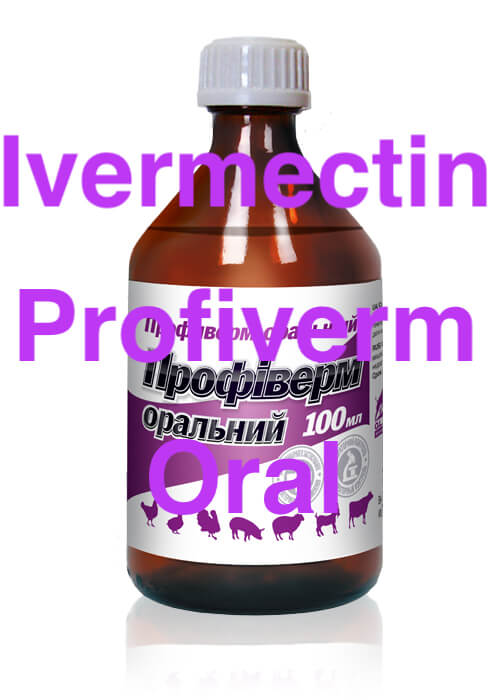
Ivermectin (Iverhelm) treatment is a ”real killer of parasites”

Ivermectin for sale online price vet pharmacy

Ivermectin (Iverhelm)

Characteristics of the substance Ivermectin
Refers to avermectins.

Pharmacology
Pharmacological action – local anti-inflammatory.
Pharmacodynamics

It has an anti-inflammatory effect by suppressing the production of inflammatory cytokines induced by lipopolysaccharides. The anti-inflammatory properties of ivermectin have been observed in animal models of skin inflammatory processes. Ivermectin also causes the death of parasites, mainly through selective binding and high affinity for glutamate-regulated chlorine channels found in the nerve and muscle cells of invertebrates. The mechanism of action of ivermectin in the treatment of inflammatory skin lesions in rosacea is not fully understood, but it may be associated with both anti-inflammatory effects and the ability to cause the death of Demodex mites, which, in turn, can be a factor causing skin inflammation.

Pharmacokinetics

Suction. The absorption of ivermectin was assessed in a clinical study involving adult patients with severe papulopustular rosacea, using the maximum tolerated dose. In equilibrium (after 2 weeks of treatment), the highest mean (± standard deviation) plasma concentrations of ivermectin were observed within (10 ± 8) h after application (Cmax – (2.1 ± 1) ng / ml, range – 0 , 7-4 ng / ml), and the highest mean (± standard deviation) AUC0-24 was (36 ± 16) ng · h / ml, range – 14-75 ng · h / ml). Systemic exposure to ivermectin reached a plateau by the end of the second week of treatment under steady state conditions. With longer treatment in phase III studies, the systemic exposure to ivermectin remained the same as after 2 weeks of treatment. Under Css conditions, the levels of systemic exposure of ivermectin (AUC0-24 (36 ± 16) ng · h / ml) were lower than after a single oral intake of 6 mg ivermectin in healthy volunteers (AUC0-24 (134 ± 66) ng · h / ml) …

Distribution. An in vitro study has shown that the binding of ivermectin to blood plasma proteins (mainly albumin) is more than 99%. No significant binding of ivermectin to erythrocytes was observed.

Metabolism. In in vitro studies using human liver microsomes and recombinant CYP450 enzymes, it has been noted that ivermectin is metabolized primarily by CYP3A4.

In vitro studies have shown that ivermectin does not inhibit the isoenzymes CYP1A2, CYP2A6, CYP2B6, CYP2C8, CYP2C9, CYP2C19, CYP2D6, CYP3A4, CYP4A11 or CYP2E1. Ivermectin does not induce the expression of isoenzymes CYP1A2, CYP2B6, CYP2C9 or CYP3A4) in cultured human hepatocytes. The two main metabolites of ivermectin (3′-O-demethylivermectin and 4a-hydroxyivermectin) were identified in a clinical pharmacokinetic study using the maximum allowable dose of this agent and were studied in phase II clinical trials. Like the parent compound, the metabolites reached equilibrium by the end of the second weeks of treatment, no signs of accumulation were observed in the period up to 12 weeks In addition, the systemic exposure of metabolites (assessed using Cmax and AUC), obtained at steady state, was much lower than for ivermectin after oral administration.

Excretion. The final T1 / 2 averaged 6 days (approximately 145 hours, range 92-238 hours) in patients who applied ivermectin to the skin 1 time per day for 28 days in a clinical pharmacokinetic study using the maximum allowable dose. Excretion from the body depends on the degree of absorption after topical application. The pharmacokinetics of ivermectin have not been studied in patients with impaired liver and kidney function.

Application of the substance Ivermectin
Inflammatory skin lesions in rosacea (papulopustular form) in adult patients.

Contraindications
Hypersensitivity; pregnancy; period of breastfeeding; age up to 18 years (safety and efficacy for this age category has not been studied).

Restrictions on use
Liver dysfunction.

Application during pregnancy and lactation
Data on the use of ivermectin in pregnant women are limited. Reproductive toxicity studies when taking ivermectin orally have shown that it has teratogenic potential in rats and rabbits, however, due to the low systemic exposure when applied externally at the recommended dosage, the risk of fetotoxicity in humans is low. The use of ivermectin during pregnancy is contraindicated.

After oral administration, low concentrations of ivermectin are excreted into breast milk. When applied topically, the release of ivermectin into breast milk has not been studied. Pharmacokinetic and toxicological data from animal studies also indicate the excretion of ivermectin in breast milk. The risk to the nursing infant cannot be excluded. If necessary, the use of ivermectin should stop breastfeeding.

Side effects of the substance Ivermectin


The most common adverse reactions, such as burning sensation, skin irritation, itching and dry skin, were noted in less than 1% of patients treated with ivermectin in clinical trials.

On the part of the skin and subcutaneous tissues: often (≥1 / 10) – burning sensation of the skin; infrequently (≥1 / 1000, <1/100) – skin irritation, itching, dry skin; frequency unknown – contact dermatitis, allergic reactions.

Typically, these reactions are mild to moderate and usually diminish with continued therapy.

There were no significant differences in the safety profile among patients aged 18 to 65 years and older.

Interaction
Studies on the interaction of ivermectin with other drugs have not been conducted. Concomitant use with other agents for external and systemic use for the treatment of rosacea has not been studied. Caution should be exercised when used simultaneously with strong inhibitors of CYP3A4, since the concentration of ivermectin in the blood plasma can increase significantly.

Overdose
There have been no reported cases of ivermectin overdose.

Symptoms: In case of accidental or significant exposure of a person to unknown amounts of veterinary forms of ivermectin (ingestion, inhalation, parenteral administration or contact with the body surface), skin rash, facial edema, eyelid edema, headache, dizziness, asthenia, nausea, vomiting, etc. diarrhea. Other reported adverse reactions include seizures, ataxia, shortness of breath, abdominal pain, paresthesia, urticaria, and contact dermatitis.

Treatment: in case of accidental ingestion, symptomatic therapy is carried out, including parenteral administration of fluids and electrolytes, respiratory support (providing oxygen and, if necessary, mechanical ventilation) and vasopressors (in the presence of a pronounced decrease in blood pressure). To prevent the absorption of ingested ivermectin, provoking vomiting and / or urgent gastric lavage followed by the use of laxatives and other measures to eliminate intoxication may be indicated.

Route of administration
Outwardly.

Precautions for the substance Ivermectin
The components of the finished dosage form of ivermectin can cause local skin reactions (eg contact dermatitis), allergic reactions (including delayed-type reactions), skin irritation.

Wash your hands after use.

After drying, you can apply cosmetics.

Influence on the ability to drive vehicles and work with mechanisms. Ivermectin does not affect or slightly affects the ability to drive vehicles and operate machinery.

Posted on Leave a comment

Which human foods can dogs eat?

Dog with carrot pet medicine pharmacy

Which human foods can dogs eat?

Dogs have a different digestive system from humans. This means that some foods that are safe for people can be harmful or even very dangerous for dogs.

However, many human foods are also safe for dogs and can provide important nutrients and health benefits.

Here, we look at which people foods are safe for dogs and which not to feed them.

So, which human foods can dog eat?

While many people foods are safe for dogs, they should generally only eat in them moderation.

Human foods that are safe for dogs include:


Carrots

Carrots are a healthful food for dogs. Chewing on carrots can help remove plaque from their teeth and otherwise promote good dental health.

Carrots are also a good source of vitamin A, which is beneficial for a dog’s immune system, skin, and coat.

However, too much vitamin A can be toxic, so feed a dog carrots in moderation.


Applesdog eat apples

Apples provide many important vitamins for dogs, including vitamins A and C.

Apples are also a good source of fiber, which can help regulate a dog’s digestion. However, eating rotting apples can lead to alcohol poisoning in dogs.


White riceWhite rice

Cooked, plain white rice can be a good option for a dog with an upset stomach, as it is easy to digest and helps bind stool.

White rice can cause blood sugar levels to rise, however, so dogs with diabetes should only eat it in small amounts.


Dairy productsDairy products

Dairy products, such as milk, cheese, and plain yogurt, are safe for dogs to have in very small quantities.

Eating too much dairy can cause digestive problems. This is because dogs have low levels of lactase, a digestive enzyme that breaks down the sugars in milk.

Dogs with lactose intolerance should not eat dairy products. Signs of lactose intolerances include diarrhea or vomiting after consuming anything that contains dairy.


Fishdog eat fish

Salmon, shrimp, and tuna are all safe for dogs to eat and good sources of protein.

Salmon and tuna are rich sources of omega-3 fatty acids, which can help keep a dog’s immune system, coat, and skin healthy.

The B vitamins in shrimp can also help maintain a dog’s digestive system and promote healthy blood circulation.

It is important to cook fish before feeding it to a dog, as uncooked fish can contain harmful parasites.


Chicken

Plain, boiled chicken with no seasoning is a good option when a dog has an upset stomach.


Peanut butter

Unsalted peanut butter with no added sugar or sweeteners is safe for dogs to eat in moderation.

Peanut butter contains many beneficial elements, including vitamins E and B, niacin, healthful fats, and protein.

However, it is vital to check that the peanut butter does not contain a sweetener called xylitol, which is highly toxic to dogs.

Anyone who suspects that their dog has ingested xylitol should immediately contact a veterinarian or call an Animal Poison Control Center.


Plain popcornPlain popcorn

Plain popcorn, without salt, butter, or sugar, can be a nutritional treat for dogs.

Popcorn contains minerals such as magnesium, phosphorus, and zinc, which are all important for keeping dogs healthy.

Make sure dogs do not eat any unpopped popcorn kernels, as this could cause them to choke.


PorkPork

Unseasoned, cooked pork is safe for dogs to eat.

However, they should only consume small portions of pork, as the high fat content is hard for dogs to digest, and it can cause inflammation and pancreatitis.

Refrain from feeding dogs bacon or processed ham, due to the high salt contents.


Turkey

Cooked turkey is safe for dogs to eat, but it should be plain and unseasoned. Many commercial dog foods contain turkey, as it is a good source of protein.

Before giving cooked turkey to a dog, remove the fat first. Too much fat can cause pancreas issues in dogs.


Blueberriesdogs-eat-blueberries

Blueberries are safe for dogs to eat and a rich source of fiber, antioxidants, and phytochemicals, which can provide a range of health benefits for dogs.

Research from 2012 suggests that antioxidants may help improve age-related issues in older dogs.


Bananas

Dogs can eat bananas in moderation. They are full of magnesium, which is important for good bone health.

Due to their high sugar content, bananas should only be an occasional treat for dogs.


Cucumbers

Cucumbers are a safe, low-calorie snack for dogs, and they can be a good option for those who are overweight.

Cucumbers also contain plenty of vitamins and minerals, such as vitamin K.


Green beans

Plain green beans are a good, healthful snack for dogs. They are a source of protein and also contain calcium, iron, and vitamin K.

Dogs can eat green beans cooked or raw. However, avoid seasoning and chop up the beans first to prevent choking.


Watermelonjack-russell-terrier-eats-watermelon

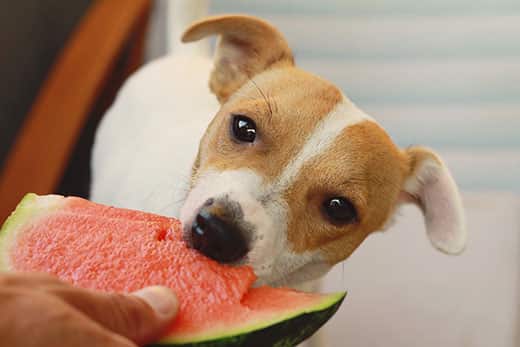
Watermelon is safe for dogs to eat, but it is important to remove all the seeds first, as these can block the intestines.

Chewing on the rind can also cause an upset stomach, so remove this too before giving the watermelon to a dog.

Watermelon has a high water content, so it can help keep dogs hydrated. It is also a good source of vitamins A, C, and B-6.


Which foods can harm dogs?

Some foods that are perfectly safe for humans can cause problems or illness in dogs.

Anyone who suspects that their dog has eaten something toxic should call a veterinarian or Animal Poison Control Center immediately.

Avoid giving a dog:


AvocadoAvocado

Avocados contain a substance called persin, which is toxic to dogs and can cause vomiting and diarrhea.


Cherries

Cherry pits contain cyanide, which is poisonous. They can also be a choking hazard or block the intestines if a dog swallows them.


Chocolate, coffee, and caffeine

Never give chocolate, coffee, or anything containing caffeine to dogs.

These products contain chemicals called methylxanthines, which are highly toxic to dogs. The chemicals can cause vomiting, an abnormal heart rate, seizures, and sometimes death.

Chocolate treats are available for dogs, but these contain a special chocolate substitute that is safe for them to eat.


Raisins and grapes

Grapes, raisins, sultanas, and currants are all highly toxic to dogs. Even small quantities can cause kidney failure and, in some cases, death.

Also, refrain from giving dogs any product that may contain these foods, such as fruit cake or malt loaf.


Citrus fruits

Citrus plants and their fruits, such as oranges and lemons, contain citric acid. While eating small amounts of the peeled fruit is okay for some dogs, it can cause an upset stomach.

In larger quantities, citric acid can lead to nervous system depression.


Cinnamon

Although not toxic, large amounts of cinnamon can cause vomiting, diarrhea, and liver disease in dogs.


Coconut products

Dogs should not drink coconut water, due to its high levels of potassium.

A person should also limit how much coconut oil or flesh they give their dog, as these foods can cause upset stomach or diarrhea.


NutsMacadamia nuts

Avoid giving nuts to dogs.

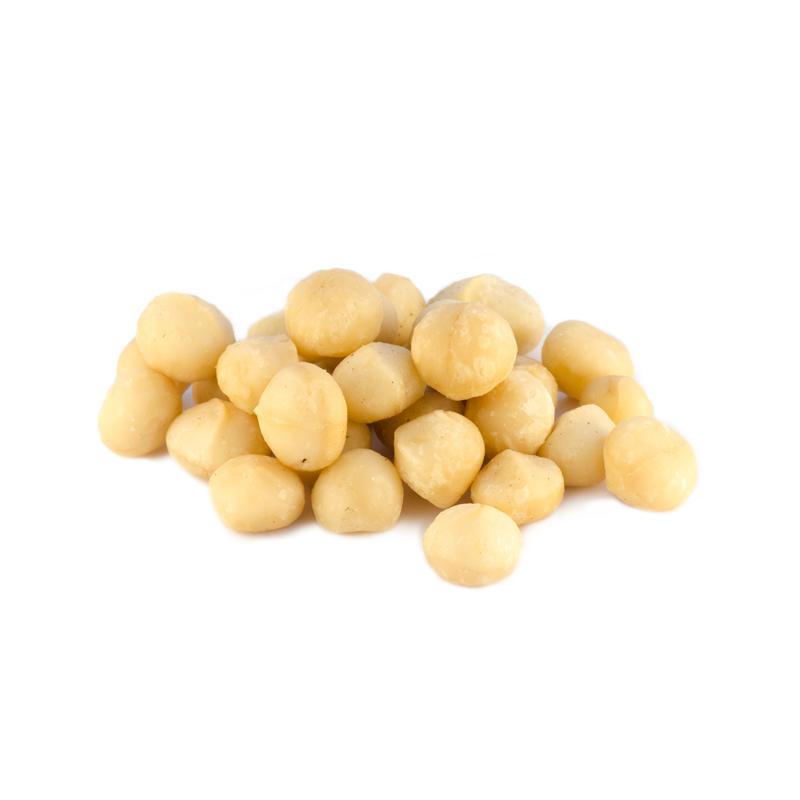
Macadamia nuts are poisonous to dogs and can cause muscle weakness, vomiting, lethargy, and hyperthermia.

Other types of nuts can cause dogs to choke.


Ice cream

Dogs should not eat ice cream, due to its high sugar content. Also, some dogs are lactose intolerant.


Onions, garlic, and chives

Onions, garlic, and chives are all part of the Allium genus. They contain substances called organosulfoxides, which are toxic to dogs and may lead to vomiting, diarrhea, and stomach pain.

Organosulfoxides can also cause anemia in dogs.


Raw or undercooked meatRaw or undercooked meat

Raw meat can contain Escherichia coli and Salmonella, which are types of bacteria that can cause food poisoning in dogs and humans. Cooking the meat properly kills the bacteria.

In recent years, certain manufacturers have promoted the benefits of raw meat for dogs, and some boutique products contain it.

It is important to understand that raw meat diets pose health risks to dogs and may not provide a complete nutritional balance.


Raw eggs

Eating raw eggs can lead to biotin deficiency in dogs, which may affect the health of their skin and coat.


Salty foods

Too much salt can cause excessive thirst and urination in dogs, as well as sodium ion poisoning.

Symptoms of this poisoning can include:


  • vomiting
  • diarrhea
  • involuntary shaking, or tremors
  • high temperature
  • seizures


XylitolXylitol

Xylitol is a sugar substitute that manufacturers add to a variety of human foods.

However, xylitol is highly toxic to dogs. It can cause liver failure and dangerously low blood sugar levels.


Bread doughBread dough

While bread is generally safe for dogs, the dough can be very dangerous.

The yeast in dough can cause it to keep expanding inside the dog’s stomach, which can cause bloating and lead to dangerous complications. The yeast also produces ethanol, and this can cause alcohol poisoning.


Alcohol

Never give a dog alcohol or products containing it. Alcohol is very dangerous for dogs and can lead to a range of serious complications, including coma and death.


Summary

Many human foods are safe and nutritious for dogs. However, a person should generally feed dogs these foods in moderation, as larger quantities can lead to health issues.

Consult a veterinarian before giving human foods to dogs with:


  • diabetes
  • weight issues
  • food sensitivities
  • liver or kidney disease
  • other health concerns

It is crucial to keep any foods or substances that are dangerous for dogs out of their reach.

Foods that are especially harmful to dogs include:


  • anything containing alcohol
  • chocolate, coffee, and caffeine
  • products containing xylitol

If in doubt about a particular food, speak to a veterinarian before giving it to the dog.

Anyone who suspects that their dog has ingested something potentially harmful should immediately call a veterinarian or an Animal Poison Control Center for advice.

Posted on Leave a comment

Dogs can get heatstroke, too. Here’s which breeds are most at risk

pug dog pet pharmacy

Dogs can get heatstroke, too

Excessive panting on hot, humid days is one warning sign.

dog heatstroke

As the days grow hotter, some dog owners may need to take extra precautions to protect their pets from potentially fatal heatstrokes, a study published Thursday suggests.

British researchers determined that certain breeds, as well as those that are older and/or overweight, may be more likely to suffer from the heat-related illness than others. In general, most at risk are dogs that weigh more than 110 pounds, and also breeds with flat faces — such as pugs and French bulldogs — according to the study in Scientific Reports.

The breeds identified at the highest risk of heatstroke were:

  • Chow chow
  • Bulldog
  • French bulldog
  • Dogue de Bordeaux
  • Greyhound
  • Cavalier King Charles spaniel
  • Pug
  • Golden retriever
  • Springer spaniel

Chow chows, for example, were 16 times more likely to develop heatstroke compared to Labradors.

“I would recommend all dog owners consider if your pet is at increased risk of heat stroke,” said Emily Hall, the lead author and a senior lecturer in veterinary nursing science at Nottingham Trent University in the United Kingdom. “Are they overweight? Are they a giant breed? Are they elderly? Are they one of the breeds identified as having a higher risk?”

If your dog is at higher risk, you should know the signs of overheating, she said in an email. That way “you can act promptly in an emergency [and also] really take care in warm weather to avoid putting any dog at risk of this potentially fatal condition.”

Signs that a dog is overheating include excessive panting, vomiting, excessive drooling, bloody diarrhea and if it collapses, said Dr. Kenneth Drobatz, a professor and the chief of the section of critical care in the department of clinical sciences and advanced medicine at the University of Pennsylvania School of Veterinary Medicine. Drobatz was not involved with the new research.

To take a closer look at the risk of heatstroke, Hall and her colleagues scoured records from veterinary care practices in the U.K. Out of a total of 905,543 dogs, 395 had confirmed heat-related illness events and 56 died.

Flat-faced breeds, such as bulldogs, are especially vulnerable because their breathing is compromised by the shape of their skulls, Hall explained.

“Dogs use panting to cool down, which works by passing air over the nasal passages allowing evaporative heat loss,” she said. “Dogs with shorter muzzles (brachycephalic breeds) have less area to allow heat loss.”

These dogs also tend to have narrowed airways, which means the dog has to work harder to pant, she said.

Prevention is key

Dog owners should pay careful attention on hot, humid days because dogs will keep going even as they are overheating, Drobatz said. “They will keep exercising till they drop.”

“Prevention is more important than anything else,” he said. “You need to recognize these dogs are at risk and should not go out in a hot humid environment.”

Sometimes dogs get into trouble because of their enthusiasm for play, said Dr. Daniel Fletcher, an associate professor of emergency and critical care at the Cornell University College of Veterinary Medicine.

“The ones with excited, active personalities will just go and chase the ball and chase the ball and chase the ball,” he said. “You don’t realize they are in trouble till it’s too late. They’re a little too good to us, to their own detriment sometimes.”

Dogs that are panting excessively should be taken to a cool area and ideally doused with water at room temperature, Fletcher said.

“If the dog is not back to normal breathing in 15 minutes it’s a good idea to get the dog to a vet,” he added. “If the dog’s temperature goes above 107 or 108, you can get damage to the organs and the dog’s ability to make blood clots.”

Even if the dog appears to have returned to normal, the owner should be watchful, Fletcher said. “Sometimes they may initially seem to go back to normal, but in a couple of hours or a day the dog might develop kidney failure or respiratory or heart issues,” he said.

Owners should be aware of signs including “lethargy, vomiting, diarrhea, blood in the stool, dark stool, or bruising or pinpoint red spots seen on the skin,” Fletcher said, adding that these symptoms necessitate a trip to an emergency vet. 

In our store you can buying dog vaccinations and buy dogs heart vaccines online. 

Posted on Leave a comment

How canine friends have helped humans cope during the pandemic?

canine helps pet medications online homelabvet

How canine friends have helped humans cope during the pandemic?

As lockdown descended, people across the UK sought comfort and distraction from the coronavirus pandemic from their pets – old and new. Demand – and prices – for puppies soared, and the Dogs Trust was inundated with interest from those wishing to adopt, while reports of thefts of popular breeds also increased.

canine help

We’d like to hear from people about how their canine friends have helped them cope in lockdown, particularly if you live – or have been shielding – alone.

Share your experiences

Have you spent more time with your dog during lockdown? Did you buy a new puppy or rescue a dog during this period? If so, how did the buying or rescue process work? And are you worried about how your dog will cope if and when you return to work?

You can leave your story in comments on our Facebook page.

Posted on Leave a comment

From ice cubes to sun cream. How to keep your dog cool in the hot weather

grooming a dog best online pet pharmacy homelabvet

How to keep your dog cool in the hot weather

The UK saw its hottest day of the year on Thursday but as Brits enjoy a week of glorious sunshine, those with pets have more to think about than just which factor SPF to apply. 

dog cool in the hot weather

Over-exposure to heat and sunshine can be harmful for animals as well as humans.

Vets Now, a provider of emergency veterinary care, warned that the average survival rate of a dog diagnosed with heatstroke was 50 percent.

The RSPCA said it had received 330 calls in regard to animal welfare and the hot weather since March 23, adding it was expecting “hundreds more” as temperatures increase this week.

Heatstroke, sunburn and dehydration are all things to consider when it comes to caring for your pet.

Here is a list of dos and don’ts to help you keep your dog cool, healthy and happy during the heatwave.

Remember water

If you go for a walk, take a bottle of water so your dog can drink from your hands every hour. If you plan to linger away from home, take a water bowl as well.

Provide ways to cool down

Even if you do not have enough space for a paddling pool or garden sprinklers (although these will go down well!), laying out a damp towel in the shade is a great way to give your pup a quick way to cool down. If you’re dog is looking very hot and bothered, hold an ice cube to the back of his neck.

Groom regularly

Grooming prevents knots building up in your dog’s coat. Matting like this can trap heat and be very uncomfortable during the summer.

Consider buying sun cream

Dogs with thin coats or lightly-coloured fur are the most vulnerable to burning. Speak to your vet about whether your animal needs sun cream. If so, you can pick up specialised creams at most pet shops.

Look out for symptoms of heat stroke

Heatstroke occurs when an animal is unable to reduce its body temperature. It can be fatal.

Battersea Dogs Home has listed the following as symptoms to watch out for:

  • Heavy panting
  • Glazed eyes
  • Rapid pulse
  • Excessive salivation
  • Lack of coordination
  • Vomiting or diarrhoea

If your dog is suffering from many of these symptoms, you need to act fast. Immediately take them out of the sun and help them to cool with wet towels, ice cubes and drinking water.

Don’t:

Leave your dog in a car

Like babies, dogs should not be left in cars. Under the sun’s glare, cars can rapidly reach dangerously hot temperatures with fatal consequences. If you see a dog in a hot car (even in the shade) call 999.

Play high-exertion games

Fetch might not be ideal for dogs who struggle with heat. If your dog seems to be one of them, play around with slow-paced games, like hiding treats for them to sniff out.

Go for a walk in the heat of the day

Avoid the hours around midday for your walk – if you feel the need to wear a hat, that is sure indication your dog will be uncomfortable walking under the glaring sun. Pick a route with a good amount of shade.

Expect your dog to walk on boiling surfaces

Again, if you are tiptoe-sprinting over a surface like hot coal, your dog’s paws are probably burning too. Tarmac and sand can be too much for a dog’s foot pads after a roasting in the sun, so help him or her find another way.

Over-cool your dog

If you do sense your dog is overheating – even if they have severe heatstroke symptoms – be wary over-cooling. Ice baths, for example, could send your pet into shock if its body temperature is very high. Stick to cool towels and single ice cubes. Give them small sips of water rather than enormous gulps.

In our store you can buying dog vaccinations and buy puppy vaccines online.

Posted on Leave a comment

Dog delivers food to quarantined neighbour

Dog delivers food to quarantined neighbour

A dog in Colorado has been helping its owner’s neighbour get through self-isolation by delivering food supplies to her home.

Dog delivers food during Covid-19

Renee Hellman has underlying respiratory issues and has been advised to quarantine herself completely due to the coronavirus outbreak, making her unable to go food shopping.

“She got the list, she gave it to Sunny, Sunny brought it to me,” Ms Evelth told KKTV. “I went to the store, got her groceries, and he delivered them all to her.”

Ms Hellman has said the visits from Sunny have not only helped her immensely, not just from a practical perspective, but from a companionship one too given that she is home alone.

“It’s been fun,” she said. “It’s been a real treat.

“Little things like Sunny coming over to visit is nice and it makes you feel good. It’s a way of communicating.”

Sunny has also been collecting the post for Ms Evelth, who hopes her story will inspire similar acts of kindness.

“Anybody can do something small, that can be so helpful,” she said.


Posted on Leave a comment

Urban dogs are more fearful than their cousins from the country

Urban dogs are more fearful than their cousins from the country

Fearfulness is one of the most common behavioural disorders in dogs. As an emotion, fear is a normal and vital reaction that helps individuals survive in threatening circumstances. When the fearfulness is excessive and disturbs the dog’s life, it is referred to as a behavioural problem. Excessive fearfulness can significantly impair the dog’s welfare, and it is also known to weaken the relationship between dog and owner.

urban dogs

Social fearfulness in dogs is particularly associated with fearfulness related to unfamiliar human beings and dogs. At the University of Helsinki, risk factors predisposing dogs to social fearfulness were investigated with the help of a dataset pertaining to nearly 6,000 dogs. The dataset was selected from a larger set of data, a behavioural survey encompassing almost 14,000 dogs.

Based on the survey, inadequate socialisation of puppies to various situations and stimuli had the strongest link with social fearfulness. The living environment also appears to make a difference, as dogs that live in urban environments were observed to be more fearful than dogs living in rural environments.

“This has not actually been previously investigated in dogs. What we do know is that human mental health problems occur more frequently in the city than in rural areas. However, further studies are needed before any more can be said about causes pertaining to the living environment,” says Jenni Puurunen, a postdoctoral researcher at the Faculty of Veterinary Medicine, University of Helsinki.

Supporting prior research evidence, social fearfulness was demonstrated to be more common among neutered females and small dogs.

Alongside size and gender, activity is another factor associated with fearfulness. Fearful dogs were less active than bolder ones, and their owners also involved them in training and other activities significantly less often. Professor Hannes Lohi from the University of Helsinki speculates whether this is a cause or consequence.

“Activity and stimuli have already been found to have a positive effect on behaviour, in both dogs and humans. Of course, the lesser activity of fearful dogs can also be down to their owners wanting to avoid exposing their dogs to stressful situations. It may be that people just are not as active with fearful dogs,” Lohi points out.

Furthermore, significant differences between breeds were identified in the study. Spanish Water Dogs and Shetland Sheepdogs expressed social fearfulness the most, while Wheaten Terriers were among the bravest breeds. The Cairn Terrier and the Pembroke Welsh Corgi expressed only little fearfulness towards other dogs.

“Differences between breeds support the notion that genes have an effect on fearfulness, as well as on many other mental health problems. This encourages us to carry out further research especially in terms of heredity. All in all, this study provides us with tools to improve the welfare of our best friend: diverse socialisation in puppyhood, an active lifestyle and carefully made breeding choices can significantly decrease social fearfulness,” Lohi sums up.

Professor Lohi’s group investigates the epidemiology of canine behaviour, as well as related environmental and genetic factors and metabolic changes.

Materials provided by University of Helsinki.

Posted on Leave a comment

Healthiest Human Food Dogs Can Eat

Healthiest Human Food Dogs Can Eat

There are plenty of people foods we’d love to share with our dogs, but some are much healthier than others. In fact, some foods are even toxic to our dogs. But fear not, there are certain human snacks that can actually benefit our four-legged friends. To see what they are, check out this list of the healthiest human food dogs can eat:

(As always, practice moderation and check with your vet before making any dietary changes.)

  1. Peanut Butter. Peanut Butter is one of the best treats to give to dogs because it lasts them so long! Plus, its packed full of protein, healthy fats, niacin, vitamin B and vitamin E. Unsalted peanut butter is the best, as too much salt is just as bad for dogs as it is for people. Make sure you check your peanut butter to make sure it DOES NOT contain sugar substitutes like Xylitol, which can be deadly for dogs.
  2. Chicken. Chicken can be fed to our dogs a variety of ways. Cooked chicken meat is a perfectly suitable snack or meal additive, but cooked bones should never be fed to dogs. On the other hand, both raw chicken and raw chicken bones are healthy for our dogs to eat. Cooked bones splinter and can be dangerous, while raw bones are soft and chewy.
  3.  
  4. Cheese. (Note: some dogs are lactose intolerant, and any dairy products should be given in small amounts.) If your dog is not lactose intolerant, cheese is an excellent treat choice. Cottage cheese is fed often by many dog owners because it’s high in protein, calcium and is bland and easy to digest. 
  5. Carrots. Carrots are high in fiber and vitamin A while being low in calories, so they make a great snack for your pooch. Chewing raw carrots is also beneficial for your dog’s teeth. If you’ve got an overweight dog, carrots are a great choice for treats because of their low calorie content. 
  6. Yogurt. Yogurt is full of protein, calcium and digestive cultures and is an excellent way to improve your pup’s digestive health. Make sure the yogurt you choose includes live active cultures and is non-fat with no sweetener or flavor. 
  7. Pumpkin. Canned pumpkin or fresh, cooked pumpkin with no added sugars and spices is a great choice for dogs with a sensitive stomach. It’s also an excellent source of vitamin A and fiber.
  8. Eggs. Eggs can be fed raw or cooked and both have great health benefits. Raw eggs should also be fed with a shell, giving the full amount of biotin, protein, riboflavin and selenium. Cooked eggs should be prepared plain with no salt, pepper or any other seasoning.
  9. Green beans. Green beans are highly recommended by veterinarians for owners looking to help their dogs lose weight. They are very high in fiber but low in calories, making them a healthy treat alternative that’s filling but won’t add any weight. 
  10. Salmon. Salmon is very high in health omega-3 fatty acids and is typically the fish used to make fish oils for our pets. Whether you want to give your pooch unseasoned cooked salmon or some capsules, you’ll be providing healthy vitamins for them. Do not give your dog uncooked salmon for any reason.  
  11. Sweet potatoes. Sweet potatoes work similarly to pumpkin as they are high in vitamin A, fiber and other nutrients. They are easily digestible when steamed or baked, served unseasoned. 
  12. Apples. Sliced apples are a healthy and tasty treat for dogs that are full of phytonutrients, vitamin A and vitamin C. They can be given with the skin on, but avoid feeding the seeds as they naturally contain cyanide.
  13. Oatmeal. Oatmeal is found in many dog foods and for those not sensitive to grains, it can be a healthy additive to your dog’s meal. Not only is it packed with vitamins and minerals, it’s an excellent source of dietary fiber. 
Posted on Leave a comment

What is Panacur?

Every once in awhile, your veterinarian gives you unpleasant news. Sometimes, that news sounds like this:

“Your dog has worms.”

Nobody wants to hear that her dog has internal parasites, but worms in dogs are more common than you might think. They are also usually treatable. One of the medications veterinarians frequently prescribe for dogs with worms is Panacur, a deworming medication used to treat several species of canine parasites.

What Is Panacur?

Panacur is the brand name of an oral deworming medication with the active ingredient fenbendazole. It is used to treat internal parasites in domestic animals, including dogs, cats, horses, and livestock. In dogs, Panacur is most often used to treat hookworm, roundworm, tapeworm (Taenia), and whipworm infections, although it is important to note that Panacur is not effective against Dipylidium tapeworms.

In addition to these worms, Panacur (fenbendazole) is approved in Europe to treat Giardia in dogs and is sometimes used off-label in the U.S. to deal with Giardia infections. It is also occasionally used off-label to combat lungworm infections.

How Does Panacur Work?

Deworming medications work in different ways to eliminate parasites. Some target specific life stages, while others attack the biological processes of the parasite. Fenbendazole kills parasites by binding to tubulin (a type of protein), which interferes with the parasites’ ability to form microtubules, which combine to form the structure of the worm cells.

So how do you introduce this parasite eliminator into your dog’s system? Panacur is given orally, either in granules, a suspension, or a paste. Talk to your veterinarian about the best formulation for your dog and for tips about how to properly administer a dewormer.

Side Effects of Panacur for Dogs

Panacur is generally considered a very safe medication and is one of the safest dewormers on the market. Its active ingredient has a selective affinity for parasitic tissue, which means it usually ignores your dog’s body tissues unless given in very high doses, and even then dogs can tolerate doses up to 100 times higher than recommended. Manufacturers list vomiting as a possible side effect, and some formulations, like Panacur Plus, contain other medications, such as ivermectin and praziquantel, which can have more serious side effects.

Even though the drug is generally safe, you still need to exercise caution. Some dogs may have an allergic reaction to the dying parasites themselves. Watch out for symptoms of an allergic reaction in dogs, which include facial swelling, itchiness, hives, diarrhea, vomiting, seizures, shock, pale gums, cold limbs, and coma. You should also talk to your vet about giving Panacur to pregnant dogs. Your veterinarian may have to adjust the dosage, and Panacur is not recommended for puppies under six weeks old.

How Much Panacur Should I Give My Dog?

When it comes to the dosage and duration of Panacur or any other medication, talk to your veterinarian. While the Internet is a great source of initial information about drug dosages, your veterinarian may have his or her own reasons for adjusting your dog’s dose and duration. These changes are based on your dog’s medical history or condition, and an inaccurate dosage and duration estimate could harm your dog and lead to parasite resistance.

The dosage and duration of the drug also depends on the intended use. Your veterinarian might prescribe a different dosage for Giardia than he would for roundworms, for instance, so make sure you follow his instructions to ensure that your dog receives the full benefit of the medication.

For more information about Panacur for dogs, you can always consult your veterinarian.

You can buy Panacur C at homelab shop.

Also, you can buy Helmintazole 222 (Fenbendazole 22,2%) it is a similar product as Panacur C.